
HACCP Management Portal Ireland, Automating Training and Compliance
HACCP Management Portal Ireland: Automating Training and Compliance
Why Manual HACCP Training Tracking Creates Compliance Risk
HACCP management portal Ireland solutions are no longer optional for growing food businesses. Manual spreadsheets, paper certificates and ad-hoc reminder systems create unnecessary compliance risks and consume valuable HR time. Automated HACCP tracking ensures certification expiry dates are monitored, audit reports are generated instantly, and training records remain accessible at all times. For busy departments managing multiple staff and locations, digital infrastructure transforms compliance from a burden into a streamlined process.
If you’ve ever managed HACCP certification across a food business with more than a handful of employees, you know the administrative nightmare it becomes. Spreadsheets tracking who was trained when. Expired certificates discovered during inspections. New starters who slip through onboarding without proper food safety training. Staff claiming they “definitely did the course” but unable to produce evidence. Reminders sent, ignored, and forgotten until an Environmental Health Officer asks to see training records.
For HR managers, operations directors, and business owners responsible for compliance, HACCP certification tracking consumes disproportionate time and energy—time that could be spent on strategic HR functions rather than chasing down certificates and manually updating spreadsheets.
The problem intensifies as businesses grow. Managing training for five staff is tedious but manageable. Managing it for 50 staff across multiple locations becomes a full-time job. Managing it for 200+ staff is simply impossible without systematic digital infrastructure.
Yet despite this being a universal challenge across the Irish food industry, most businesses still rely on paper certificates filed in folders, Excel spreadsheets maintained manually, and email reminders sent sporadically. When audits or inspections arrive, the scramble begins: photocopying certificates, frantically emailing staff who’ve left, and hoping there aren’t gaps that trigger enforcement action.
Acornstar Limited recognised this problem years ago. We understood that providing excellent, internationally accredited HACCP training is only half the solution. The other half is helping businesses actually manage that training efficiently once staff are certified.
This article explains why manual HACCP certification tracking creates operational and compliance risks, explores the specific challenges HR departments face, and demonstrates how Acornstar’s free management portal provided at no additional cost to all our customers—transforms HACCP certification from an administrative burden into a streamlined, automated process.
The Hidden Cost of Manual HACCP Certification Tracking
Most businesses don’t quantify the true cost of managing training records manually. When you calculate the actual time spent, the numbers are startling:
Time Spent on Manual Administration
Consider a medium-sized food business with 40 employees requiring HACCP certification:
Initial record-keeping (after training): 15 minutes per employee to file certificates, update spreadsheets, and record completion = 10 hours annually (assuming some turnover).
Monitoring expiry dates: Weekly or monthly spreadsheet reviews to identify upcoming renewals = 30-60 minutes monthly = 6-12 hours annually.
Chasing expired certifications: Emailing staff, following up on non-responses, escalating to managers = 20-30 minutes per expired certification × 10-15 staff annually = 5-8 hours annually.
Audit preparation: Locating and photocopying certificates, creating compliance reports for inspections = 3-6 hours per audit × 2-3 audits annually = 6-18 hours annually.
Onboarding administration: Processing training records for new hires, verifying external certifications, ensuring completion before start dates = 1-2 hours per new hire × 15 hires annually = 15-30 hours annually.

Total: 42-78 hours annually for a 40-employee operation more than a full working week devoted entirely to HACCP certification administration.
For larger operations (100+ employees, multiple sites), this easily reaches 150-200+ hours annually.
Compliance Risks of Manual Systems
Beyond time costs, manual tracking creates serious compliance vulnerabilities:
Expired Certifications Going Unnoticed: Spreadsheets updated sporadically mean staff can work for weeks or months with expired certifications before anyone notices. During Food Safety Authority of Ireland (FSAI) inspections, this triggers immediate improvement notices.
Lost or Misfiled Certificates: Paper certificates get lost in filing cabinets, left behind when staff depart, or damaged. When you can’t produce evidence of training during an audit, regulators assume it never happened.
Inconsistent Records Across Sites: Multi-site operations often maintain separate records at each location, creating inconsistencies and gaps. Central visibility is impossible.
New Hire Gaps: In fast-paced onboarding, HACCP training sometimes gets delayed or overlooked. New staff work uncertified for weeks before the gap is discovered.
Inefficient Refresher Scheduling: Manual tracking makes it difficult to schedule group refresher sessions efficiently. Staff certifications expire at different times, requiring multiple small sessions instead of consolidated training.
Version Control Problems: When staff complete refresher training or upgrade certification levels, old certificates aren’t consistently replaced. Files end up with multiple conflicting certificates, and it’s unclear which is current.
These aren’t hypothetical risks they’re problems Irish food businesses experience regularly, often discovered during audits with serious consequences.

The Compliance Landscape in 2026
The regulatory environment has intensified the importance of robust training tracking. Under current Health Information and Quality Authority (HIQA) Schedule 5 requirements for healthcare facilities, and the FSAI Strategy 2025-2029 emphasis on competency verification, businesses must demonstrate:
- Current, accredited certification for all food handling staff at appropriate levels
- Documented refresher training on annual or more frequent cycles
- Rapid production of training records during inspections (delays while “finding certificates” create negative impressions)
- Role-specific certification levels matched to staff responsibilities
- Competency verification, not just training completion
Manual systems struggle to provide the speed, accuracy, and comprehensiveness these requirements demand.

The Specific HACCP Tracking Challenges HR Faces
HR professionals managing food businesses face unique challenges that generic training management systems don’t address:
Multi-Level Certification Complexity
Unlike single-tier training (e.g., manual handling certification), HACCP has multiple levels (1, 2, 3, 4) with different roles requiring different certifications. HR must:
- Track which roles require which levels
- Ensure staff aren’t under-certified (Level 1 when Level 2 is required)
- Avoid unnecessary over-certification (Level 3 for kitchen porters)
- Manage upgrades when staff are promoted or change roles
- Verify that supervisors and managers hold higher certifications than those they supervise
This matrix of roles and levels is difficult to manage in spreadsheets, where errors and oversights are common.
High Turnover Environments
The Irish hospitality and food service sectors experience notoriously high staff turnover often 30-50% annually. This means:
- Constant onboarding of new staff requiring certification
- Training records for departed staff cluttering systems
- Difficulty maintaining institutional knowledge about training requirements
- Frequent gaps when positions turn over between certification cycles
High turnover makes manual tracking exponentially more burdensome and error-prone.
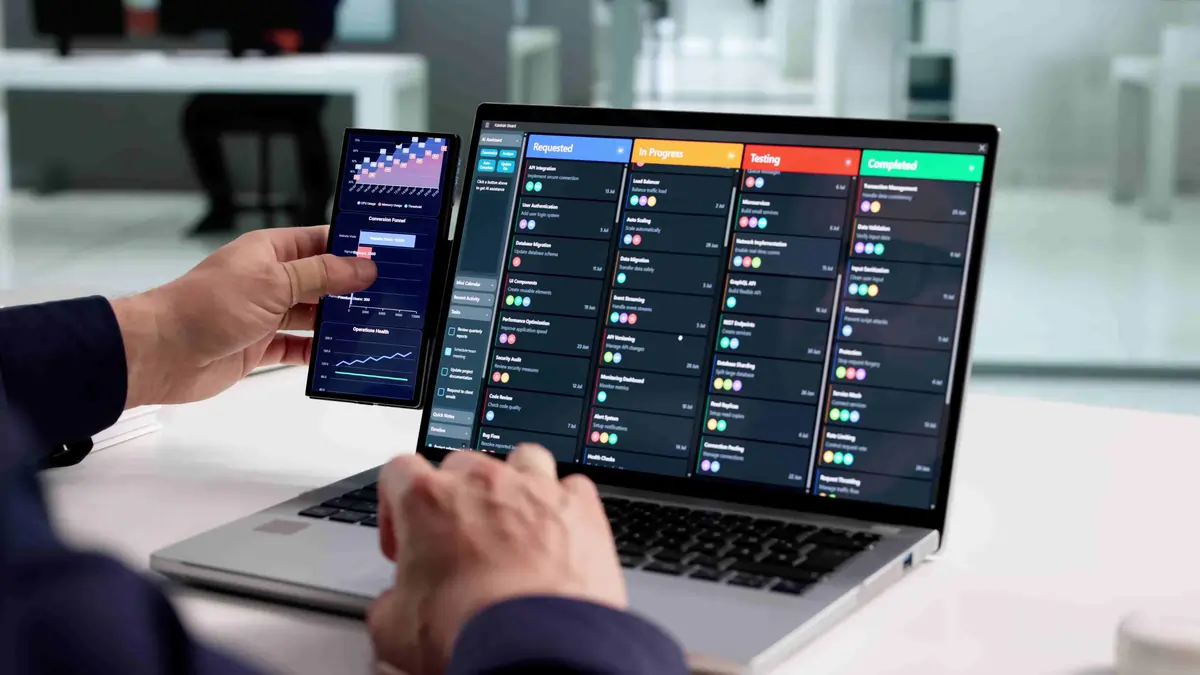
Multi-Site Coordination
Businesses operating multiple locations restaurant groups, healthcare providers with several facilities, catering companies—face coordination nightmares:
- Each site maintains separate records using different formats
- Central visibility of organisation-wide compliance is impossible
- Duplicated effort as each location tracks independently
- Inconsistent standards across sites
- Difficulty transferring staff between locations (records don’t follow them)
Manual systems simply can’t provide the centralised oversight multi-site operations require.

External vs. Internal Training Verification
When staff arrive with existing certifications from previous employers or external courses, HR must:
- Verify certification authenticity
- Confirm the training was accredited and meets requirements
- Determine remaining validity period
- Integrate external records with internal tracking systems
This verification process is time-consuming and often incomplete with manual systems.
Audit and Inspection Readiness
The Health Service Executive (HSE), HIQA, FSAI, and third-party auditors (BRC, FSSC 22000) all require rapid production of training records. Manual systems make this stressful:
- Scrambling to locate certificates spread across filing cabinets
- Photocopying dozens or hundreds of documents
- Compiling compliance reports manually
- Discovering gaps only during the audit itself
The pressure and risk are enormous, yet entirely preventable with proper systems.
How Acornstar’s Free Management Portal Solves These Challenges
Acornstar didn’t just want to train staff and leave businesses struggling with the administrative aftermath. We built a comprehensive management portal and provide it free to all our customers recognising that training is only valuable if businesses can effectively manage and maintain it.
Automated Expiry Tracking and Alerts
The portal automatically tracks certification expiry dates for every employee and sends email alerts at configurable intervals:
- 90 days before expiry (allowing time to schedule refresher training)
- 30 days before expiry (urgent reminder)
- On expiry date (critical alert)
HR managers receive dashboard notifications showing all upcoming expirations, allowing proactive scheduling of group refresher sessions rather than reactive individual training.
Real-world impact: No more expired certifications discovered during audits. No more manual spreadsheet reviews. No more relying on memory.

Centralised Digital Certificate Storage
Every certificate issued by Acornstar is automatically stored in the portal, accessible 24/7 from any device. Benefits include:
- Certificates can never be lost, damaged, or misfiled
- Instant access during audits no scrambling through filing cabinets
- Permanent records even after staff depart
- Version control automatically maintained (system shows current certification and historical records)
- Digital certificates can be emailed to auditors or regulators instantly
Real-world impact: Audit preparation time reduced from hours to minutes. Complete confidence that records are accessible and complete.
Multi-Site Visibility and Management
For businesses operating multiple locations, the portal provides:
- Single dashboard showing compliance status across all sites
- Filter and sort by location, role, certification level, or expiry date
- Compare compliance rates between sites
- Transfer records seamlessly when staff move between locations
- Centralised reporting whilst maintaining site-level access for local managers
Real-world impact: Operations directors can see organisation-wide compliance at a glance. Site managers access their team’s records without affecting other locations.
Role-Based Certification Requirements
The portal allows HR to define role-specific certification requirements (e.g., “Head Chef requires HACCP Level 3”) and automatically flags non-compliance:
- Visual indicators show when staff certification doesn’t match their role requirements
- Alerts when promotions create certification gaps
- Prevents under-certification being overlooked
- Supports workforce planning by showing which staff are qualified for promotion
Real-world impact: Eliminates the common problem of supervisors holding only Level 1 when Level 2 or 3 is required. Ensures consistent standards across roles.
Streamlined Onboarding Integration
New hire onboarding becomes dramatically simpler:
- Create employee profiles before they start
- Assign required training and track completion
- Upload external certifications if arriving with existing training
- Generate onboarding checklists showing training status
- Verify all food safety requirements are met before first shift
Real-world impact: HR confidence that no new staff begin work without required certifications. Reduced onboarding administration time.
One-Click Audit Reports
When inspections occur, the portal generates comprehensive compliance reports in seconds:
- Organisation-wide training status
- Certificates for specific departments or roles
- Individual staff training histories
- Compliance rates and gap analysis
- Downloadable PDFs or printable formats
Real-world impact: FSAI, HIQA, or HSE inspectors receive complete documentation instantly. Professional presentation demonstrates strong food safety culture.

Training History and Competency Tracking
The portal maintains complete training histories showing:
- All certifications held (current and historical)
- Refresher training completion dates
- Competency assessments and results
- Progression through certification levels
- Training hours and CPD credits
Real-world impact: Demonstrates continuous professional development. Supports performance reviews and career progression discussions.
Automated Refresher Scheduling
Rather than manually identifying who needs refresher training and scheduling individual sessions, the portal:
- Groups employees with similar expiry dates
- Suggests optimal dates for consolidated refresher sessions
- Sends invitations and tracks RSVPs
- Updates records automatically upon completion
Real-world impact: Refresher training becomes a scheduled, routine process instead of a crisis-driven scramble. Maximises efficiency through group sessions.
Real-World Impact: Time and Cost Savings
Let’s return to our example of a 40-employee food business and calculate the impact of the management portal:
Before portal (manual tracking): 42-78 hours annually on HACCP administration.
After portal implementation:
- Initial setup: 3-4 hours (one-time)
- Ongoing monitoring: 15 minutes monthly reviewing dashboard = 3 hours annually
- Refresher scheduling: 2 hours annually (significantly reduced through batching)
- Audit preparation: 30 minutes per audit = 1.5 hours annually
- Onboarding: 15 minutes per new hire = 3.75 hours annually
Total ongoing time: 10-11 hours annually a reduction of 75-85%.
Time savings: 32-67 hours annually = £800-£1,700 in HR salary costs (assuming £25/hour loaded cost).
For larger operations (100+ employees), savings easily reach 150+ hours annually = £3,750+ in salary costs and this doesn’t account for the value of avoided compliance failures, faster audits, or improved staff productivity.
Why Acornstar Provides This Portal Free
Many software-as-a-service (SaaS) training management platforms charge £500-£2,000+ annually for similar functionality. We could monetise our portal separately, but we choose not to for a simple reason:
We want our customers to succeed.
Providing excellent training that then becomes an administrative nightmare doesn’t serve our customers or advance food safety in Ireland. By offering the management portal free to all Acornstar training customers, we ensure:
- Our training investment delivers maximum value
- Customers can manage compliance efficiently regardless of organisation size
- The administrative barrier to maintaining current certifications is removed
- Irish food businesses can compete on operational excellence, not administrative capacity
It’s a core part of our value proposition: internationally accredited training + the tools to manage it effectively = complete solution, not just one component.
Integration with Acornstar’s Training Services
The portal integrates seamlessly with our full range of HACCP training:

All Certification Levels
Whether staff complete Level 1, 2, 3, or 4 training, certifications automatically populate the portal with correct expiry dates, accreditation details, and level specifications.
Multiple Delivery Formats
The portal supports all training formats we offer:
- On-site group training
- Online self-paced courses
- Blended learning programmes
- Refresher courses
Completion records update regardless of format.
Customised Training Programmes
For large organisations requiring bespoke training programmes, the portal accommodates custom certification types, assessment requirements, and competency frameworks.
External Certification Integration
If staff complete training with other accredited providers before joining your organisation, certificates can be manually uploaded to the portal, maintaining complete training histories in one location.

Supporting Over 3,000 Irish Businesses
With over 3,000 B2B customers across Ireland using our training and management portal, we’ve refined the system based on real-world feedback from diverse operations:
- Single-location cafés managing 5-10 staff
- Healthcare facilities with 100+ food service employees across multiple buildings
- Multi-site restaurant groups coordinating training across dozens of locations
- Food manufacturers with complex shift patterns and role structures
This breadth of experience means the portal serves small businesses and large enterprises equally well, adapting to different organisational needs without requiring expensive customisation.
Getting Started with the Management Portal
Accessing and using the portal is straightforward:
- Enrol Staff in Acornstar Training: When you book HACCP training for your team, portal access is automatically included at no additional cost.
- Receive Login Credentials: HR administrators receive secure login details once training is booked.
- Configure Organisation Settings: Set up your locations, departments, roles, and certification requirements (we provide setup guidance).
- Add Existing Staff Records (optional): If you have staff with existing Acornstar certifications or external accredited training, records can be imported.
- Begin Monitoring: The dashboard immediately shows your team’s training status, upcoming expirations, and compliance gaps.
- Automate Alerts: Configure when you want expiry reminders sent (we recommend 90, 30, and 0 days before expiry).
From initial login to full functionality typically takes 2-4 hours for most organisations a tiny investment for the ongoing time savings.
The Bottom Line
HACCP certification tracking doesn’t need to be an administrative nightmare consuming dozens or hundreds of hours annually. With the right digital infrastructure, it becomes a streamlined, largely automated process that protects compliance whilst freeing HR to focus on strategic priorities.
Acornstar’s free management portal provided at no additional cost to all our training customers transforms HACCP administration from a burden into a competitive advantage. Automated expiry tracking, centralised digital storage, one-click audit reports, and multi-site visibility deliver immediate, measurable time and cost savings whilst strengthening compliance.
The best part? You don’t pay extra for this capability. It’s included because we believe excellent training deserves excellent management tools.
Ready to eliminate HACCP certification tracking headaches? Visit www.acornstar.com to explore our internationally accredited HACCP training and discover how our free management portal can save your HR department dozens of hours annually whilst strengthening compliance. With over 3,000 Irish businesses already benefiting, join the organisations that have transformed training administration from a burden into a streamlined, automated process.
Stay Compliant. Stay Confident.
Navigating food safety regulations doesn’t have to be stressful. Acorn Star provides the training and expert guidance to keep your business fully compliant and inspection-ready.
Accredited Training Courses
- Food Safety & HACCP Level 1: Entry-level certification for new team members.
- HACCP Level 2: Mandatory certification for all food handlers.
- HACCP Level 3 Management: Advanced compliance for supervisors and senior staff.
- Level 1 & 2 Bundle: Full-team compliance in a single purchase.
- Allergen Awareness: Meet Natasha’s Law requirements. Free with selected courses.
- Fire Warden & Slips, Trips & Falls: Workplace safety essentials.
Professional Consultancy
Our Food Safety Consultancy Services provide on-site auditing, HACCP plan development, and EHO inspection preparation giving you the confidence to pass first time.
Manage It All for Free
Business accounts include free access to our Learning Management System, so you can assign courses, track staff progress, and download certificates all in one dashboard.
Contact our team to get started, or view all courses.
“But my head chef already has a food safety certificate why does he need more training?” This question comes up repeatedly when food business owners review their training obligations. The certificate on the staff room wall shows HACCP Level 1 or Level 2, the legal box appears ticked, and surely that’s enough?
Not quite. In fact, not even close.
Here’s the reality that catches many Irish food businesses off guard: the legal requirement isn’t simply to have trained staff it’s to ensure staff are “supervised and instructed and/or trained in food hygiene matters commensurate with their work activity.” That final phrase is crucial, and it’s where many businesses fall short without even realising it.
Your head chef, sous chef, kitchen supervisor, or anyone managing food safety in your operation isn’t performing the same role as a line cook or food handler. They’re not just cleaning surfaces, monitoring temperatures, and following procedures someone else created. They’re designing those procedures, troubleshooting when things go wrong, training others, making critical food safety decisions independently, and ultimately bearing responsibility when inspectors arrive.