
Allergen Awareness Training: 5 Critical Reasons for Irish Food Businesses
Why Allergen Awareness Training Ireland Is Legally Required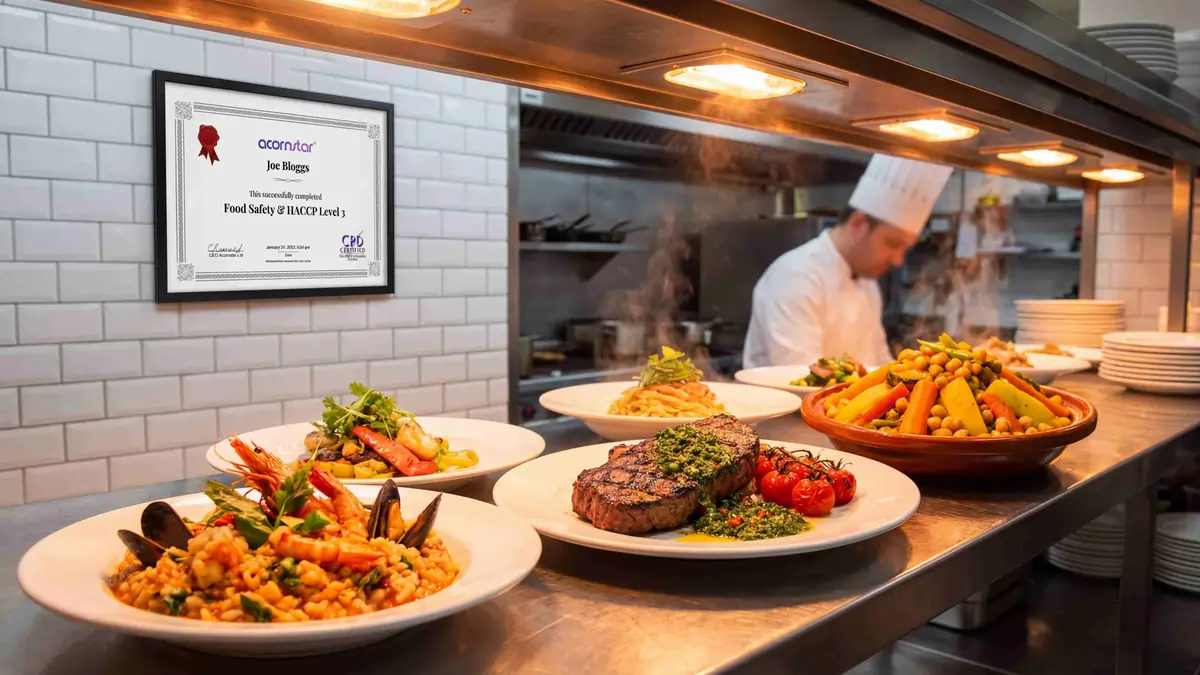
Why HACCP Certification Is No Longer Just About Compliance
Allergen awareness is no longer optional for Irish food businesses it’s a legal, ethical, and reputational essential. Under EU Regulation 1169/2011, every food business in Ireland must accurately identify, manage, and communicate the 14 major allergens in their dishes. For customers with severe allergies, a single mistake can be life-threatening. For your business, the consequences of poor allergen awareness range from criminal prosecution to permanent reputational damage. Investing in proper allergen awareness training is one of the most important steps you can take to protect your customers and your brand.
When most Irish food business operators think about HACCP certification, they see it purely as a regulatory requirement needed to satisfy Environmental Health Officers. While compliance is essential, this narrow view overlooks a major opportunity. Accredited HACCP certification is not just about meeting food safety standards it is a powerful marketing asset that builds consumer trust, strengthens brand reputation, and opens the door to new commercial opportunities in an increasingly competitive market.
Accredited HACCP certification is one of the most powerful marketing assets your food business can possess.
In an increasingly competitive market where consumers are more informed and discerning than ever, demonstrating verified food safety credentials can differentiate your business, open doors to new customers, and directly impact your bottom line. This article explores why accredited HACCP certification deserves a prominent place in your marketing strategy and how to leverage it effectively.
5 Critical Reasons Every Business Needs Allergen Awareness Training
Consumer awareness of food safety has undergone a dramatic shift in recent years. High-profile food scandals, increased media coverage of foodborne illness outbreaks, and the transparency enabled by social media have fundamentally changed how people evaluate food businesses.
According to the Food Safety Authority of Ireland (FSAI), consumer confidence in food safety directly influences buying behaviour, brand loyalty, and willingness to pay premium prices. The FSAI’s regular consumer surveys consistently show that food safety is now a primary purchasing consideration for Irish consumers often ranking above price and convenience.
This creates both a risk and an opportunity. Businesses without visible food safety credentials are increasingly viewed with suspicion or simply overlooked in favour of certified competitors. Conversely, businesses that can demonstrate verified, accredited food safety systems gain a significant competitive advantage.
The key word here is accredited. Whilst any business can claim to have good food safety practices, accredited certification provides independent, third-party verification that your systems meet recognised international standards.
What Makes Certification “Accredited”?
Not all HACCP training and certification is created equal. Understanding the difference between accredited and non-accredited programmes is crucial for both compliance and marketing purposes.

Accredited certification means the training provider has been independently assessed and approved by a recognised accreditation body. In the UK and Ireland, this typically means accreditation by organisations such as Highfield Qualifications, CIEH (Chartered Institute of Environmental Health), or RSPH (Royal Society for Public Health).
These accreditation bodies ensure that course content meets defined standards, assessments are rigorous, trainers are qualified, and certification is recognised across industries and jurisdictions. When you display an accredited HACCP certificate, you’re not just saying “we’ve done some training” you’re saying “our food safety competence has been independently verified to meet international standards.”
This distinction matters enormously when trying to win contracts, attract corporate clients, or build consumer trust.
Allergen awareness training covers all 14 major allergens that every food handler must understand.
The Commercial Benefits of Accredited HACCP Certification
1. Access to B2B Contracts and Tender Opportunities
Many corporate clients, public sector organisations, and larger food businesses require accredited HACCP certification as a minimum qualification for suppliers. Common scenarios include catering tenders for schools, hospitals, and corporate offices, where accredited HACCP certification is typically specified as mandatory in tender documentation.
Food manufacturers, retailers, and distributors maintain approved supplier lists that require verified food safety credentials. Large venues, conference centres, and event organisers increasingly mandate accredited certification for all food service providers.
According to Enterprise Ireland, Irish food businesses looking to export or supply to international markets find that accredited HACCP certification is often non-negotiable. Without it, your business simply won’t be considered for these opportunities regardless of how good your food or service might be.
For many Irish food businesses, B2B contracts represent the most stable and profitable revenue streams. Investing in accredited HACCP certification is often the price of entry to these markets.
Proper allergen awareness prevents life-threatening reactions and protects your business reputation.

2. Enhanced Brand Reputation and Consumer Trust
In the age of online reviews and social media, reputation is everything. A single food safety incident can destroy years of brand-building effort. Accredited HACCP certification provides reassurance to consumers that your business takes food safety seriously.
This is particularly valuable for new businesses trying to establish credibility, premium brands where customers expect higher standards, and businesses recovering from past incidents seeking to rebuild trust. Displaying certification logos on your website, menus, shopfront, and marketing materials sends a clear signal: “We don’t just claim to be safe we can prove it.”
Research published by the Health and Safety Authority (HSA) demonstrates that consumers are increasingly willing to pay premium prices for products and services from businesses that demonstrate verified safety credentials. This builds confidence, reduces customer anxiety, and strengthens brand perception.
3. Competitive Differentiation
In crowded markets like cafés, restaurants, delis, and catering, differentiation is challenging. Most businesses compete primarily on food quality, price, and servic but these are subjective and difficult to verify.
Food safety certification, by contrast, is objective and verifiable. When potential customers are choosing between similar businesses, accredited HACCP certification can be the deciding factor. Consider a parent choosing a caterer for their child’s birthday party, or a corporate events manager selecting suppliers for a conference. In both cases, the business with visible food safety credentials has a distinct advantage particularly when the customer is risk-averse.
4. Insurance Premium Reduction and Risk Management
Food businesses face significant liability risks related to foodborne illness, contamination incidents, and product recalls. Insurance providers assess these risks when setting premiums. Accredited HACCP certification demonstrates to insurers that your business has implemented systematic controls, maintains trained staff, and is committed to continuous improvement.
Many insurers offer reduced premiums for businesses with accredited HACCP certification, recognising that these businesses present lower risk. Over time, these savings can offset the cost of certification many times over.

How to Leverage Your HACCP Certification in Marketing
Simply having accredited certification isn’t enough you need to actively communicate it. Here’s how:
1. Display Certification Prominently
Make your food safety credentials visible across all customer touchpoints. Frame certificates in customer-facing areas like entrances, serving counters, or dining areas. Feature certification logos prominently on your website homepage, about page, and footer. Include certification in social media profile bios and create posts highlighting your commitment to food safety.
Add accreditation logos to menus, business cards, brochures, and promotional materials. Include a line in email signatures like “Proud to be HACCP Level 3 Certified.”
The goal is to make food safety credentials part of your brand identity, not hidden in a filing cabinet.
2. Tell the Story Behind Your Certification
Consumers and business buyers respond to narratives. Don’t just display a logo explain what it means. Use language like:
- “Our entire team holds internationally accredited HACCP certification, ensuring every dish meets the highest food safety standards”
- “We’ve invested in Level 4 HACCP training for our management team because your safety is our top priority”
- “Certified and trusted by corporate clients across Ireland”
Use your website, social media, and in-person conversations to communicate the effort and expertise behind your certification.
3. Leverage Certification in B2B Proposals
When responding to tenders or pitching to corporate clients, lead with your food safety credentials. Include certification details in executive summaries, provide copies of certificates and training records as appendices, and highlight the accreditation bodies that have verified your competence.
Explain how your HACCP system protects clients from liability and reputational risk. For risk-averse procurement managers, knowing that food safety is handled by certified professionals can be the difference between winning and losing a contract.
4. Celebrate Training Milestones
Each time staff complete refresher training or achieve higher-level certification, treat it as a marketing opportunity. Post about it on social media, update your website, and consider issuing press releases for significant milestones. These updates demonstrate ongoing commitment and keep food safety top-of-mind for customers.
How Acornstar Supports Your Marketing with Accredited Certification
At Acornstar Limited, we understand that HACCP certification is more than a compliance requirement it’s a commercial asset. That’s why all of our training programmes are internationally accredited and certified, giving your business credentials you can confidently promote.
Recognised Accreditation You Can Market
Our HACCP training is accredited by leading international bodies, ensuring your certifications are recognised and respected across Ireland and beyond. We offer accredited training from Level 1 through Level 4, allowing you to demonstrate progressive expertise across your organisation.
This tiered approach allows you to market both breadth (“100% of our team is HACCP trained”) and depth (“Our management holds Level 4 certification”).
Free Management Portals for Brand Enhancement
Our free management portals don’t just help with compliance they enhance your marketing capability. The portal allows you to generate professional reports showing team training status, demonstrate centralised food safety management to clients, provide instant verification of credentials during tender processes, and track training milestones across your organisation.
These tools help you present a professional, credible image to customers and partners.
Supporting Over 3,000 Irish Businesses
When you train with Acornstar, you join a network of over 3,000 B2B customers across Ireland who trust us for their food safety training and certification. This scale and reputation adds additional credibility to your own business when you reference your Acornstar certification.
Without allergen awareness training, even experienced staff can make costly cross-contamination mistakes.
Allergen awareness is a core requirement under FSAI guidance for Irish food businesses.
Common Mistakes to Avoid
Whilst certification is valuable, businesses sometimes undermine its marketing impact through avoidable mistakes. Never let certification lapse an expired certificate is worse than no certificate, as it signals negligence. Always ensure your training is genuinely accredited by recognised bodies before promoting it.
Make honest, accurate claims about what your certification represents. HACCP certification demonstrates food safety competence it doesn’t guarantee zero incidents. Update all marketing materials immediately when you achieve new certification levels, and ensure customer-facing staff can confidently explain what your credentials mean when customers ask.
The Bottom Line
Accredited HACCP certification is far more than a regulatory checkbox it’s a versatile marketing tool that opens doors to new customers, strengthens brand reputation, reduces costs, and differentiates your business in competitive markets.
The Irish food industry is becoming more professional, more regulated, and more transparent. Businesses that embrace accredited certification and actively promote their food safety credentials will thrive. Those that treat it as a hidden compliance cost will increasingly find themselves at a competitive disadvantage.
Ready to gain a marketing advantage through accredited HACCP certification? Visit www.acornstar.com to explore our internationally accredited HACCP training courses or book a consultation with one of our food safety experts. With over 3,000 Irish businesses trusting Acornstar for their certification needs, we’ll help you turn food safety compliance into competitive advantage.
Complete Food Safety Support: From Training to Consultancy
At Acorn Star, we don’t just provide courses; we partner with you to ensure your business meets the highest safety standards. Whether you need online certification for your team or hands-on expert advice, we have you covered.
Expert Consultancy Services
Sometimes you need more than just training. Our Food Safety Consultancy Services offer on-site auditing, HACCP plan development, and expert guidance to help you navigate complex regulations and pass EHO inspections with confidence.
Essential Online Training
Ensure your staff are certified with our industry-leading courses. (Note: Free Allergen Awareness training is currently included with eligible food safety courses).
- Food Safety HACCP Level 1: The perfect start for new staff.
- HACCP Level 2 Training: Mandatory for all food handlers.
- HACCP Level 3 Management: For supervisors and head chefs.
- Level 1 & 2 Bundle: Complete coverage from induction to handler level.
- Allergen Awareness: Vital training on the 14 major allergens.
Workplace Safety
Free LMS for Business Customers
Manage your compliance effortlessly. Our Free Learning Management System allows you to enroll staff, track progress, and access certificates in one smart, easy login. It delivers significant cost savings compared to other platforms and cuts down your admin time instantly.
Contact us to discuss consultancy or training bundles, or view all courses here.