
Operational Excellence The Blueprint for Professional Standards
What You Really Need to Know
Why Operational Excellence Matters More Than Ever
Operational excellence is no longer a competitive advantage it is the minimum standard expected of food, hospitality, healthcare, and education businesses in Ireland. With consumer confidence in food safety high, enforcement activity increasing, and the Food Hygiene Rating Scheme expected by 2027, businesses that rely on minimum compliance are being left behind. Achieving operational excellence requires more than certificates or paperwork; it demands a well-trained workforce supported by robust, professional safety systems that protect people, reputation, and performance.
Why Operational Excellence Matters More Than Ever
1. Consumer Expectations Are Rising
Research shows that Irish consumers have exceptionally high standards for food safety:
- 90% of people consider food in Ireland safe (FSAI, 2024)
- 9 in 10 consumers believe food safety has improved over the past five years
- Consumer trust is fragile: A single negative Google review, social media complaint, or enforcement order can damage your reputation overnight
In the age of TripAdvisor, Google Reviews, and viral social media posts, excellence is the baseline not the exception. Customers expect immaculate hygiene, allergen transparency, and professional service. Anything less risks not just losing one customer, but losing hundreds through negative word-of-mouth.
2. The Food Hygiene Rating Scheme is Coming
Between 2025 and 2027, the FSAI will evaluate the introduction of a mandatory Food Hygiene Rating Scheme similar to the UK’s Food Standards Agency model, where ratings (0–5) are displayed at business premises and online.
What this means for you:
- Your hygiene standards will be publicly visible to every potential customer
- A “3” rating could lose you business to competitors with “4” or “5” ratings
- EHOs will assess not just documentation, but culture, consistency, and operational practices

Businesses that invest in professional standards now will secure top ratings. Those that don’t will struggle to compete.
3. Enforcement Activity is Increasing
The FSAI served 133 enforcement orders in 2024 a 45% increase on 2023. Common reasons for closure and improvement orders included:
- Pest infestations and inadequate pest control
- Poor temperature control and monitoring
- Cross-contamination risks and inadequate allergen management
- Inadequate staff training and competency
- Falsified or missing records
Professional training and systems prevent these failures before they trigger enforcement action.
4. Fire Safety and Workplace Safety Are Non-Negotiable
Food businesses face fire risks from cooking equipment, grease build-up, and electrical systems. Under the Safety, Health and Welfare at Work Act 2005 and the Fire Services Act 1981 & 2003, employers must:
- Conduct fire risk assessments
- Appoint and train competent Fire Wardens
- Ensure staff are trained in evacuation procedures
- Provide fire safety equipment (extinguishers, blankets, alarms) and maintain it regularly
Similarly, slips, trips, and falls are the most common workplace accidents in hospitality, accounting for thousands of injuries annually. Wet floors, uneven surfaces, and cluttered walkways create liability risks and training is your first line of defence.
Operational excellence means protecting your team and your customers from all hazards, not just food safety.

The Acorn Star Approach: Training + Systems + Smarter Management
1. Training Your Team: Accredited Courses for Every Role
Our FSAI-aligned, CPD-accredited courses are designed to be practical, engaging, and flexible—allowing your staff to train at their own pace, on any device, 24/7.
Kitchen Essentials: Food Safety & HACCP
HACCP Level 1 – Induction Skills
- Who needs it: All new food handlers (kitchen staff, pantry staff, front-of-house staff handling food)
- Duration: 1.5–2 hours (online, self-paced)
- What it covers: Personal hygiene, basic food safety, cross-contamination prevention, allergen awareness, cleaning, and pest control
- Certification: Valid for 3 years (FSAI-aligned)
Why it matters: Level 1 training ensures that every team member understands the basics within their first month reducing errors, building confidence, and meeting legal obligations under Regulation (EC) No 852/2004.
HACCP Level 2 – Food Handling Skills
- Who needs it: Staff who handle, prepare, or serve food directly (chefs, cooks, food prep staff)
- Duration: 5–6 hours (online, self-paced)
- What it covers: Temperature control, cooking/cooling procedures, cross-contamination, allergen management, traceability, cleaning schedules, and HACCP principles
- Certification: Valid for 3 years (FSAI-aligned)

Why it matters: Level 2 is the legal requirement for food handlers in Ireland. It equips staff with the skills to apply food safety principles in real-world scenarios managing CCPs, monitoring temperatures, and preventing foodborne illness.
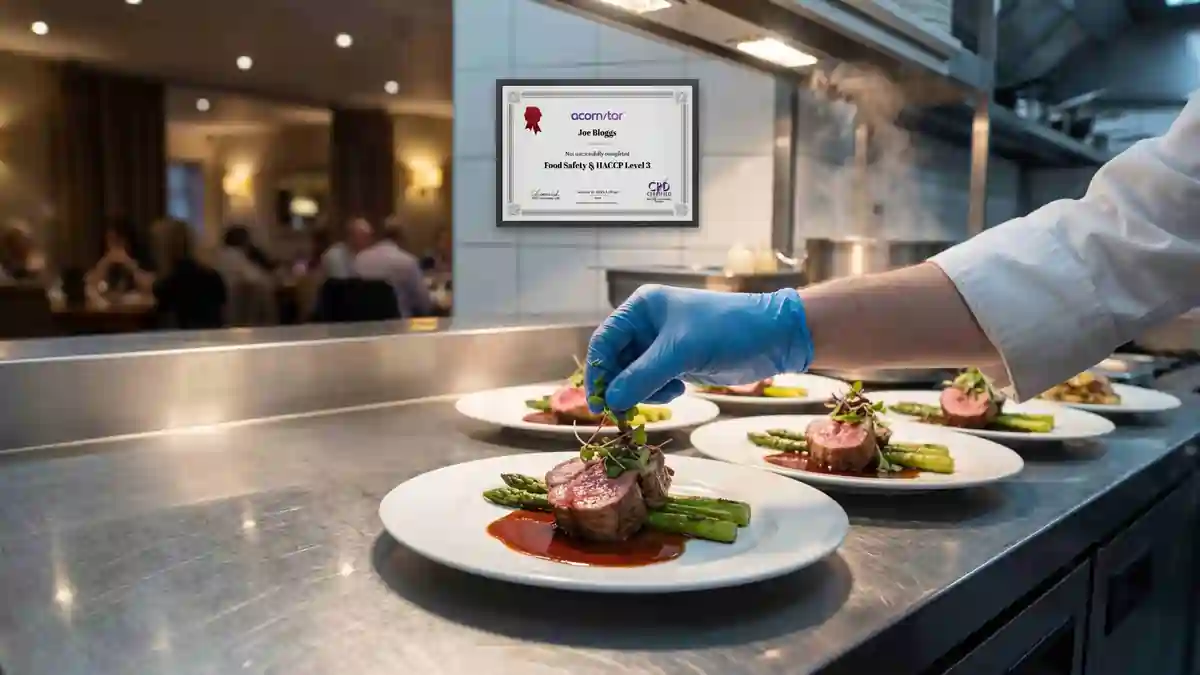
HACCP Level 3 – Management of Food Safety
- Who needs it: Head chefs, kitchen managers, supervisors, HACCP team members, business owners
- Duration: 15+ hours (online or blended learning)
- What it covers: Hazard analysis, CCP determination, critical limits, verification, documentation, HACCP plan development, staff training, incident management, and regulatory compliance
- Certification: Valid for 3 years (FSAI-aligned)
Why it matters: Regulation (EC) No 852/2004 requires that anyone responsible for developing or maintaining a HACCP system must have adequate training in HACCP principles. Level 3 provides that expertise, enabling managers to lead their teams with confidence and competence.
🎁 Special Offer: Free Allergen Awareness Training
For a limited time, Allergen Awareness training is included free with selected food safety courses. This 2–3 hour module covers:
- The 14 major allergens under EU Regulation 1169/2011
- Allergen matrices and menu labelling
- Cross-contact prevention (equipment, storage, preparation)
- Communication with customers and handling allergen requests
- Emergency response to allergic reactions
Why it matters: Allergen incidents can result in serious harm, legal action, and reputational damage. Professional allergen training protects vulnerable customers and demonstrates your commitment to safety.
Comprehensive Training Bundles: Total Peace of Mind
Level 1 & 2 + Allergen Bundle
- Who needs it: Small to medium food businesses looking to train their entire team in one go
- What it includes: HACCP Level 1 + Level 2 + Allergen Awareness (all online, self-paced)
- Benefit: Comprehensive coverage of all legal requirements at a discounted bundle price
Why it matters: Bundling ensures consistency across your team everyone receives the same high-quality training, using the same terminology and procedures. No gaps, no confusion, no compliance risks.

Site Safety: Beyond Food Hygiene
Operational excellence isn’t just about food safety it’s about protecting your team and your premises from all workplace hazards.
Fire Warden Training
- Who needs it: Designated Fire Wardens (legal requirement under Safety, Health and Welfare at Work Act 2005)
- Duration: 3–4 hours (online or in-house)
- What it covers: Fire risk assessment, fire prevention, evacuation procedures, use of fire extinguishers and blankets, roll call procedures, liaising with emergency services
- Certification: Valid for 1 year (annual refresher recommended)
Why it matters: Employers are legally required to appoint and train competent Fire Wardens. Training ensures they can respond calmly and effectively in an emergency, preventing injuries and minimising damage.

- Who needs it: All staff (especially front-of-house and cleaning staff)
- Duration: 1–2 hours (online, self-paced)
- What it covers: Common causes (wet floors, loose cables, uneven surfaces), risk assessment, preventive measures (signage, matting, footwear), reporting near-misses, legal obligations
- Certification: Valid for 2 years
Why it matters: Slips, trips, and falls account for 30–40% of workplace accidents in hospitality. Prevention training reduces injuries, reduces insurance claims, and protects your reputation.
2. Need Deeper Expertise? HSEQ Consultancy Services
Sometimes training alone isn’t enough you need expert, hands-on support to build and maintain robust safety systems.
What Our HSEQ Consultancy Services Include:
A. Risk Assessments
- Comprehensive hazard identification across all areas of your operation (kitchen, front-of-house, back-of-house, outdoor seating, storage areas)
- Risk evaluation using industry-standard matrices
- Control measures and action plans tailored to your premises
Why it matters: Risk assessments are a legal requirement under the Safety, Health and Welfare at Work Act 2005. Professional assessments identify hazards you might miss and provide defensible documentation for EHO inspections and insurance claims.
B. Safety Statements
- Bespoke safety statements covering all workplace hazards (food safety, fire, manual handling, slips/trips/falls, chemical hazards, etc.)
- Clearly defined responsibilities, procedures, and emergency protocols
- Compliance with Irish health and safety legislation
Why it matters: Every employer with three or more employees must have a written Safety Statement. Professional consultancy ensures yours is comprehensive, site-specific, and legally compliant not a generic template.

C. Full Compliance Auditing
- Pre-EHO audits to identify gaps and non-conformances before inspections
- HACCP system audits to verify that procedures are working as intended
- Fire safety audits (equipment, signage, evacuation routes, training records)
- Health and safety audits (PPE, cleaning schedules, accident reporting, training compliance)
Why it matters: Audits provide objective, expert oversight spotting issues that you, as someone who works in the business every day, might overlook due to habituation blindness. Regular audits ensure you’re inspection-ready at all times.
D. Incident Investigation and Corrective Action
- Root cause analysis following complaints, near-misses, or enforcement orders
- Corrective action plans to prevent recurrence
- Ongoing support to embed improvements
Why it matters: If something goes wrong, professional consultancy ensures you respond correctly demonstrating due diligence, protecting your business from further enforcement action, and rebuilding trust with customers and regulators.
3. Smarter Management for Free: Your Exclusive LMS Access
Here’s where Acorn Star goes beyond traditional training providers: Business customers get exclusive access to our Free Learning Management System (LMS).
What Is an LMS?
A Learning Management System is a digital platform that allows you to:
- Enrol staff in training courses with a few clicks
- Track progress in real-time see who’s completed training, who’s in progress, and who needs follow-up
- Download certificates instantly no waiting, no admin hassle
- Schedule refresher training automatically receive reminders when certificates are due to expire
- Centralise compliance records all training documentation in one secure, accessible location
- Generate reports for EHO inspections, insurance audits, or management reviews
Why Our Free LMS is a Game-Changer
Most training providers charge €300–€1,000+ annually for LMS access. We provide it free to business customers—delivering:
1. Cost Savings
- Save up to 70% compared to traditional classroom training (no venue hire, no trainer fees, no travel costs)
- Save €500–€1,000 per year compared to paid LMS platforms
- Fast ROI: The time saved on admin alone pays for itself within weeks
2. Time Savings
- Staff train at their own pace, on any device (laptop, tablet, smartphone), 24/7
- No need to coordinate schedules, book venues, or wait for groups to form
- Managers can enrol 10 staff in 5 minutes no paperwork, no phone calls
3. Consistency
- Everyone receives the same high-quality training, using the same content, language, and procedures
- No variation in delivery quality (unlike face-to-face training, where outcomes depend on the trainer’s skill)

4. Compliance Made Easy
- Download certificates instantly no waiting for postal delivery
- Automated reminders when refresher training is due
- Full audit trail for EHO inspections (who trained, when, on what topics, with what outcome)
5. Scalability
- Whether you have 5 staff or 500, the LMS handles it effortlessly
- Multi-site operations can manage training across all locations from a single dashboard
How to Get Started
- Sign up for an Acorn Star training course (Level 1, Level 2, Bundle, or any other course)
- Receive your free LMS login via email
- Enrol your team in seconds simply add their names and email addresses
- Track progress from your dashboard
- Download certificates as soon as training is completed
It’s that simple. And it’s free for all business customers.
Real-World Impact: How Professional Standards Deliver Results
Case Study 1: Dublin Restaurant Chain
Scenario: A five-site restaurant group struggled with inconsistent food safety practices. Staff turnover was high, and training records were patchy. One location received an Improvement Order for inadequate temperature control.
Solution:
- Enrolled all staff (60+ people) in the Level 1 & 2 + Allergen Bundle via the Acorn Star LMS
- Completed training within two weeks (staff trained during downtime, at their own pace)
- Engaged Acorn Star consultancy for a pre-EHO audit at all five locations
- Implemented corrective actions and updated HACCP plans
Outcome:
- All five sites passed subsequent EHO inspections with no non-conformances
- Training completion time reduced from 3 months to 2 weeks
- Management reports 80% reduction in time spent on training admin
- Staff feedback: “Clear, practical, easy to follow much better than the old classroom sessions.”
Case Study 2: Cork Nursing Home
Scenario: A 70-bed nursing home faced fire safety compliance gaps no designated Fire Wardens, no evacuation drills in the past year, incomplete fire risk assessment.
Solution:
- Enrolled six staff members in Fire Warden Training via the Acorn Star LMS
- Engaged Acorn Star consultancy for a full fire safety audit and updated risk assessment
- Conducted a mock evacuation drill with expert oversight
Outcome:
- Full compliance with Fire Services Act 1981 & 2003
- Staff confidence in emergency procedures increased dramatically
- HSE inspection passed with commendation for “well-trained, competent Fire Wardens“
- Insurance premiums reduced by 10% due to improved safety record

Why Acorn Star? What Sets Us Apart
1. Comprehensive Coverage
We’re not just a food safety training provider we offer end-to-end support for all aspects of workplace safety and compliance:
- Food safety (HACCP Levels 1, 2, 3, Allergen Awareness)
- Fire safety (Fire Warden, fire risk assessments)
- Workplace safety (Slips, Trips & Falls, Manual Handling)
- HSEQ consultancy (risk assessments, safety statements, audits)
One partner, total compliance.
2. Flexibility
Our online, self-paced courses fit around your schedule not the other way around. Staff can train during quiet periods, breaks, or at home. No waiting for classroom dates, no travel, no downtime.
3. Quality
All our courses are:
- FSAI-aligned (meeting Ireland’s food safety training standards)
- CPD-accredited (recognized by professional bodies)
- Engaging and practical (real-world scenarios, not dry theory)
5. Cost-Effectiveness
We don’t just hand you a certificate and disappear. Our team is available via phone, email, and online chat to answer questions, provide guidance, and troubleshoot issues.
The Professional Standards Checklist: Are You Ready?
✅ Food Safety:
- All staff trained to HACCP Level 1 or 2 (commensurate with duties)
- Managers/supervisors trained to HACCP Level 3
- Allergen awareness training completed by all food handlers
- Bespoke HACCP plan in place, reviewed quarterly
- Temperature logs, cleaning schedules, and traceability records up to date
✅ Fire Safety:
- Fire risk assessment completed and current
- Fire Wardens appointed and trained (refresher training annually)
- Evacuation procedures documented and rehearsed
- Fire safety equipment inspected and maintained
✅ Workplace Safety:
- Risk assessments completed for all hazards (slips/trips/falls, manual handling, chemicals)
- Safety Statement in place (if 3+ employees)
- PPE provided and staff trained in its use
- Accident reporting system in place
✅ Training Management:
- LMS in place to track training, certificates, and refresher dates
- Training records accessible for EHO inspections
- Refresher training scheduled automatically
If you can’t tick all these boxes, Acorn Star can help.
Take the Next Step: Elevate Your Standards Today
Operational excellence isn’t an aspiration it’s a business imperative. With consumer expectations rising, the Food Hygiene Rating Scheme on the horizon, and enforcement activity increasing, now is the time to invest in professional training and robust safety systems.
Get Started with Acorn Star:
Step 1: Enrol Your Team in Training
- Browse our full course catalogue at [AcornStar.ie]
- Choose individual courses or comprehensive bundles
- Receive instant LMS access upon sign-up
Step 2: Unlock Your Free LMS
- Enrol staff in seconds
- Track progress from your dashboard
- Download certificates instantly
Step 3: Book a Consultancy Session (Optional)
- Need a pre-EHO audit, risk assessment, or HACCP plan development?
- Contact our HSEQ consultancy team for a free, no-obligation consultation
🎁 Limited-Time Offer: Free Allergen Awareness Training included with selected food safety courses. Don’t miss out enrol today and protect your business, your team, and your reputation.
“But my head chef already has a food safety certificate why does he need more training?” This question comes up repeatedly when food business owners review their training obligations. The certificate on the staff room wall shows HACCP Level 1 or Level 2, the legal box appears ticked, and surely that’s enough?
Not quite. In fact, not even close.
Here’s the reality that catches many Irish food businesses off guard: the legal requirement isn’t simply to have trained staff it’s to ensure staff are “supervised and instructed and/or trained in food hygiene matters commensurate with their work activity.” That final phrase is crucial, and it’s where many businesses fall short without even realising it.
Your head chef, sous chef, kitchen supervisor, or anyone managing food safety in your operation isn’t performing the same role as a line cook or food handler. They’re not just cleaning surfaces, monitoring temperatures, and following procedures someone else created. They’re designing those procedures, troubleshooting when things go wrong, training others, making critical food safety decisions independently, and ultimately bearing responsibility when inspectors arrive.