
Food Handler Training Ireland, Legal Requirements Explained
What Food Handler Training Covers in Ireland
Legal Requirements for Food Handler Training in Ireland
Food handler training in Ireland is a legal requirement for anyone who prepares, handles, or serves food in a food business. Employers must ensure staff receive appropriate food safety training to comply with Irish food safety legislation and HACCP principles.
If you run a food business in Ireland, food handler training is not optional it is a legal requirement. But what exactly does the law require, who counts as a food handler, and what happens if your team isn’t properly trained? This guide cuts through the complexity and gives you a clear, practical understanding of food handler training obligations in Ireland.
What is a Food Handler?
Under Irish and EU food safety law, a food handler is any person who, as part of their job, directly handles food that is intended for consumption. This is a broad definition that encompasses roles across hospitality, retail, food manufacturing, healthcare catering, education catering, and any other setting where food is prepared or served commercially.
In practice, the following roles are all considered food handlers and require appropriate training: chefs and kitchen staff, food service and waiting staff who handle food, deli and food counter staff, bakery and butchery staff, food production line workers, school and hospital catering staff, and any other employee who touches or handles open food as part of their role.
What Does Irish Law Require for Food Handler Training?
The legal obligation for food handler training in Ireland stems from Regulation (EC) No 852/2004 on the hygiene of foodstuffs. Article 4 of this regulation requires food business operators to ensure that food handlers are ‘supervised and instructed and/or trained in food hygiene matters commensurate with their work activity’.
The Food Safety Authority of Ireland (FSAI) provides detailed guidance on what this means in practice through its Guide to Food Safety Training. This guide defines the knowledge and skills that food handlers should be able to demonstrate at Level 1 (within the first month of employment) and Level 2 (within 3–12 months of commencing employment). In practice, HACCP Level 2 training is the recognised qualification that meets the Level 2 standard.
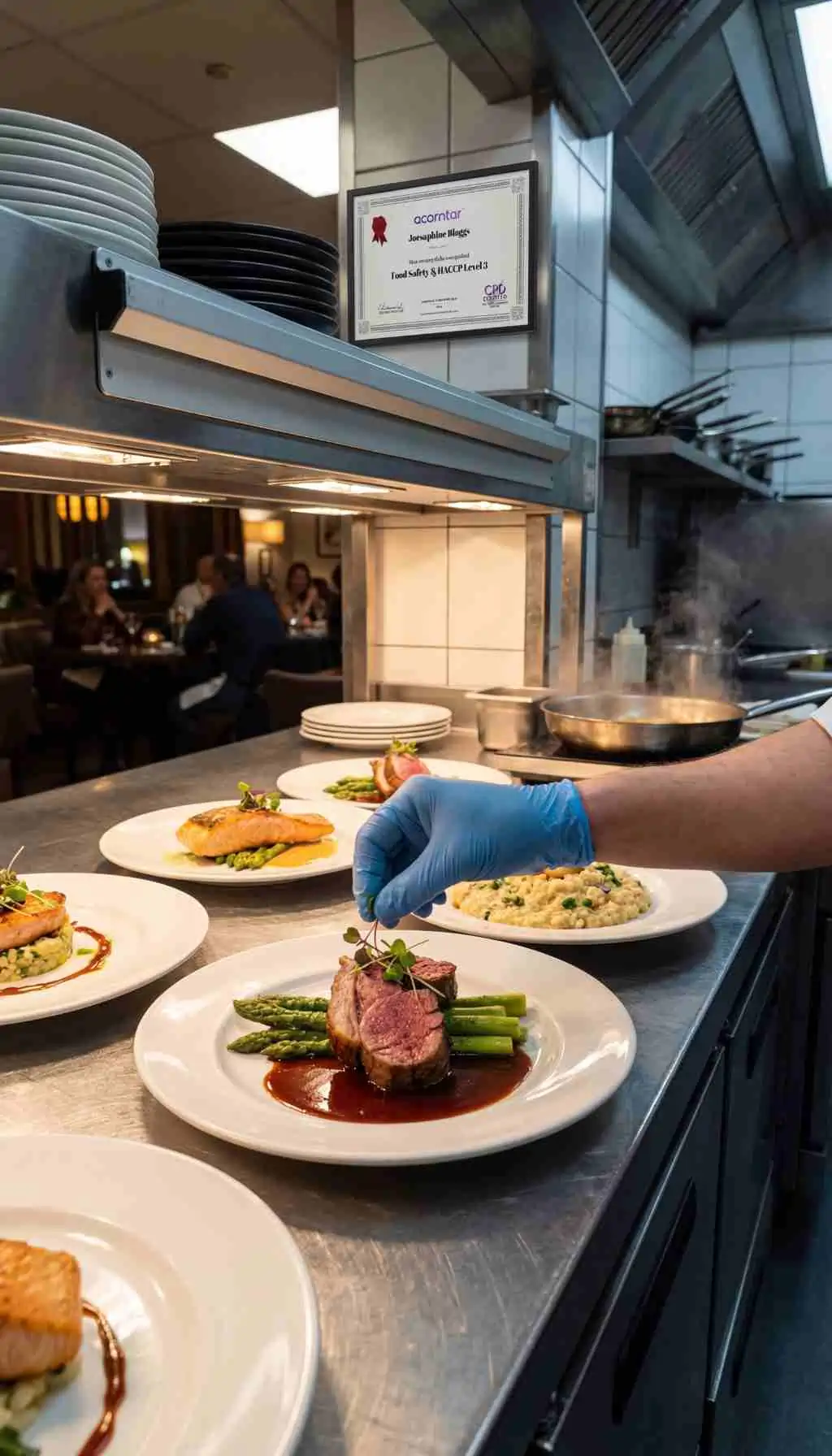
What Does Food Handler Training Cover?
A comprehensive food handler training course HACCP Level 2 covers all the practical knowledge and skills that food handlers in Ireland need to carry out their role safely and compliantly:
- The seven HACCP principles and how they apply to food handler responsibilities
- Identifying biological, chemical, and physical food safety hazards
- Safe temperature control: cooking, chilling, reheating, and storage
- Personal hygiene: handwashing, illness reporting, protective clothing, and behaviour in the food preparation environment
- Cross-contamination prevention: safe food handling, storage, and use of equipment
- Allergen awareness: the 14 major allergens, cross-contact risks, and customer communication
- Cleaning and disinfection practices
- Food safety record keeping and the food handler’s documentation responsibilities
The FSAI’s Food Safety Skills Guide
The FSAI’s Guide to Food Safety Skills is a valuable resource for food business operators. It sets out in detail the food safety competencies that staff should be able to demonstrate at Level 1 and Level 2, and can be used to assess whether your team’s training meets the expected standard. EHOs use this framework when assessing staff training during inspections.

Induction Training for New Food Handlers
One of the most common compliance failures identified during EHO inspections of Irish food businesses is new staff working with food before they have received appropriate training. Irish food law does not specify a formal grace period — the expectation is that food handlers are trained before they work with food unsupervised.
For new starters, our HACCP Level 1 course provides rapid induction-level training that can be completed within a couple of hours on day one. Our Level 1 & 2 Bundle then ensures they progress to full food handler certification as quickly as possible — all online, at their own pace.
Management and Supervisory Level
Those with supervisory or management responsibility for food safety head chefs, kitchen managers, catering managers, food safety officers should hold HACCP Level 3 Management in addition to Level 2. Level 3 provides the knowledge to develop, implement, and audit the HACCP system a management-level responsibility that goes well beyond the food handler standard.
Frequently Asked Questions
How long does food handler training take in Ireland?
Our online HACCP Level 2 food handler training typically takes between 3 and 5 hours to complete. It is fully self-paced, so staff can work through it at whatever speed suits them including across multiple sessions if needed. Certificates are issued immediately upon passing the assessment.
Does food handler training need to be renewed?
There is no fixed renewal period specified in Irish food law, but the FSAI recommends refreshing training regularly. Standard practice in the Irish food industry is to refresh food handler training every two to three years, or when there are significant changes to regulations, procedures, or a staff member’s role.
What is the difference between food handler training and HACCP training?
In the Irish food industry context, these terms are essentially synonymous. Food handler training in Ireland is based on HACCP principles as required by Regulation (EC) No 852/2004. A ‘food handler training course’ that does not incorporate HACCP methodology would not meet Irish legal requirements.
What if a food handler refuses to complete training?
As a food business operator, you have a legal obligation to ensure your food handlers are appropriately trained. If a staff member refuses to complete required training, this creates a compliance risk for your business. In most cases, food safety training is a contractual requirement of employment in a food handling role, and failure to complete it may be grounds for disciplinary action.
We have a small food business with just two or three staff. Do we still need food handler training?
Yes. The legal requirement applies to all food businesses in Ireland regardless of size. Whether you have two staff or two hundred, anyone handling food must be appropriately trained. The FSAI and EHOs apply the same standards across the board.
Ensure your food handlers are trained and compliant. Enrol in HACCP Level 2 today or contact us to discuss a training solution for your team.
Elevate Your Business Standards
Achieving operational excellence requires a two-pronged approach: a well-trained team and robust safety systems. We provide the tools you need for both.
Training Your Team
Our accredited courses let your staff train at their own pace. Take advantage of our limited-time offer — free Allergen Awareness training included with selected food safety modules.
- Kitchen Essentials: From Level 1 Induction to Level 2 Food Handling and Level 3 Management.
- Comprehensive Bundles: Get the Level 1 & 2 + Allergen Bundle for total peace of mind.
- Allergen Training: Allergen Awareness — vital knowledge on the 14 major allergens.
Need Deeper Expertise?
Our HSEQ Consultancy Services provide bespoke support including risk assessments, safety statements, and full compliance auditing — keeping your business bulletproof.
Smarter Management, for Free*
Business customers get exclusive access to our Free Learning Management System* (LMS). Manage all your compliance training in one place with a smart, easy login. Track enrolments, download certificates, and save time and money compared to other learning platforms.
Get in touch today for corporate rates, or browse our full course list.
*T&Cs apply
“But my head chef already has a food safety certificate why does he need more training?” This question comes up repeatedly when food business owners review their training obligations. The certificate on the staff room wall shows HACCP Level 1 or Level 2, the legal box appears ticked, and surely that’s enough?
Not quite. In fact, not even close.
Here’s the reality that catches many Irish food businesses off guard: the legal requirement isn’t simply to have trained staff it’s to ensure staff are “supervised and instructed and/or trained in food hygiene matters commensurate with their work activity.” That final phrase is crucial, and it’s where many businesses fall short without even realising it.
Your head chef, sous chef, kitchen supervisor, or anyone managing food safety in your operation isn’t performing the same role as a line cook or food handler. They’re not just cleaning surfaces, monitoring temperatures, and following procedures someone else created. They’re designing those procedures, troubleshooting when things go wrong, training others, making critical food safety decisions independently, and ultimately bearing responsibility when inspectors arrive.