
Bartender Allergen Safety: What Every Irish Bar Must Know
What You Really Need to Know
Food Allergens in Cocktails and Drinks
Bartender allergen training is often overlooked, yet bar allergen awareness is legally required under FSAI food safety law.
Picture this: It’s the third Saturday night of December. Your restaurant is hosting back-to-back Christmas parties. The kitchen is running like a military operation chefs in full food safety mode, allergen protocols being followed to the letter, your HACCP systems humming along perfectly.
Then it happens.
A guest at the bar orders an Espresso Martini. Your bartender shakes it up beautifully, garnishes it with three coffee beans, and slides it across. Five minutes later, that guest is struggling to breathe. Paramedics are called. Turns out they have a severe nut allergy, and your coffee liqueur contains hazelnut extract.
Your bartender had no idea. Nobody told them to check. After all, they’re “just” serving drinks, right?
Wrong. Legally, catastrophically wrong.
The Legal Reality Bartenders Are Food Handlers
Here’s what many hospitality business owners don’t realise: under Irish and EU food safety legislation, anyone who handles food or drink for consumption is classified as a food handler. That includes your bartenders, your bar backs, your cocktail waiters, and even the floor staff who carry drinks from bar to table.
According to the Food Safety Authority of Ireland (FSAI), the legal obligation to declare allergens applies to all food and drink, including alcoholic beverages. There’s no exemption because it’s “just a drink.”
The same legal obligations that apply when a chef fails to declare peanuts in a sauce apply when a bartender serves a cocktail containing undeclared allergens the same risk of compensation claims, enforcement action, and reputational damage.
But here’s the uncomfortable truth: while almost every food business trains their kitchen staff in allergen awareness, the bar team is frequently overlooked. They’re the forgotten food handlers and that oversight is a liability time bomb.
The Christmas Party Minefield
The festive season transforms this risk from theoretical to immediate. Christmas parties mean complex cocktails in high volumes, rushed service, inexperienced temporary staff, and customers who’ve already been drinking and may not clearly communicate allergies.
Let’s look at the allergen landmines hidden in your festive cocktail menu:
Egg White Cocktails
Whiskey Sours, Pisco Sours, Amaretto Sours, Clover Clubs – these Instagram-worthy drinks with their beautiful foam tops are everywhere on Christmas menus. They all contain egg white, one of the 14 major allergens.
A customer with egg allergy asks your bartender: “Does this drink contain egg?” If your bartender doesn’t know, or incorrectly says no, you’ve got a problem. Egg allergies can trigger severe anaphylaxis.
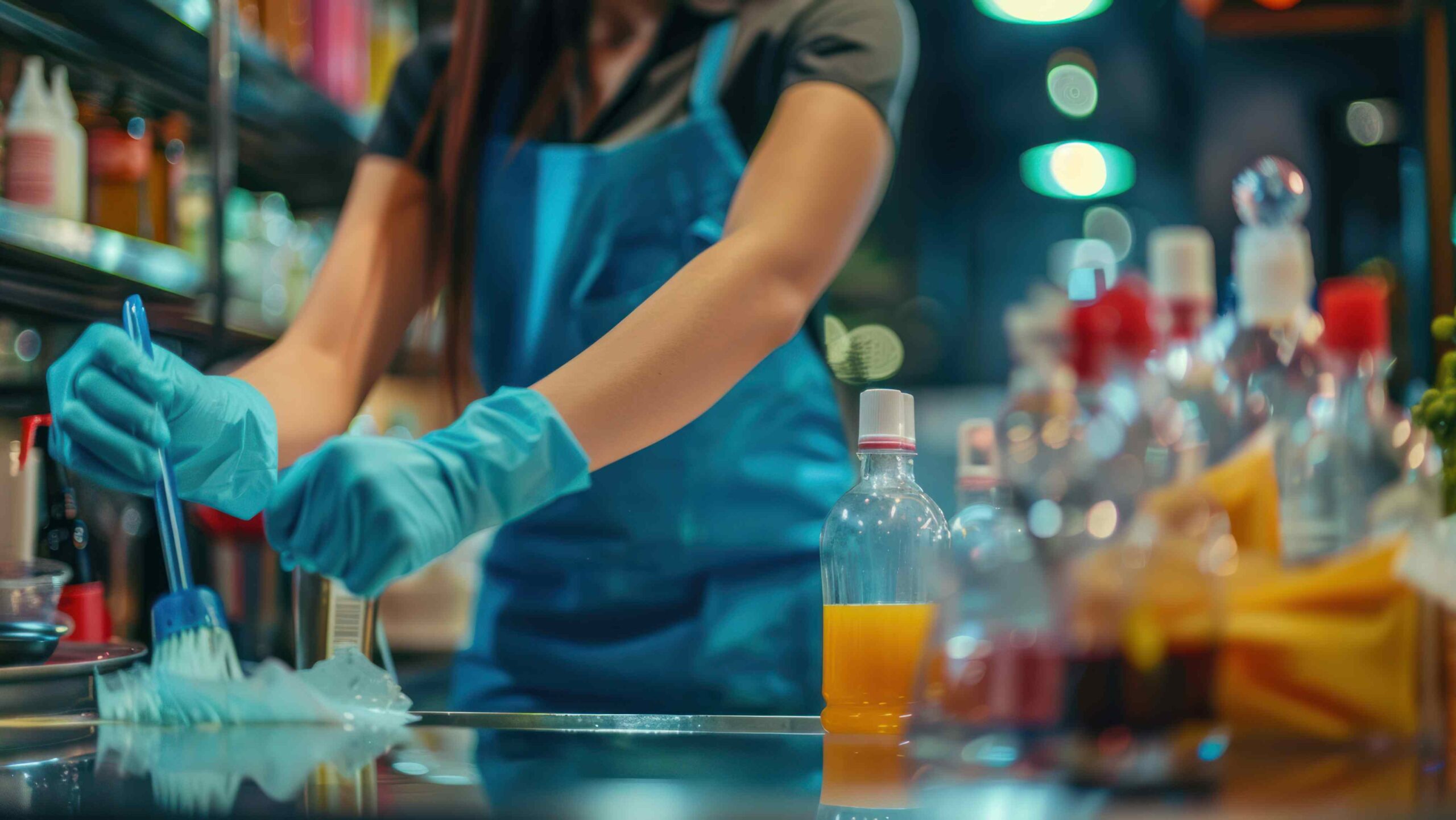
The cross-contamination factor: Once you’re making egg white cocktails, your bar equipment – shakers, strainers, jiggers, glassware – all potentially have egg residue. Is your bar team aware they need separate equipment or meticulous cleaning when serving someone with egg allergy?
Nut-Based Liqueurs and Syrups
Amaretto, Frangelico (hazelnut), orgeat syrup (almond), nocino (walnut) tree nuts are all over your back bar. Even coffee liqueurs can contain hazelnut. That innocent-looking bottle of vanilla syrup? Check the label some contain almond extract.
A bartender who hasn’t been trained doesn’t know to check these labels. They see “coffee liqueur” and think it’s just coffee and alcohol. They don’t realise it might trigger a severe allergic reaction.

Sulphites The Silent Allergen
Here’s the big one that even experienced bar managers often miss: sulphur dioxide and sulphites are one of the 14 major allergens.
According to FSAI guidance, sulphur dioxide and sulphites must be declared when present above 10 mg/kg or 10 mg/L — a threshold commonly reached in wine and some other alcoholic drinks.
According to FSAI guidance on wine and allergens, when sulphites are present at levels above 10mg/L (which they almost always are in wine), they must be declared.
This applies to bottled wine and beer, wine served by the glass, cocktails containing wine, and cider on tap. For asthmatic customers, sulphites can trigger serious respiratory reactions. For full guidance on allergen labelling for drinks and non-prepacked food, see the FSAI’s Allergen Information for Non-prepacked Food guidance.
Other Hidden Allergens
- Celery in Bloody Marys and Caesar cocktails (1 in 200 people allergic)
- Milk in cream liqueurs, Espresso Martinis, Irish Coffee, and whipped cream garnishes
- Gluten in beer and some spirits (critical for coeliac customers)
Without training, bartenders give inconsistent, often incorrect information. That’s both a customer service failure and a legal liability.
The “Just a Garnish” Fallacy
Many bartenders think garnishes don’t count. A walnut on the rim, a celery stick, a dusting of cinnamon. “It’s just decoration,” they think.
But garnishes are part of the drink. They touch the glass. Customers sometimes eat them. Oils and residues transfer from garnish to liquid. Legally, they absolutely count as ingredients that must be declared if they contain allergens.
A customer with severe nut allergy might ask about ingredients in the drink itself, not thinking to ask about the “decoration.” If a walnut garnish causes a reaction, your defence that “it was just a garnish” won’t help you in court.
Cross-Contamination in the Chaos
It’s 11 PM on a busy Saturday. Your runner drops a tray of eight cocktails. Now you’re remaking those drinks in a hurry. In the chaos:
- Are you using clean equipment or equipment contaminated with egg white?
- Is the bartender washing hands between drinks or rushing through?
- Are glasses being grabbed from areas where nutty liqueur was just spilled?
- Is anyone tracking what needs to be allergen-free?
This is when allergic reactions happen not during calm service, but during the chaos of peak festive trading when protocols break down and untrained staff make dangerous assumptions.

Why “Common Sense” Isn’t Enough
Many bar managers assume allergen awareness is “common sense.” But common sense doesn’t tell you:
- Which of the 14 allergens are legally required to be declared
- That celery and sulphites are major allergens
- That liqueurs and syrups contain hidden allergens
- How to prevent cross-contamination in a bar environment
- What to do if a customer has an allergic reaction
- That you’re legally liable as a food handler
Common sense also doesn’t provide documentation. When an Environmental Health Officer asks to see training records, “we assumed they knew” isn’t an acceptable answer.
The Irish Legal Framework: Strict Liability
Irish food safety law operates on strict liability principles. If someone suffers harm due to undeclared allergens, proving you “didn’t mean to” or “didn’t know” isn’t a defence.
Under EU Regulation 1169/2011, as implemented in Ireland, food businesses must provide accurate allergen information for all food and beverages.
If a bartender serves a drink containing undeclared allergens:
- The business is liable for any harm caused
- Criminal prosecution is possible for serious breaches
That last point is crucial. Many insurance policies require businesses to demonstrate adequate staff training. If your bartenders haven’t completed food safety training, your insurer might refuse to cover claims arising from their actions.
Real-World Consequences
Let’s talk about what an allergic reaction at your bar actually means:
Immediate Impact:
- Paramedics called during peak trading
- Service disrupted
- Customers witnessing the incident (social media amplification)
- Customer in severe distress, potentially life-threatening
Financial Consequences:
- Compensation and legal costs vary significantly depending on the severity of the reaction and the circumstances
- Insurance premiums may increase following a claim
- Lost business during investigations
- Reputation damage and customer loss
For a small independent bar or restaurant, a serious allergic reaction incident can be business-threatening.
Bartenders vs. Kitchen Staff Same Legal Obligations
Some bar owners argue their bartenders are different from kitchen staff. The law disagrees. Food safety legislation defines “food” to include beverages, including alcoholic beverages.
Consider the parallels:
|
Kitchen Staff |
Bar Staff |
|---|---|
|
Prepare food items |
Prepare drink items |
|
Mix ingredients |
Mix ingredients |
|
Handle allergens |
Handle allergens (including sulphites) |
|
Use shared equipment |
Use shared equipment |
|
Must declare allergens |
Must declare allergens |
|
Legally liable |
Legally liable |
The only difference is the medium solid vs. liquid. The legal obligations are identical.
The Solution Practical Training in Hours, Not Days
Training your bar staff doesn’t require week-long courses. What they need is targeted training covering:
- The 14 Major Allergens – What they are and where they appear in drinks
- Common Bar Allergens – Hidden allergens in liqueurs, syrups, and garnishes
- Cross-Contamination Prevention – Equipment, glassware, and cleaning protocols
- Customer Communication – How to respond to allergen questions
- Emergency Response – What to do if a reaction occurs
- Legal Responsibilities – Understanding their role as food handlers
This training takes less than an afternoon to complete online.
Beyond Bartenders Your Entire Front-of-House Team
It’s not just bartenders who need training:
Floor Staff/Servers – Carry drinks, answer allergen questions, handle spills Bar Backs – Prep garnishes, wash glassware, stock ingredients Supervisors – Make decisions when staff are unsure, handle complaints Temporary Christmas Staff – Often the weakest link during the busiest period
Every person who touches a drink between preparation and consumption is potentially liable. Every one needs training.
The Business Case Hours vs. Years
Training Investment:
- Time: 3-4 hours per employee
- Cost: Minimal compared to potential liability
- Benefit: Legal compliance, reduced risk, improved service
One Allergic Reaction Incident:
- Compensation and legal costs vary significantly by severity
- Insurance premiums may rise following a claim
- Reputation damage: Incalculable
- Management time: Hundreds of hours
Training three bartenders takes about 12 hours total. A single incident will consume hundreds of hours of management time dealing with legal processes, insurance claims, and reputation management – not to mention the financial costs.
Your Action Plan Start This Week
Immediate Actions:
- Audit your drinks menu – List every cocktail and identify all 14 allergens
- Check your bottles – Read labels, list allergens, create a reference guide
- Test your team – Ask about allergens in common drinks
- Review your insurance – Check training requirements
This Month:
- Train everyone – All bar staff, servers, floor staff, temps
- Create bar-specific procedures – Cross-contamination protocols, allergen queries
- Update drinks menu – Add allergen information or access instructions
- Hold briefing sessions – Make it part of your safety culture
Ongoing:
- Include in onboarding – Standard for all new hires
- Regular refreshers – Annual updates or when menu changes
- Incident reporting – Treat near-misses as learning opportunities
Don’t Be the Business That Learns the Hard Way
Every year, hospitality businesses face compensation claims and closure orders because they overlooked front-of-house allergen training. They assumed bartenders didn’t need it. They thought “it’s just drinks.” They believed common sense was enough.
They were wrong. And they paid the price.
Your bartenders are food handlers under Irish law. They’re handling allergens every time they make an egg white cocktail, pour a glass of wine, or garnish a drink with celery.
If they don’t know what they’re handling, if they can’t answer customer allergen questions, if they’re not trained to prevent cross-contamination – you’re exposing your business to serious legal liability.
The Christmas party season is nearly here. Your kitchen team is trained and ready. But what about your bar team?
Strengthen Your Food Safety Knowledge
Proper training is the foundation of effective allergen management. Acornstar provides comprehensive online certification designed specifically for Irish food businesses:
For All Food Handlers:
- Food Safety & HACCP Level 1 – Essential knowledge for everyone handling food and drinks
For Supervisors & Managers:
- HACCP Level 2 – Advanced food safety management
- HACCP Level 3 – Comprehensive HACCP implementation
Specialist Training:
- Manual Handling – Prevent workplace injuries
- Control of Chemicals – Safe chemical use
- Fire Safety Awareness – Fire prevention & response
All-in-One Package:
- Food Safety, HACCP & Allergen Bundle – Complete certification
Our free learning management system helps you track training, maintain records, and demonstrate compliance. View all courses →