
Office Kitchen Food Safety Employer Responsibilities in Ireland
What You Really Need to Know
Why Workplace Food Safety Applies to Office Kitchens
Office kitchen food safety is an employer duty in Ireland, and office fridge hygiene is one of the most common causes of staff illness in shared workplaces.
Scene: Corporate headquarters, Dublin. 500 employees across 8 floors. 20 vending machines (snacks, drinks, sandwiches). Facility Manager outsources restocking to VendCo Ltd.
Tuesday, 2 PM: Emma, marketing coordinator, buys a “Fruit & Nut Cereal Bar” from Floor 3 vending machine (coil D7).
Tuesday, 6 PM: Emma in hospital anaphylactic shock (severe nut allergy). She has an EpiPen, survives, but misses 3 weeks of work.
The investigation:
- Emma’s “Fruit & Nut” bar was nut-free (ingredients: oats, dried fruit, honey)
- But: Coil D7 sits directly above Coil D8 (Snickers bars—contains peanuts)
- D8 was overstocked (48 Snickers instead of max 40) → top row pressed against D7’s product
- Peanut dust/residue transferred from Snickers wrapper to Emma’s bar wrapper
- Cross-contact contamination
The liability cascade:
| Party | Claim | Outcome |
|---|---|---|
| Emma | Sue employer (medical costs + lost wages + distress) | ✅ Employer settles (provided unsafe facility) |
| Employer | Sue VendCo (“Your restocking caused contamination”) | ⚖️ Partial recovery (long legal battle) |
| VendCo | Sue Facility Manager (“You didn’t specify cross-contact protocols”) | ❌ Fails (restocking contract silent on allergen protocols) |
| Facility Manager | Disciplined internally | ⚠️ Reprimand (failed duty of care oversight) |
The trap: Facility Managers think “vending is the contractor’s problem.” But under Section 8, Safety, Health & Welfare at Work Act 2005 + EU Regulation 1169/2011, if you provide the facility (vending machines), you’re responsible for ensuring it’s allergen-safe even when outsourced.
The Legal Reality Vending Machines = Food Business
Who’s Liable?
FSAI Guidance: “Vending Machines”:
“Vending machine operators are considered a food business and must comply with Regulation 852/2004/EC on food hygiene.”
Translation: The moment you install a vending machine on-site (even if outsourced), you’re involved in a food business operation.
Liability hierarchy:
| Party | Legal Obligation | Liability |
|---|---|---|
| Vending Contractor (VendCo) | EU Reg 852/2004: Food safety management, allergen protocols | Primary (direct control of restocking) |
| Facility Manager / Building Owner | Section 8, Safety Act 2005: Provide safe workplace, oversee contractors | Secondary (duty to ensure contractor compliance) |
| Employer (if separate) | Section 8: Duty of care to employees | Joint (with FM if facility provided) |

Critical finding: Even if you outsource, you retain oversight duty. If the contractor fails, you share liability.
Sources:
FSAI – Vending Machines | Safety, Health & Welfare at Work Act 2005
The FSAI Allergen Exemption Loophole
Office fridge hygiene failures often include expired food, uncovered leftovers, shared milk cartons, and poor temperature control.
Improving office fridge hygiene reduces the risk of food poisoning, staff illness complaints, and employer liability.
The Confusing Rule
FSAI Guidance Note 28 (updated 2025):
“Declaration of food allergens is not required for the sale of foods in automatic vending machines.”
What this means:
- Prepacked foods IN vending machines don’t need separate allergen labels ON the machine
- Because: The individual product packaging already has allergen labels (per EU 1169/2011)
What it does NOT mean:
- Vending operators are exempt from preventing cross-contact
- Facility Managers can ignore allergen contamination risks
The trap: FMs read “no allergen declaration required” and assume “allergen safety isn’t our problem.”
Reality: You still must ensure the vending setup doesn’t cause cross-contact.
Source: FSAI GN 28 – Food Allergen Declaration for Non-Prepacked Foods

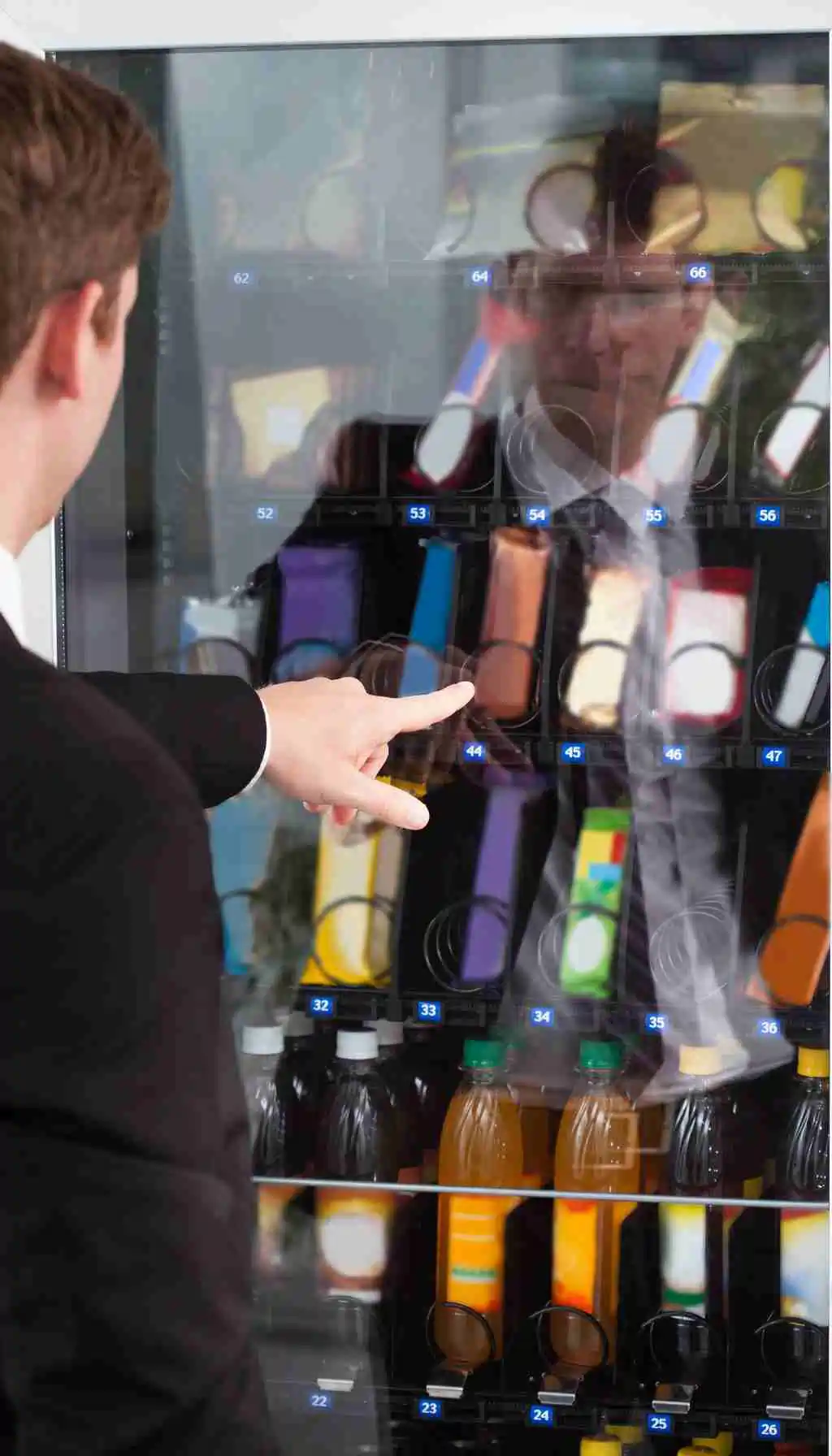
Three Hidden Hazards in Vending “Valley”
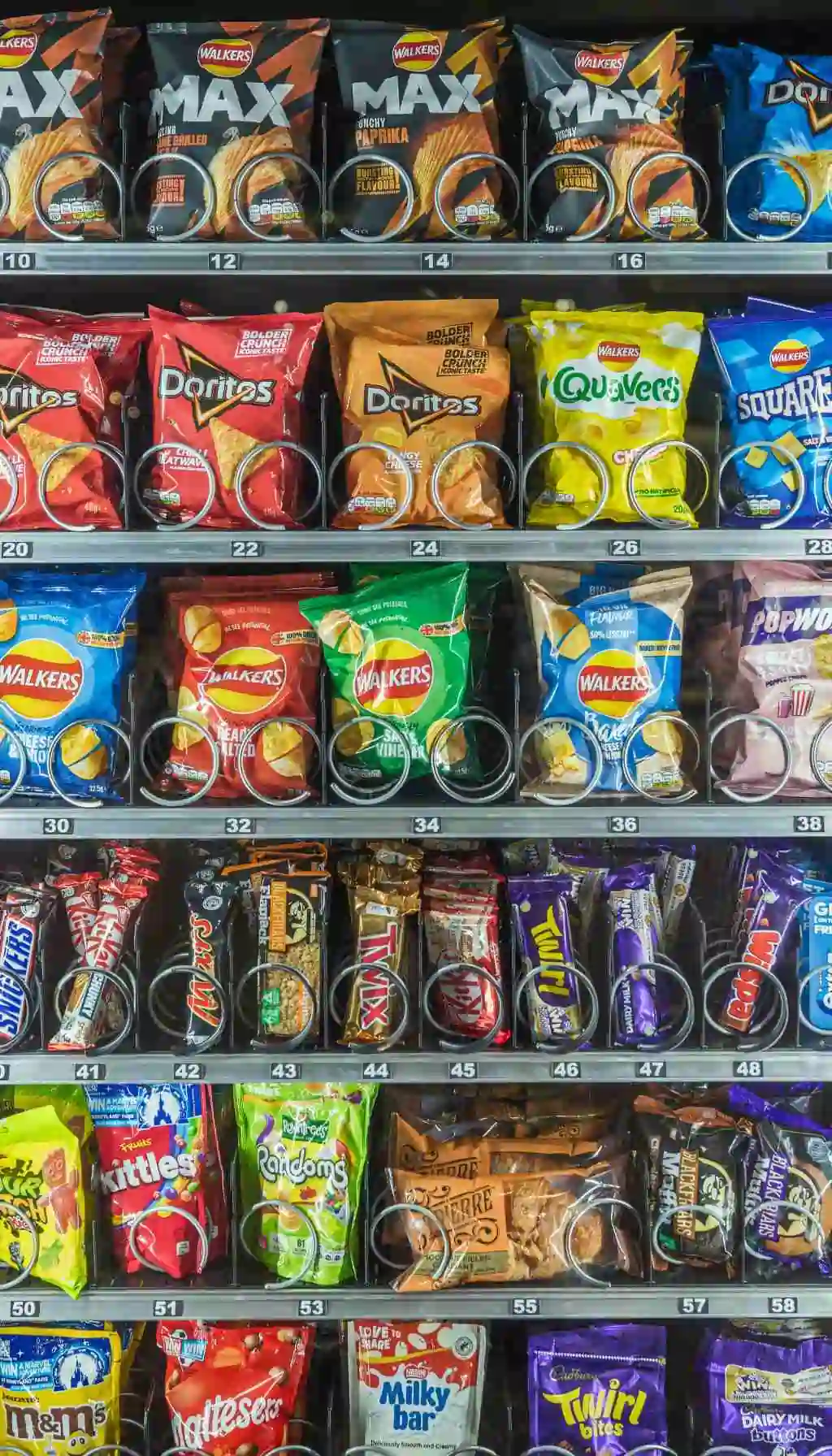
Hazard #1: Coil Proximity (The “Snickers Above Fruit Bar” Problem)
The setup:
- Vending machines have multiple coils (spiral dispensers)
- Products stacked vertically in each coil
- Coils sit side-by-side and above/below each other (e.g., D7 next to D8, D8 above E7)
The risk:
- D8 = Snickers (contains peanuts)
- D7 = “Nut-Free” granola bar
- Restocking staff overfill D8 (48 bars instead of 40) → top bars press against D7’s products
- Peanut dust/oil from Snickers wrappers transfers to D7 wrappers
- Customer with nut allergy buys D7 bar → cross-contact contamination
Real-world incident (UK 2023, applicable to Ireland):
A university vending machine had “May Contain Nuts” warnings on 8 products. Investigation found 12 out of 30 products had nut residue due to coil proximity not listed on packaging.
Hazard #2: Restocking Cross-Contamination
The problem:
- Restocking staff handle multiple products in one visit:
- Restock Coil A (Peanut M&Ms)
- Move to Coil B (Dairy-free chocolate)
- Move to Coil C (Gluten-free crisps)
- No handwashing between coils
- No glove changes
- Allergen residue on gloves transfers to “allergen-free” products
The science:
- Peanut protein (Ara h 1) survives on surfaces for 180 days (Journal of Allergy and Clinical Immunology, 2019)
- Dry hands transfer 0.5–2 mg protein per touch (enough to trigger severe reaction)
Typical scenario:
- Staff touches peanut butter cookie wrapper
- Touches dairy-free bar wrapper 30 seconds later
- Customer with dairy allergy buys “dairy-free” bar
- Peanut protein present (not dairy, but still dangerous if dual allergy)
Hazard #3: Machine Hygiene (Mold, Expired Products)
The problem:
- Vending machines rarely deep-cleaned (quarterly at best, often longer)
- Spilled crumbs accumulate in coils (chocolate, nuts, grains)
- Mold grows in warm, humid machines (especially sandwich/fresh food units)
- Expired products sit for weeks (staff don’t systematically check dates)
The risks:
- Mold spores cross-contaminate fresh products
- Expired sandwiches (listeria risk) sit next to fresh items
- Allergen residue buildup in coils (can’t be removed by restocking staff alone)
FSAI requirement (Reg 852/2004, Chapter III):
“Vending machines must be sited, designed, and constructed to avoid contamination risk.” + “Machines must be cleaned regularly.”
Reality: Most contracts specify “restock as needed” no cleaning protocol.

The Contractor Blind Spot When FM Contracts Fail
Typical Vending Contract Language
What contracts say:
- “Contractor will restock vending machines weekly.”
- “Contractor responsible for product quality.”
- “Contractor indemnifies client against food safety claims.”
What contracts DON’T say:
- ✖️ Allergen cross-contact protocols (coil spacing, handling procedures)
- ✖️ Staff training requirements (HACCP Level 1, allergen awareness)
- ✖️ Cleaning frequency (coil interiors, not just external wipe-down)
- ✖️ Incident reporting (if customer reports reaction, who investigates?)
The legal trap:
“Indemnification” clauses don’t protect you from employee lawsuits. If your employee sues (Emma’s case), you settle first, then try to recover from contractor (expensive, time-consuming, partial recovery at best).

Case Study UK University (Applicable to Ireland)
Background: 8,000-student university, 45 vending machines across campus. Outsourced to VendCo.
March 2023: Student with severe nut allergy buys “Nut-Free Granola Bar” (Coil F12). Within minutes, anaphylaxis (hospitalized 2 days).
Investigation:
- Coil F12 sat directly adjacent to Coil F13 (Peanut Butter Cookies)
- F13 overstocked by 12 units → products leaning against F12 divider
- Peanut residue found on 3 out of 8 “Nut-Free” bars in F12
Liability:
- University settled with student
- University sued VendCo for partial recovery
- Net result: Significant financial loss + legal fees + reputational damage
Post-incident changes:
- Contract rewrite: Added “allergen cross-contact protocol” (coils with nuts must have 2-coil buffer from “nut-free” coils)
- VendCo staff training: HACCP Level 1 + allergen awareness (mandatory for all restockers)
- Quarterly audits: University FM checks coil spacing, expiry dates
Lesson: Prevention measures would have avoided the entire incident.
The Solution: 4-Part FM Vending Protocol
Protocol #1: Allergen-Safe Coil Layout
The rule: “Buffer zones” between allergen-heavy and allergen-free products.
Example layout (snack machine, 6 columns × 10 rows):
|
Column |
Products |
Buffer |
|---|---|---|
|
A |
Peanut M&Ms, Snickers, Reese’s (nut products) |
— |
|
B |
BUFFER (non-allergen: plain crisps, pretzels) |
✅ |
|
C |
Dairy-free chocolate, vegan bars |
— |
|
D |
BUFFER (water bottles, non-food items) |
✅ |
|
E |
Gluten-free crisps, GF cookies |
— |
|
F |
Standard chocolate bars (dairy, no nuts) |
— |
Why it works:
- Physical separation prevents direct contact between allergen products
- Buffer products (non-allergen or non-food) act as protective barrier
- Simple to implement during regular restocking
Protocol #2: Restocking Hygiene Checklist
What VendCo staff must do:
✅ Step 1: Wear clean disposable gloves (change between allergen categories)
- After handling nuts → new gloves before handling dairy-free
- After handling dairy → new gloves before handling vegan
✅ Step 2: Check expiry dates (remove products within 7 days of expiry)
✅ Step 3: Avoid overstocking (max capacity per coil = typically 40 units)
✅ Step 4: Wipe coil dividers with allergen-safe cleaner (quarterly deep-clean by specialist)
✅ Step 5: Log restock date + products loaded (for traceability if incident occurs)
Enforcement: Include checklist in FM-VendCo contract with clear consequences for non-compliance.

Protocol #3: Quarterly Allergen Audit (FM Responsibility)
-
What Facility Manager checks (quarterly inspection):
✅ Coil spacing: Are nut products adjacent to nut-free? (Flag for buffer zone) ✅ Expiry dates: Spot-check 5 random products (remove if <7 days remaining) ✅ Machine hygiene: Visible mold, crumbs, or residue? (Schedule deep-clean) ✅ Contractor logs: Did VendCo document recent restocks? (Verify glove protocol followed)
Documentation: FM completes “Vending Safety Audit” form (meets Section 8 oversight duty, provides evidence for FSAI inspections).
Protocol #3: Quarterly Allergen Audit (FM Responsibility)
-
What VendCo staff must complete:
- HACCP Level 1 (online, certificate valid 2 years)
- Covers: Cross-contamination, temperature control, personal hygiene
- Specifically addresses handling multiple allergen categories
- Allergen Awareness Module (online, certificate included)
- Covers: 14 major allergens, cross-contact vs. cross-contamination, glove protocol
- Visual scenarios: “You just restocked Snickers. Can you touch the vegan bars next?” (Answer: No change gloves first)
Why Acornstar:
- Standardized training = all contractors meet same safety baseline
- Certificate verification = FM can audit compliance easily
- Bespoke modules = customizable for vending-specific risks
Acornstar Angle: “Standardize your contractor training. Use our platform to ensure every external vendor on your site has passed your specific safety standards.”

Acornstar Contractor Compliance Platform
How It Works:
Step 1: FM sets safety standards
- Select required courses: HACCP Level 1 + Allergen Awareness
- Add bespoke modules (e.g., “Vending Machine Cross-Contact Protocol”)
Step 2: Contractor enrolls staff
- VendCo receives email: “Your staff must complete these courses to access [Site Name].”
- Staff complete training online at their own pace
- Certificates issued automatically
Step 3: FM verifies compliance
- Dashboard shows: “3/3 VendCo staff certified ✅”
- Audit trail: Who completed, when, expiry dates (2-year refresh)
- Downloadable reports for FSAI/HSA inspections
Step 4: Enforce on-site
- Staff without current certification cannot restock (site access policy)
- Regular compliance checks ensure ongoing adherence
Action Plan: 6 Weeks to Vending Safety
| Week | Task | Outcome |
|---|---|---|
| 1 | Audit all vending machines: Document coil layouts, check expiry dates, count machines | Baseline data (identify high-risk coil configurations) |
| 2 | Hire FM consultant: Review VendCo contract for allergen compliance gaps | Gap analysis report with specific recommendations |
| 3 | Rewrite contract: Add allergen protocols, training requirements, quarterly audits | Updated contract (legally enforceable safety standards) |
| 4 | Enroll VendCo staff in Acornstar HACCP L1 + Allergen Awareness | Certificates issued, compliance documented |
| 5 | Implement coil layout changes: Restock with buffer zones between allergen categories | Allergen-safe physical setup |
| 6 | Conduct first FM quarterly audit: Check compliance, document findings | Audit report for FSAI/HSA, establish baseline |
Result:
- Zero allergen cross-contact incidents (buffer zones + training)
- FSAI-compliant (contractor training documented, audits logged)
- Protected liability position (demonstrate due diligence)
- Staff confidence (employees trust vending machine safety)
Essential Training & Certification for Your Team
Ensure your business stays fully compliant and your staff remain safe with our comprehensive range of accredited online courses. We are currently including free Allergen Awareness training with our eligible food safety courses—a limited-time offer designed to add extra value to your team’s development.
Food Safety & HACCP
- Food Safety HACCP Level 1: The ideal introduction for low-risk food handlers, covering hygiene basics and safe food practices.
- HACCP Level 2 Training: Mandatory for anyone preparing or handling open food. Covers hazard analysis, critical control points, and full legal compliance.
- HACCP Level 3 Training: Advanced training for managers, supervisors, and head chefs responsible for implementing and maintaining the HACCP system.
- Level 1 & 2 + Allergen Awareness Bundle: A complete certification package ensuring staff are trained from basic hygiene right through to hazard control.
- Allergen Awareness: A dedicated course on the 14 major allergens, preventing cross-contamination, and understanding legal labelling requirements.
Workplace Health & Safety
- Fire Warden Online Training: Equips designated fire wardens with the skills to lead evacuations, identify fire hazards, and manage emergency procedures.
- Slips, Trips & Falls: Practical training to help staff identify hazards and prevent the most common cause of workplace injury.
Need a Bundle? We offer special bundle prices for bulk purchases. If you are training a team, contact us for more details on our corporate packages.