
Managing the 4-Hour Rule in a Busy Hotel Breakfast Buffet
What You Really Need to Know
Breakfast Buffet Food Safety and the 4 Hour Rule
Breakfast buffet food safety is a critical part of hotel operations and is frequently reviewed during an FSAI food safety inspection. Hotels must demonstrate strong hotel food safety compliance, particularly when applying the 4 hour rule food safety guidance at self-service breakfast buffets.
Scene: A 120-room hotel in Killarney. Breakfast service, 7:00 AM.
The scrambled eggs go out at 7:15 AM. By 8:30 AM, they’ve dropped to 58°C. By 9:45 AM, they’re at 51°C. At 10:30 AM, service ends 3 hours and 15 minutes in the danger zone.
Who checked the temperature? No one.
Who logged it? No one.
What’s the risk? Staphylococcus aureus, Clostridium perfringens, and a potential FSAI Closure Order that costs your hotel €15,000–€50,000 in lost revenue during peak season.
The “4-Hour Rule” (or more accurately, the 2-Hour Rule under FSAI guidelines) is the most violated, most misunderstood, and most dangerous regulation in Irish hospitality. And breakfast buffets where hot food sits under heat lamps for hours are Ground Zero.
Why Breakfast Buffets Are a Food Safety Minefield
1. The Biology Bacteria Love Breakfast
The FSAI Temperature Danger Zone is 5°C to 63°C. Within this range, bacteria double every 20–30 minutes.
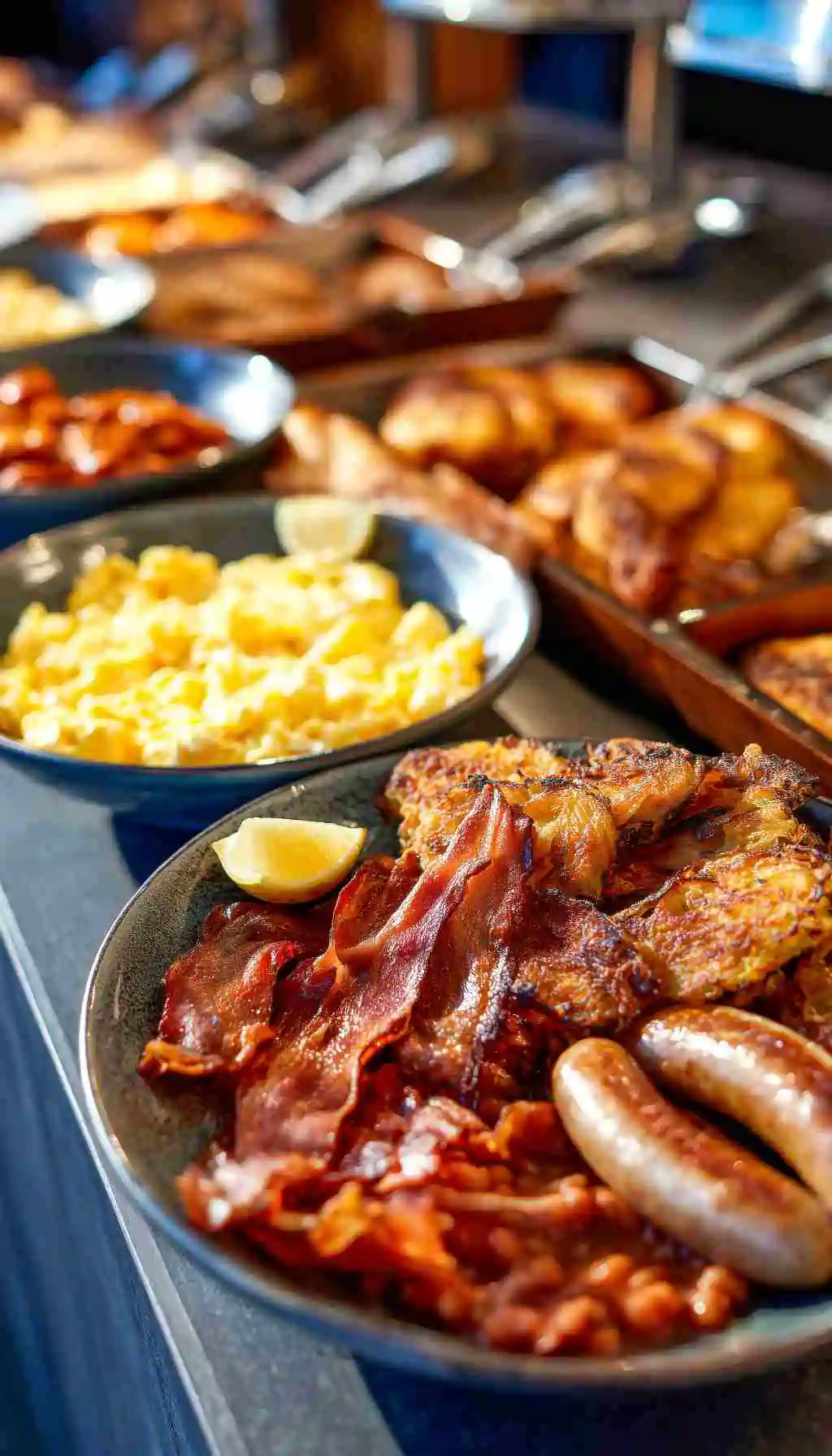
Scrambled eggs, sausages, bacon, and beans are all high-protein, moist foods perfect bacterial breeding grounds. If these foods drop below 63°C and stay there for more than 2 hours, they become microbiologically unsafe.
Key Pathogens in Breakfast Foods:
- Eggs: Salmonella (grows rapidly at 7°C–46°C)
- Cooked meats (sausages, bacon): Clostridium perfringens (forms heat-resistant spores)
- Rice/porridge: Bacillus cereus (thrives in starchy, warm foods)
Source: FSAI Temperature Control Guidance
2. The Regulatory Reality The “2-Hour Rule” (Not 4 Hours)
Here’s the critical misconception: Many hoteliers believe hot food can sit out for 4 hours as long as it’s “kept warm.”
The Law: According to FSAI guidance and EU Regulation 852/2004, hot food must be kept above 63°C at all times. If you cannot maintain 63°C, hot food can only be held for a maximum of 2 hours before it must be discarded.
Translation: If your scrambled eggs drop below 63°C at 8:00 AM, they must be thrown out by 10:00 AM not served until 10:30 AM.
Why the Confusion?
- Some staff confuse the 2-hour rule with the “4-hour cumulative rule” (used in some jurisdictions for foods that pass in/out of temp control multiple times).
- In Ireland, FSAI applies the stricter 2-hour limit for food held outside temperature control.
3. The Enforcement Data FSAI Is Watching Hotels
FSAI Enforcement Orders in 2024–2025 show a recurring pattern:
|
Violation Type |
Frequency in Hotel/Catering Orders |
|---|---|
|
Failure to maintain correct temperatures |
38% of all orders |
|
Poor cleaning and pest control |
29% |
|
Unsafe food storage |
21% |
|
Inadequate HACCP documentation |
12% |
Source: FSAI Enforcement Orders (2024–2025)
Translation: Temperature abuse especially at breakfast buffets is the #1 reason hotels get shut down.


Risk #2: The Night Porter Gap
The Scenario: Your night porter preps breakfast items (pre-cooking bacon, boiling eggs, portioning sausages) between 5:00 AM and 6:30 AM. But they’ve never been trained on:
- Safe cooling procedures (cooked food must drop from 63°C to 8°C within 90 minutes)
- How long prepped items can sit at room temp before reheating
- Cross-contamination risks (raw eggs touching cooked bacon on the same prep table)
Why It Matters: Night porters are often the least trained staff in the hotel, yet they handle the most critical food safety steps. If they cool food incorrectly, it doesn’t matter how well the breakfast team reheats it the damage is already done.
Risk #2: The Night Porter Gap
Here’s the trap: A guest complains the scrambled eggs are “too dry” or the sausages are “overcooked.”
Hotel response: Lower the heat lamp temperature or cook items less thoroughly to keep them “moist.”
Result: Food drops into the danger zone faster, and undercooked sausages may harbor Salmonella or Campylobacter.
The Fix: Train your team to explain that food safety > texture preference. Offer fresh-cooked-to-order eggs as a premium option (€3 surcharge) to satisfy fussy guests without compromising the buffet.
The Financial Reality What Temperature Abuse Costs
Scenario: A 100-Room Hotel, 70% Occupancy
|
Metric |
Calculation |
|---|---|
|
Guests per day (70% occupancy) |
140 guests |
|
Breakfast revenue per guest |
€12 |
|
Daily breakfast revenue |
€1,680 |
|
Monthly breakfast revenue |
€50,400 |
Now add a Closure Order:
|
Cost Category |
Estimated Loss |
|---|---|
|
5 days closed (peak season) |
€8,400 lost revenue |
|
Staff wages during closure |
€3,200 |
|
Emergency deep-clean + re-inspection |
€2,500 |
|
Reputational damage (lost bookings) |
€12,000–€25,000 |
|
Total cost of one FSAI violation |
€26,100–€39,100 |
Investment to Prevent It:
- Digital probe thermometers (5 units) = €175
- Temperature log sheets (printed, 12 months) = €40
- HACCP Level 1 training for 6 breakfast staff = €540 (€90/person)
- HACCP Level 2 training for 1 breakfast supervisor = €120
Total Prevention Cost: €875
ROI: Spend €875 to avoid a €26,000+ disaster. Payback period: Immediate.

The Solution 4 Systems to Fix Your Breakfast Buffet
System #1: The 30-Minute Temperature Check Protocol
What to Do:
- Assign one dedicated staff member to check buffet temperatures every 30 minutes from 7:00 AM to 10:30 AM.
- Use a digital probe thermometer (€35 each) to check the center of the food (not just the surface).
- Log every reading on a visible chart next to the buffet (guests see this as professionalism, not paranoia).
Action Threshold:
- Above 63°C: Safe. Continue service.
- 58°C–63°C: “Yellow Zone.” Increase heat lamp intensity or stir food to redistribute heat.
- Below 58°C: “Red Zone.” Remove food immediately. Start the 2-hour discard timer.
Acornstar Integration: Use our HACCP Level 1: Food Hygiene Principles course to train breakfast staff on why temperature matters (not just “because the inspector said so”). Our visual scenario modules show real buffet setups, so staff recognize danger zones instantly.
System #2: The Night Porter Pre-Shift Checklist
Before the night porter leaves at 7:00 AM, they must:
✅ Cooling Log: Verify all pre-cooked items (bacon, sausages) were cooled from 63°C to 8°C in under 90 minutes (FSAI requirement).
✅ Reheating Temp: Confirm reheated items reached 75°C for 2 minutes before being placed on the buffet.
✅ Cross-Contamination Check: Raw eggs stored below cooked meats in the walk-in fridge.
✅ Handover Note: Written note to breakfast team: “Scrambled eggs cooked at 6:15 AM, placed on buffet at 6:50 AM. Start 2-hour timer at 8:50 AM if temp drops below 63°C.”
Acornstar Integration: Our HACCP Level 1 course includes a Night Porter Module with visual scenarios: “You cooked 5kg of sausages at 5:30 AM. At 6:00 AM, they’re still at 68°C. Can you put them straight in the fridge?” (Answer: No rapid cooling in shallow pans required first.)
System #3: The “Fresh Batch” Rotation Rule
Instead of keeping one batch of scrambled eggs warm for 3.5 hours, cook in smaller batches:
|
Time |
Action |
|---|---|
|
7:00 AM |
Batch 1 (3kg eggs) goes out |
|
8:30 AM |
Remove Batch 1 (2-hour limit approaching). Batch 2 (2kg eggs) replaces it. |
|
10:00 AM |
Remove Batch 2. Batch 3 (1kg eggs) for final 30 min of service. |
Why This Works:
- Fresher food = happier guests
- Smaller batches = less waste (you’re not throwing out 5kg of cold eggs at 10:30 AM)
- FSAI-compliant = zero closure risk
Cost: 15 extra minutes of cook time. Savings: €26,000+ in avoided closures.
System #4: The Guest-Facing “Freshness Commitment” Card
Place a small sign next to the buffet:
“Fresh & Safe Breakfast Promise” “We refresh our hot dishes every 90 minutes and monitor temperatures every 30 minutes to ensure your safety. Last batch prepared: 9:30 AM.”
Why This Matters:
- Guests see you care about food safety (builds trust)
- If an inspector arrives during breakfast, the sign + visible temp log = instant credibility
Action Plan: 4 Weeks to a Safer Breakfast Buffet
Week 1: Audit Your Current System
- Observe breakfast service for 3 consecutive days
- Check buffet temps every 30 minutes (use your phone timer)
- Red flags to look for: Food sitting out for 3+ hours, no temp checks, night porter skipping cooling protocols
Week 2: Implement Temperature Monitoring
- Buy 5 digital probe thermometers (€175 total)
- Print temperature log sheets (free template: FSAI Resources)
- Assign one staff member as “Buffet Monitor” per shift
Week 3: Train Your Team
- Enroll breakfast staff in Acornstar HACCP Level 1 (€90/person)
- Enroll night porter in Level 1 + breakfast supervisor in HACCP Level 2 (€120)
- Run a 15-minute “buffet safety briefing” at the next team meeting
Week 4: Install Guest-Facing Systems
- Place “Freshness Commitment” card next to buffet
- Switch to 3-batch egg rotation (7:00 AM, 8:30 AM, 10:00 AM)
- Review temp logs daily for 2 weeks to catch any gaps
Total Investment: €875 (training + thermometers)
Result: FSAI-compliant breakfast service, zero closure risk, happier guests.

You’re still on your break. You have 5 minutes. Do this before you go back to service:
Right now (on your phone):
- Check your last pest control report read it properly
- Check your training records who hasn’t done food safety training?
- Make a note of every gap, hole, or broken seal you know about
- Check when door seals were last replaced
Tomorrow: 5. Walk to Goods Inwards and actually look at it with fresh eyes 6. Take photos of problem areas 7. Ask your porter/delivery staff what issues they see daily
This week: 8. Book door seal repairs if needed 9. Implement immediate cardboard breakdown rule 10. Brief all staff on door discipline 11. Contact your pest control company if gaps were mentioned in reports
This month: 12. Get basic food safety training for porters and delivery staff 13. Add pest checks to opening/closing procedures 14. Fix all ingress points identified in last pest control report