
Batch Cooking for Large Groups How to Scale Recipes Safely in Irish Canteens
What You Really Need to Know
Why Batch Cooking Fails When Recipes Are Simply Multiplied
Batch cooking for large groups is a daily reality in Irish canteens, schools, hospitals, and workplace kitchens. However, scaling recipes safely is not as simple as multiplying ingredients. Poor batch cooking practices can lead to inconsistent flavour, food waste, and serious food safety risks if temperatures, seasoning, and holding times are not controlled correctly.
Batch cooking temperature control requirements are critical when preparing food for large groups, as improper cooling, reheating, or hot holding is a common cause of food safety failures.
Scaling recipes for large groups requires careful adjustment of seasoning, liquids, and cooking times to maintain consistency and food safety.
Batch cooking food safety depends on strict temperature control, correct storage, and documented reheating procedures in line with HACCP principles.
You’ve done it a hundred times.
Taken a recipe that serves 6, multiplied everything by 10, and ended up with a vat of curry so spicy nobody can eat it. Or a stew so bland it tastes like hot water with beef in it.
However, scaling a recipe isn’t just multiplication. In practice, it’s chemistry.
The good news? Once you know the golden ratios, batch cooking becomes predictable. Consistent. Repeatable.
Here’s your secret sauce.
Meanwhile, Why Simple Multiplication Fails
At first glance, when you double a recipe, you’d think you double everything, right?
Wrong.
In practice, here’s what actually happens in a large batch:
Heat dynamics change:
- As a result, larger volumes lead to slower heat penetration.
- More surface area = different evaporation rates
- In contrast, deeper pots retain moisture very differently.
Flavours concentrate differently:
- For example, spices don’t scale linearly. (they compound)
- Because of this, salt becomes more prominent in larger volumes.
- Aromatics (garlic, onion) need careful adjustment
Cooking times shift:
- Therefore, more volume results in longer cooking times.
- But not proportionally longer (a 10x batch doesn’t take 10x time)
- As a consequence, texture changes if you overcook trying to get “done”.
For this reason, this is why that 6-portion family recipe becomes a disaster at 60 portions. The maths worked. The chemistry didn’t.
Most importantly, The Golden Ratios What Actually Scales
Professional caterers and canteen chefs know these rules. Now you will too.
Rule 1: Proteins & Vegetables Scale Linearly
✅ Multiply directly:
- Beef, chicken, pork, fish
- Vegetables
- Pasta, rice, potatoes
- Dairy (cream, milk, cheese)
Example:
Recipe calls for 500g chicken for 6 people?
For 60 people: 500g × 10 = 5kg chicken
In simple terms, this one is straightforward. You need 10x the main ingredients for 10x the people.
Rule 2: Spices & Seasonings Scale to 75-80%
❌ Don’t multiply directly
According to professional large-scale cooking guidance, spices and seasonings should only increase by 75-80% of the mathematical scaling factor.
For this reason, spices compound in larger volumes. The flavour becomes exponentially stronger, not linearly stronger.
Example:
Recipe calls for 2 tsp chilli powder for 6 people
Mathematical scale for 60 people: 2 tsp × 10 = 20 tsp
Actual amount needed: 20 tsp × 0.75 = 15 tsp
Spices to watch:
- Chilli, cayenne, hot pepper (scale to 70-75%)
- Black pepper, white pepper
- Garlic powder, onion powder
- Dried herbs (thyme, oregano, basil)
- Curry powder, garam masala
- Ground spices (cumin, coriander, turmeric)
Rule 3: Salt Scales to 80-85%
However, salt behaves differently from other spices.
In larger volumes, it dissolves more evenly and tastes more prominent. You need less than you think.
Example:
Recipe calls for 1 tsp salt for 6 people
Mathematical scale for 60 people: 1 tsp × 10 = 10 tsp
Actual amount needed: 10 tsp × 0.80 = 8 tsp
Pro tip: For this reason, always under-salt batch cooking.. You can adjust at service. You can’t remove excess salt.
Rule 4: Fresh Aromatics Scale to 90-95%
Fresh garlic, onions, ginger, and fresh herbs scale almost linearly, but slightly less than proteins.
Why? Meanwhile, fresh aromatics release flavour compounds that concentrate during long cooking.
Example:
Recipe calls for 3 cloves garlic for 6 people
Mathematical scale for 60 people: 3 cloves × 10 = 30 cloves
Actual amount needed: 30 cloves × 0.90 = 27 cloves
Rule 5: Liquids Need Judgment
As a result, this is where experience matters.
Braising/stewing liquids: Scale to 90-95% (evaporation is slower in larger pots)
Soup/sauce bases: Scale linearly (100%)
Frying oil: Don’t scale at all (use what’s needed for coverage)
Example:
Stew recipe calls for 500ml stock for 6 people
Mathematical scale for 60 people: 500ml × 10 = 5 litres
Actual amount needed: 5 litres × 0.90 = 4.5 litres
Watch as it cooks. Add more liquid if needed. Large pots evaporate slower than you expect.
Rule 6: Thickeners (Flour, Cornflour) Scale to 85-90%
As a result, thickeners work more efficiently in larger volumes.
Example:
Recipe calls for 2 tbsp flour for 6 people
Mathematical scale for 60 people: 2 tbsp × 10 = 20 tbsp
Actual amount needed: 20 tbsp × 0.85 = 17 tbsp
Pro tip: Add thickeners gradually at the end. Easier to thicken than to thin.
The Scaling Factor Formula
Here’s your basic calculation:
Scaling Factor = New Yield ÷ Original Yield
Example:
Original recipe serves 6
You need to serve 60
Scaling factor = 60 ÷ 6 = 10
Then apply the golden ratios:
|
Ingredient Type |
Scaling Adjustment |
|---|---|
|
Proteins, vegetables, starches, dairy |
× 10 (100%) |
|
Spices, dried herbs, hot peppers |
× 7.5 (75%) |
|
Salt |
× 8 (80%) |
|
Fresh aromatics (garlic, onion, ginger) |
× 9 (90%) |
|
Braising liquids |
× 9 (90%) |
|
Thickeners |
× 8.5 (85%) |
Applying the Golden Ratios A Worked Example
To illustrate this, let’s take a classic Irish stew recipe. and show you exactly how to scale it properly.
Start with a family-sized recipe (serves 6) from BBC Good Food’s Beef & Guinness Stew or Bord Bia’s Braised Beef in Irish Stout.
Your scaling task: Take it from 6 portions to 60 portions (scaling factor = 10).
How to Apply the Golden Ratios:
Step 1: Identify ingredient types
- Proteins & vegetables → scale × 10 (full mathematical scale)
- Fresh aromatics → scale × 9 (90%)
- Spices & dried herbs → scale × 7.5 (75%)
- Salt → scale × 8 (80%)
- Braising liquids → scale × 9 (90%)
- Thickeners → scale × 8.5 (85%)
Step 2: Calculate each ingredient
If the original recipe calls for:
- 800g beef → 800g × 10 = 8kg beef ✅
- 2 onions → 2 × 10 = 20 onions ✅
- 3 carrots → 3 × 10 = 30 carrots ✅
- 3 cloves garlic → 3 × 9 = 27 cloves garlic (not 30)
- 2 tbsp tomato purée → 2 × 10 = 20 tbsp ✅
- 2 tbsp flour → 2 × 8.5 = 17 tbsp (not 20)
- 500ml Guinness → 500ml × 9 = 4.5 litres (not 5 litres)
- 400ml beef stock → 400ml × 9 = 3.6 litres (not 4 litres)
- 2 bay leaves → 2 × 7.5 = 15 bay leaves (not 20)
- 1 tsp dried thyme → 1 × 7.5 = 7.5 tsp (not 10)
- 1 tsp black pepper → 1 × 7.5 = 7.5 tsp (not 10)
- 1½ tsp salt → 1.5 × 8 = 12 tsp (not 15)
See the difference?
If you’d multiplied everything by 10:
- Thyme: 10 tsp instead of 7.5 tsp (33% too much → overpowering)
- Salt: 15 tsp instead of 12 tsp (25% too salty)
- Liquids: 5 litres Guinness instead of 4.5 litres (too thin, requires longer cooking)
These differences are the difference between “tastes like Mam’s stew” and “tastes like canteen food.”

In addition, Where to Find Great Recipes to Scale
In other words, don’t reinvent the wheel.Start with proven Irish recipes from reputable sources:
Irish Recipe Sources:
- Official Irish Food Board recipes
- Traditional and modern Irish dishes
- Quality Irish ingredients focus
- Categories: beef, chicken, pork, seafood, vegetarian
- Tested, reliable recipes
- Clear instructions
- Irish classics (stews, soda bread, boxty)
- User ratings and reviews
- Irish chef with professional expertise
- Modern takes on traditional dishes
- Detailed method and timing
Irish Examiner – Batch Cooking Features
- Irish food columnists
- Practical batch cooking advice
- Seasonal Irish ingredients
Pro tip: Choose recipes with:
- ✅ Braised or stewed dishes (forgiving, improve with time)
- ✅ Sauce-based dishes (won’t dry out)
- ✅ Simple ingredient lists (easier to scale accurately)
- ❌ Avoid delicate dishes requiring precise timing
Top 3 “Forgiving” Batch Recipes for Irish Canteens
Fortunately, some dishes scale beautifully. Others are nightmares. Here are three categories that hold hot, reheat well, and forgive timing errors.
1. Beef & Guinness Stew (The Gold Standard)
Why it’s forgiving:
- ✅ Improves with long cooking (collagen breaks down)
- ✅ Holds hot for hours without drying out
- ✅ Reheats perfectly the next day
- ✅ Flavours meld and deepen over time
- ✅ Can be held at 80°C for service without texture loss
Scaling notes:
- Brown beef in batches (don’t overcrowd the pan)
- Use the 90% liquid rule (it’s a braise)
- Add extra carrots and onions if needed for bulk
- Consider adding parsnips, turnips, or pearl barley
Where to find recipes:
- BBC Good Food Beef & Guinness Stew
- Bord Bia Braised Beef in Irish Stout
- Donal Skehan Irish Beef Stew
Service tip: Holds beautifully in a bain-marie or hot cabinet for 2-3 hours. Stir occasionally.
2. Chicken Curry (Tikka Masala or Korma Style)
Why it’s forgiving:
- ✅ Sauce-based (won’t dry out)
- ✅ Flavours actually improve after a few hours
- ✅ Can adjust spice level at service
- ✅ Works with different cuts (breast, thigh, drumstick)
- ✅ Freezes and reheats exceptionally well
Scaling notes:
- Use the 75% rule for curry powder, garam masala, chilli
- Cream/yoghurt scales linearly (100%)
- Tomato-based sauces reduce less in large pots (watch consistency)
- Cook chicken separately, then add to sauce (prevents overcooking)
Where to find recipes:
Service tip: Keep sauce and chicken separate until service. Chicken stays tender, sauce stays consistent.
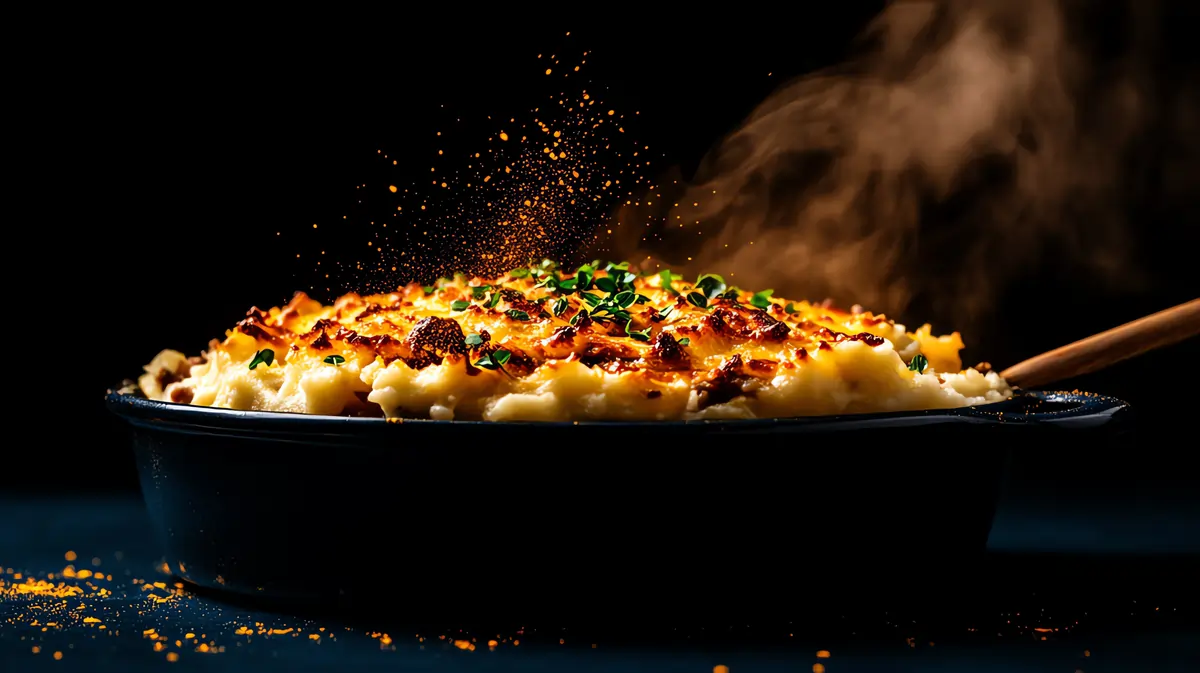
3. Slow-Braised Pork Shoulder (Irish Style)
-
Why it’s forgiving:
- ✅ Nearly impossible to overcook (the fat keeps it moist)
- ✅ Shreds easily for portion control
- ✅ Holds hot indefinitely (it’s already braised to falling-apart)
- ✅ Works hot or cold
- ✅ Very economical for large numbers
Scaling notes:
- Season pork generously (it’s a dense protein)
- Liquid can be reduced (pork releases its own fat and moisture)
- Cook whole shoulders, then shred for service
- Pairs well with apple sauce, colcannon, or mashed potatoes
Where to find recipes:
Service tip: Shred pork and hold in its own braising liquid. Stays moist for hours.
Meanwhile, What NOT to Scale: The Disaster List
On the other hand, some recipes don’t work at scale. Don’t learn this the hard way.
❌ Delicate Pasta Dishes (Carbonara, Aglio e Olio)
Problem: Timing is critical. Pasta overcooks. Sauce breaks. Cheese clumps.
Alternative: Pre-cook pasta, shock in cold water, reheat à la minute with sauce.
❌ Soufflés, Meringues, Delicate Baking
Problem: Requires precise oven temperature and timing for multiple batches.
Alternative: Don’t offer these in high-volume service.
❌ Fried Foods (Battered Fish, Tempura)
Problem: Goes soggy quickly. Can’t be held hot without quality loss.
Alternative: Cook to order, or offer grilled/baked alternatives.
❌ Rare/Medium-Rare Steaks
Problem: Can’t hold at temperature without overcooking.
Alternative: Sear to order, or offer braised/slow-cooked meats instead.
❌ Dishes Relying on Fresh Herbs Finishing
Problem: Fresh herbs lose colour and flavour when held hot.
Alternative: Add fresh herbs at service, not during cooking.
Free Recipe Scaling Tools
Don’t do the maths manually. Use these free calculators:
1. Webstaurant Store Recipe Converter
Link: https://www.webstaurantstore.com/recipe_resizer.html
What it does:
- Enter your recipe with ingredients and portions
- Specify new portion size
- Automatically scales all ingredients
Best for: Quick scaling of entire recipes, easy interface.
2. Inch Calculator Recipe Scale Converter
Link: https://www.inchcalculator.com/recipe-scale-conversion-calculator/
What it does:
- Input ingredients with measurements
- Multiplies or divides by your scaling factor
- Handles fractions and unusual measurements
Best for: Detailed ingredient-by-ingredient scaling.

3. My Kitchen Calculator
Link: https://mykitchencalculator.com/recipeconverter.html
What it does:
- Converts between measurement systems (metric/imperial)
- Scales recipes up or down
- Handles complex recipes with multiple components
Best for: Metric-to-imperial conversions alongside scaling.
Pro tip: Use the calculator for baseline numbers, then apply your golden ratios (75% for spices, 80% for salt, etc.) manually. The calculators don’t know the chemistry rules.
Most importantly, Practical Batch Cooking Tips for Canteen Service
In addition, beyond scaling, here’s what makes batch cooking work. in real-world service:
1. Cook in Stages
Don’t try to cook 60 portions in one go if your equipment can’t handle it.
Example: For 60-portion stew:
- Cook in 2× 30-portion batches
- Or 3× 20-portion batches
Smaller batches cook more evenly and are easier to manage.
2. Use Weight, Not Volume
Volume measurements (cups, spoons) are inconsistent at scale.
Switch to weight:
- 1 cup flour ≈ 120g
- 1 tsp salt ≈ 6g
- 1 tbsp oil ≈ 15ml
Weigh everything. It’s more accurate and faster.
3. Most importantly, taste as you go.
The reality of rodent behaviour:
- Mice are territorial – seeing one means there are 10+ hidden
- Rats are nocturnal – you only see 5% of the population
- Breeding cycle: mice can have 6-10 litters per year, 5-6 babies each
- By the time you see signs regularly, you have an infestation
One sighting is not “no big deal.” It’s an early warning you’re ignoring.
4. Write It Down
When you get a scaled recipe right, document it.
Record:
- Exact weights of all ingredients
- Cooking times for your equipment
- Holding times and temperatures
- Any adjustments you made
- Customer feedback
Build your own canteen recipe book. Next time, you’ll nail it first try.
5. Plan for Holding Time
Most canteen dishes sit hot for 30 minutes to 2 hours before service.
Test your recipes for holding:
- Cook a batch
- Hold at service temperature (75-80°C)
- Check texture, moisture, flavour every 30 minutes
If it dries out or toughens, it’s not a good batch recipe. Adjust or choose something else.
The Temperature Safety Rule
Most importantly, batch cooking isn’t just about flavour. It’s about food safety.
HACCP principles for batch cooking:
Cooking:
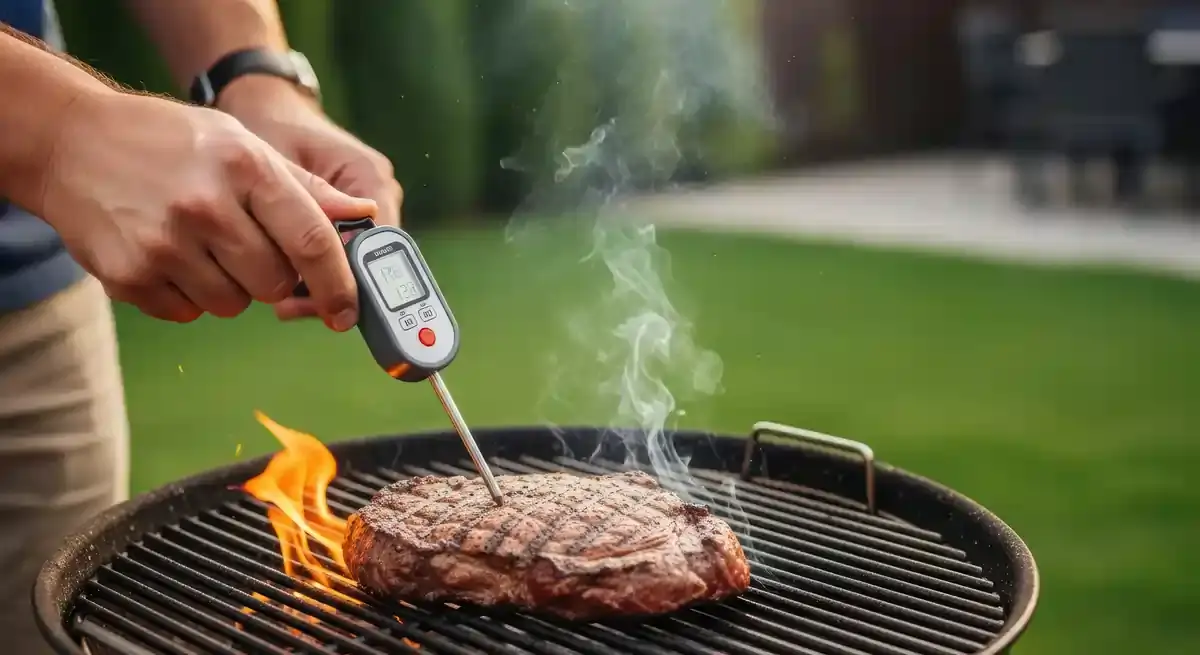
- Core temperature must reach 75°C minimum
- Hold at that temperature for 30 seconds minimum
- Check multiple points in large pots (centre, edges, bottom)
Holding hot:
- Maintain above 63°C at all times
- Check temperature every 2 hours (document it)
- Discard after 4 hours of hot holding (quality and safety decline)
Cooling for reheat:
- Cool from 75°C to 21°C within 2 hours
- Then from 21°C to 5°C within 4 hours
- Use shallow containers, ice baths, blast chillers
Reheating:
- Reheat to 75°C core temperature minimum
- Reheat only once (don’t reheat leftovers multiple times)
Get this wrong, and your scaled recipe doesn’t matter. You’ll be dealing with a food poisoning outbreak instead.
Your staff need to understand these critical temperatures. However, this is where proper food safety training becomes non-negotiable. Level 1 Food Safety training covers temperature control, safe holding times, and HACCP basics for all kitchen staff.
When to Call in a Professional Recipe Developer
Some operations need custom-scaled recipes developed by professionals.
Consider professional help if:
- You’re scaling recipes beyond 100 portions regularly
- You’re launching a new canteen operation from scratch
- You need recipes for commercial cook-chill production
- You’re struggling with consistency across multiple sites
- You need recipes that meet specific dietary requirements at scale
Professional recipe developers understand:
- Industrial cooking equipment behaviour
- Ingredient functionality at volume
- Cost control and margin optimisation
- Nutritional requirements for institutions (schools, hospitals, care homes)
Investment: Typically £500-£2,000 per recipe, but you get a tested, documented, reproducible formula that works every single time.
For high-volume operations, this pays for itself in reduced waste and consistent quality.
The Staff Training Gap
You can have the perfect scaled recipe, but if your staff don’t follow it, it’s useless.
Common problems:
- “I’ve always done it this way” (chef adds extra salt out of habit)
- “The recipe seems wrong” (cook adjusts spices without permission)
- “We ran out of stock so I used water” (substitutions without understanding ratios)
- “I thought it needed more garlic” (personal preference overrides recipe)
Solution: Training and discipline.
Staff need to understand:
- Why recipes are scaled the way they are (chemistry, not just maths)
- Why following the recipe exactly matters (consistency)
- When they can adjust (almost never) and when they must follow (always)
- How to document variations (if stock runs out, record what you used instead)
However, this is where food safety training becomes critical. It’s not just about hygiene it’s about understanding that recipe adherence is part of quality control and food safety culture.
For kitchen teams:
Level 1 Food Safety & HACCP training teaches all kitchen staff why procedures matter, including recipe adherence and temperature control.
For supervisors and head chefs:
Level 2 HACCP training covers recipe management, scaling procedures, quality control systems, and how to implement HACCP in batch cooking operations.
The Bottom Line: In summary, consistency is king.
In summary, in family cooking, “near enough” is fine. In canteen cooking, it’s a disaster.
Your customers expect:
- The same flavour every time
- The same portion every time
- The same quality every time
However, that only happens with:
- ✅ Properly scaled recipes (using golden ratios, not just multiplication)
- ✅ Documented procedures (write it down, follow it exactly)
- ✅ Staff training (everyone follows the system)
- ✅ Quality control (taste, measure, check temperature)
Batch cooking isn’t about making “loads of food.” It’s about making the same high-quality dish reliably, at scale, day after day.
Master the golden ratios. Use the tools. Choose forgiving recipes. Train your team.
As a result, that’s how you cook for the crowd without losing your mind or your reputation.
Strengthen Your Food Safety Knowledge
Consistent batch cooking requires trained staff who understand food safety, recipe adherence, temperature control, and quality systems. Our courses provide the knowledge your kitchen team needs:
For All Kitchen Staff:
- Food Safety & HACCP Level 1 – Essential hygiene, temperature control, safe holding times, and understanding why procedures matter for batch cooking operations
For Supervisors & Head Chefs:
- HACCP Level 2 Training – Recipe management, scaling procedures, quality control systems, HACCP implementation, and maintaining consistency in high-volume kitchens
For Senior Managers:
- Level 3 Food Safety & HACCP Management – Advanced food safety management, validation of batch cooking processes, and regulatory compliance for large-scale operations
Bonus: Access our free learning management system to track staff training, document your scaled recipes, manage temperature monitoring records, and prove compliance during inspections.
Ready to build a consistent, compliant kitchen operation? Start with Level 1 Food Safety training for your entire kitchen team. For comprehensive training solutions, visit Acorn Star.
You’re still on your break. You have 5 minutes. Do this before you go back to service:
Right now (on your phone):
- Check your last pest control report – read it properly
- Check your training records – who hasn’t done food safety training?
- Make a note of every gap, hole, or broken seal you know about
- Check when door seals were last replaced
Tomorrow: 5. Walk to Goods Inwards and actually look at it with fresh eyes 6. Take photos of problem areas 7. Ask your porter/delivery staff what issues they see daily
This week: 8. Book door seal repairs if needed 9. Implement immediate cardboard breakdown rule 10. Brief all staff on door discipline 11. Contact your pest control company if gaps were mentioned in reports
This month: 12. Get basic food safety training for porters and delivery staff 13. Add pest checks to opening/closing procedures 14. Fix all ingress points identified in last pest control report