
Why Manual Handling Training Is an Investment, Not an Expense
Why Manual Handling Training is an Investment, Not an Expense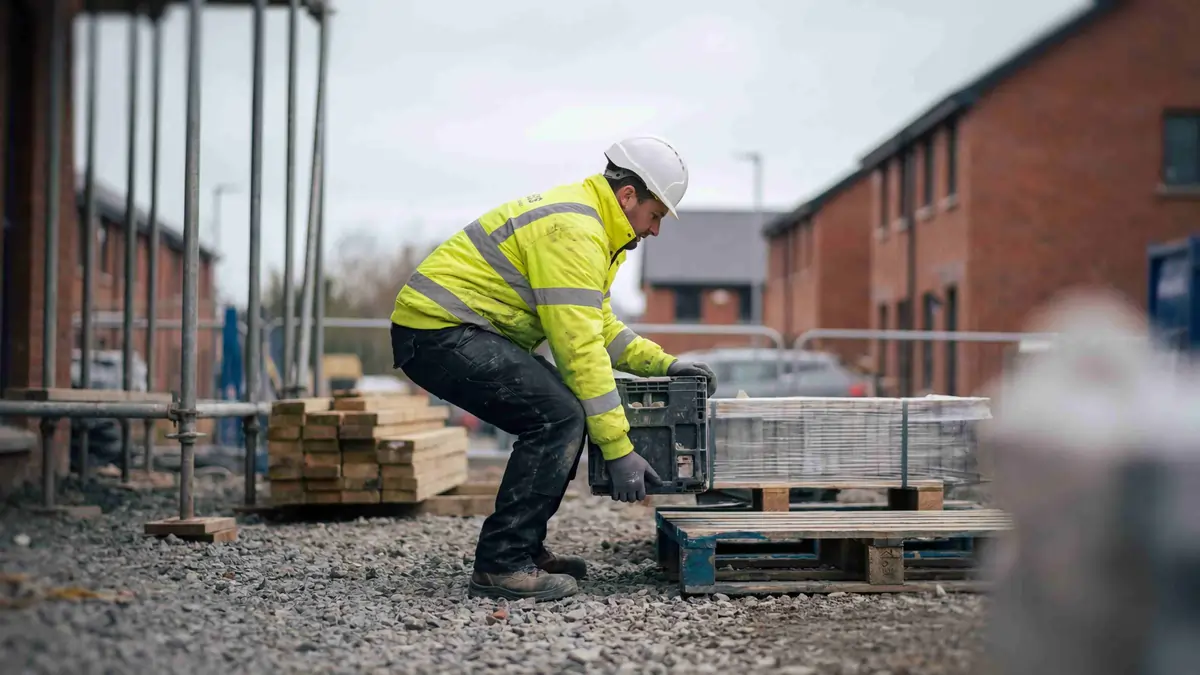
The True Cost of Workplace Injuries in Ireland
Many Irish employers still treat manual handling training as a compliance cost rather than a financial decision. In reality, the cost of a single preventable workplace injury can exceed the price of training an entire workforce. When compensation claims, insurance premium increases, lost productivity, and enforcement risks are taken into account, manual handling training becomes one of the highest-return investments a business can make.
Every finance director understands the importance of protecting the bottom line. Yet many Irish businesses continue to view manual handling training as just another compliance cost a box to tick rather than a strategic investment. This perspective couldn’t be further from the truth. The reality is stark: the cost of a single workplace injury can dwarf the expense of training your entire workforce.
When you examine the true financial impact of workplace accidents, manual handling training transforms from a perceived burden into one of the smartest investments your organisation can make. Let’s explore the numbers that every Irish employer needs to understand.
The True Cost of Workplace Accidents in Ireland
According to the Health and Safety Authority’s (HSA) latest Annual Review of Workplace Injuries, Illnesses and Fatalities, manual handling incidents remain one of the leading causes of non-fatal workplace injuries in Ireland. Recent data shows that manual handling injuries accounted for 43% of the top three non-fatal accident categories, with thousands of Irish workers suffering preventable injuries each year.
But what does this actually cost your business?
The financial burden of workplace injuries extends far beyond the immediate medical expenses. Research from the Injuries Resolution Board reveals that between 2019-2023, over 22,000 workplace injury claims were submitted in Ireland. When these claims reach litigation, the average employer liability settlement is substantial €70,297 according to 2022 dat and that figure doesn’t include the significant indirect costs that accompany every workplace injury.
Breaking Down the Real Cost of a Back Injury
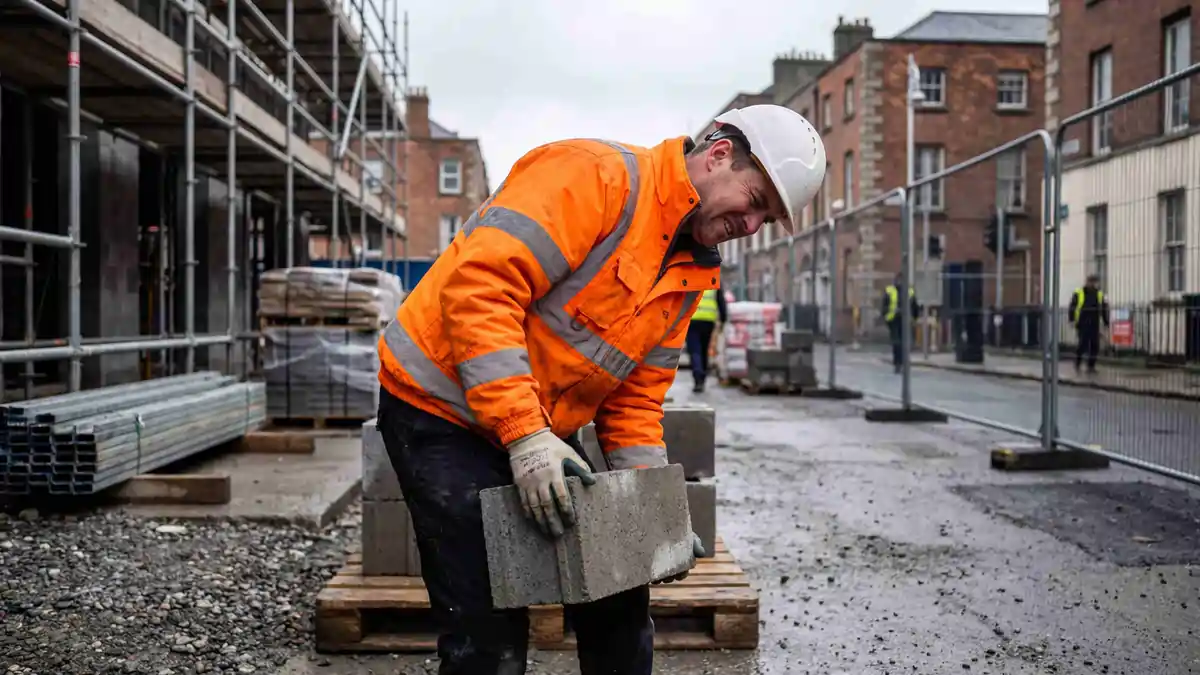
Manual handling injuries, particularly back injuries, represent a significant financial risk for Irish employers. According to current compensation guidelines, back injury claims in Ireland typically range from €15,000 to €85,000, depending on severity and long-term impact.

Let’s examine a realistic scenario:
Minor to Moderate Back Injury Costs:
- Direct compensation: €15,000 – €55,000 (for injuries requiring 24+ months recovery)
- Legal costs: €5,000 – €31,735 average (Central Bank research shows 71% of injury claims involve litigation)
- Insurance excess/deductibles: €2,500 – €10,000
- Lost productivity: €8,000 – €25,000 (considering temporary replacement staff, training, reduced efficiency)
- Administrative costs: €3,000 – €7,000 (HR time, accident investigation, HSA reporting requirements)
Total potential cost for ONE back injury: €33,500 – €128,735+
And that’s before considering the long-term implications: increased employer liability insurance premiums, potential HSA enforcement actions, damage to your reputation as a safe employer, and the immeasurable impact on team morale when colleagues witness preventable injuries.
The Investment: What Does Manual Handling Training Actually Cost?
Now contrast those figures with the cost of prevention. A comprehensive manual handling course for your workforce typically costs between €40-€85 per employee, depending on delivery method and class size. Even for a team of 50 employees, you’re looking at an investment of approximately €2,000-€4,250 for initial training.
The mathematics is compelling:
- Cost to train 50 employees: €2,000 – €4,250
- Cost of one moderate back injury: €33,500 – €128,735+
- Return on investment: Preventing just ONE injury saves 8-32 times the cost of training your entire team
That’s not an expense that’s profit protection.

The Hidden Costs That Destroy Profitability
Beyond the direct financial implications, workplace injuries trigger a cascade of hidden costs that erode profitability:
Operational Disruption: When an experienced employee is injured, productivity doesn’t just dip it plummets. Replacement staff require time to reach full efficiency. Projects are delayed. Customer service may suffer. For skilled roles, finding suitable temporary cover can take weeks, during which workload falls on already-stretched team members.
Regulatory Consequences: Under the Safety, Health and Welfare at Work Act 2005, employers must report certain workplace accidents to the HSA. Serious injuries trigger inspections, which can lead to enforcement notices, improvement orders, or prosecution. HSA fines can reach €3 million for breaches, and directors can face personal liability under Section 80 of the Act
Reputational Damage: In today’s connected world, word spreads quickly. A poor safety record damages your reputation with potential employees, customers, and business partners. Millennials and Gen Z workers increasingly prioritise employer safety culture when evaluating job opportunities a strong safety record is now a competitive recruitment advantage.
Team Morale and Retention: When employees witness preventable injuries, trust erodes. They question whether their wellbeing truly matters to leadership. The cost of replacing skilled employees who leave due to safety concerns far exceeds the investment in proper training.

The Strategic Advantage: Safety as a Competitive Differentiator
Progressive Irish businesses recognise that excellent safety performance isn’t just about avoiding costs it’s about creating competitive advantage. Companies with strong safety cultures consistently outperform competitors across multiple metrics:
- Higher productivity: Employees who feel safe work more efficiently and take fewer shortcuts
- Better quality: Safety-conscious teams make fewer errors across all operations
- Stronger client relationships: Particularly for B2B companies, clients increasingly audit supplier safety records
- Enhanced tender competitiveness: Many public and private sector tenders now require evidence of safety training and low incident rates
At Acornstar Limited, our work with over 3,000 B2B customers across Ireland has provided clear evidence of this principle. The organisations that treat manual handling training as a strategic investment consistently report fewer injuries, lower insurance costs, and stronger financial performance than those viewing it merely as compliance overhead.
Legal Obligations Under Irish Law: Non-Compliance Carries Its Own Costs
It’s worth remembering that manual handling training isn’t optional in Ireland it’s a legal requirement. The Safety, Health and Welfare at Work (General Application) Regulations 2007 mandate that employers provide adequate manual handling training to employees engaged in manual handling activities.
HSA guidance specifies that this training must be relevant, practical, and refreshed at intervals of not more than three years. Failure to provide adequate training exposes employers to:
- HSA enforcement actions and potential prosecution
- Increased liability in compensation claims (courts consider whether adequate training was provided)
- Personal liability for directors under Section 80 provisions
- Invalidated insurance coverage in certain circumstances
The cost of non-compliance isn’t theoretical it’s documented in HSA enforcement records and court judgments throughout Ireland.
From Cost Centre to Profit Protection: Reframing the Conversation
The conversation around manual handling training needs to shift in Irish boardrooms. This isn’t about spending money on compliance—it’s about protecting profit, reducing risk, and building organisational resilience.
Consider these strategic questions:
- Can your business afford a €50,000+ compensation claim plus associated costs?
- What happens to your insurance premiums after multiple injury claims?
- How does your safety record impact your ability to win contracts and attract talent?
- What’s the opportunity cost when key employees are off work for months due to preventable injuries?
When viewed through this lens, the €2,000-€4,250 investment to train your workforce becomes one of the highest-return expenditures your organisation can make.

Making the Smart Investment: Choosing Quality Training
Not all manual handling courses deliver equal value. To maximise your return on investment, choose training that:
- Meets HSA standards and delivers recognised manual handling certificates
- Provides both theoretical knowledge and practical, job-specific application
- Engages employees rather than simply ticking compliance boxes
- Includes proper documentation to support insurance renewals and HSA compliance
- Offers flexible delivery options (in-person, online, or blended) to minimise operational disruptio
Quality training pays for itself many times over through injury prevention, improved safety culture, and reduced insurance costs.
The Acornstar Approach: Investment-Focused Training for Irish Business
At Acornstar Limited, we’ve built our reputation by understanding the business case for safety training. As an Ireland-based training consultancy with deep roots in food safety and health & safety training, we know that our B2B clients need training that delivers tangible value, not just certificates.
Our manual handling training programmes are designed with your bottom line in mind:
- Practical, engaging content that employees actually retain and apply
- Comprehensive documentation for insurance and compliance purposes
- Flexible scheduling to minimise operational disruption
- Ongoing support to maintain your safety culture between formal training sessions
We’ve seen firsthand how organisations that invest in quality manual handling training transform their safety performance and their financial results.
Conclusion: The Choice Is Clear
The mathematics of manual handling training is unambiguous. Investing £2,000-£4,250 to train 50 employees versus risking £33,500-£128,735+ for a single preventable injury isn’t a difficult decision it’s a fundamental business imperative.
Add in the insurance premium reductions, productivity improvements, reputational benefits, and competitive advantages that flow from excellent safety performance, and the return on investment becomes overwhelming.
Manual handling training isn’t an expense to minimise it’s an investment in your organisation’s financial health, operational resilience, and long-term success.
Ready to protect your profit and your people? Visit www.acornstar.com today to discuss how our manual handling training can deliver measurable returns for your Irish business. Let’s transform your safety culture from a compliance burden into a competitive advantage.
Additional Resources
For more information on workplace injury costs and safety requirements in Ireland:
- HSA Annual Review of Workplace Injuries, Illnesses and Fatalities
- Injuries Resolution Board – Personal and Economic Cost of Accidents in Ireland
- Safety, Health and Welfare at Work Act 2005
- HSA Manual Handling Resources
- NFP Ireland – How a Robust Health and Safety Culture Can Strengthen Your Insurance Coverage
“But my head chef already has a food safety certificate why does he need more training?” This question comes up repeatedly when food business owners review their training obligations. The certificate on the staff room wall shows HACCP Level 1 or Level 2, the legal box appears ticked, and surely that’s enough?
Not quite. In fact, not even close.
Here’s the reality that catches many Irish food businesses off guard: the legal requirement isn’t simply to have trained staff it’s to ensure staff are “supervised and instructed and/or trained in food hygiene matters commensurate with their work activity.” That final phrase is crucial, and it’s where many businesses fall short without even realising it.
Your head chef, sous chef, kitchen supervisor, or anyone managing food safety in your operation isn’t performing the same role as a line cook or food handler. They’re not just cleaning surfaces, monitoring temperatures, and following procedures someone else created. They’re designing those procedures, troubleshooting when things go wrong, training others, making critical food safety decisions independently, and ultimately bearing responsibility when inspectors arrive.