
Bespoke HACCP Plan Ireland, Fully Compliant Food Safety Systems
Why Your Business Needs a HACCP Plan in Ireland
What’s Included in Our HACCP Plan Development
Opening a food business is exciting. Maybe you’re launching a small café in Dublin, a farm-to-table restaurant in Cork, or a mobile coffee dock at weekend markets in Galway. You’ve been planning the menu, choosing equipment, and picturing your first customers.
Then you hit food safety compliance.
If you’ve spent any time researching the legal side of running a food business in Ireland, you’ve come across the word HACCP. You may even have been tempted to download a free HACCP plan template online to save time and money.
Before you do, here’s why a bespoke HACCP plan Ireland food businesses can rely on one built around your specific operation isn’t just nice to have. It’s the foundation of your long-term success and your legal compliance from day one.
What HACCP Means and Why It Matters in Ireland
HACCP stands for Hazard Analysis and Critical Control Points. It’s an internationally recognised system for spotting, evaluating and controlling food safety hazards.
In Ireland, HACCP isn’t optional. It’s a legal requirement under Regulation (EC) No 852/2004, enforced by the Food Safety Authority of Ireland (FSAI).
Every food business in Ireland has to run a food safety management system based on HACCP principles. That applies to a Michelin-starred restaurant, a nursing home kitchen, a school canteen, a hotel banqueting suite and yes, that small pop-up coffee dock you’re planning for weekend markets.
The FSAI is clear: food businesses must keep food safe across the whole chain, and HACCP is the main tool for doing it. The system asks you to identify hazards (biological, chemical or physical) that could make food unsafe, then put controls in place to prevent, eliminate or reduce them.
For new food entrepreneurs, this matters more than it first appears. A solid HACCP plan does two jobs at once. It protects customers from foodborne illness. And it protects your business from enforcement action, prosecution, closure orders, and the kind of reputation damage that travels fast on social media.
What HACCP Means and Why It Matters in Ireland
The reason a bespoke plan matters comes down to one simple idea: every food business is different. Your HACCP plan needs to be as specific as your business is.
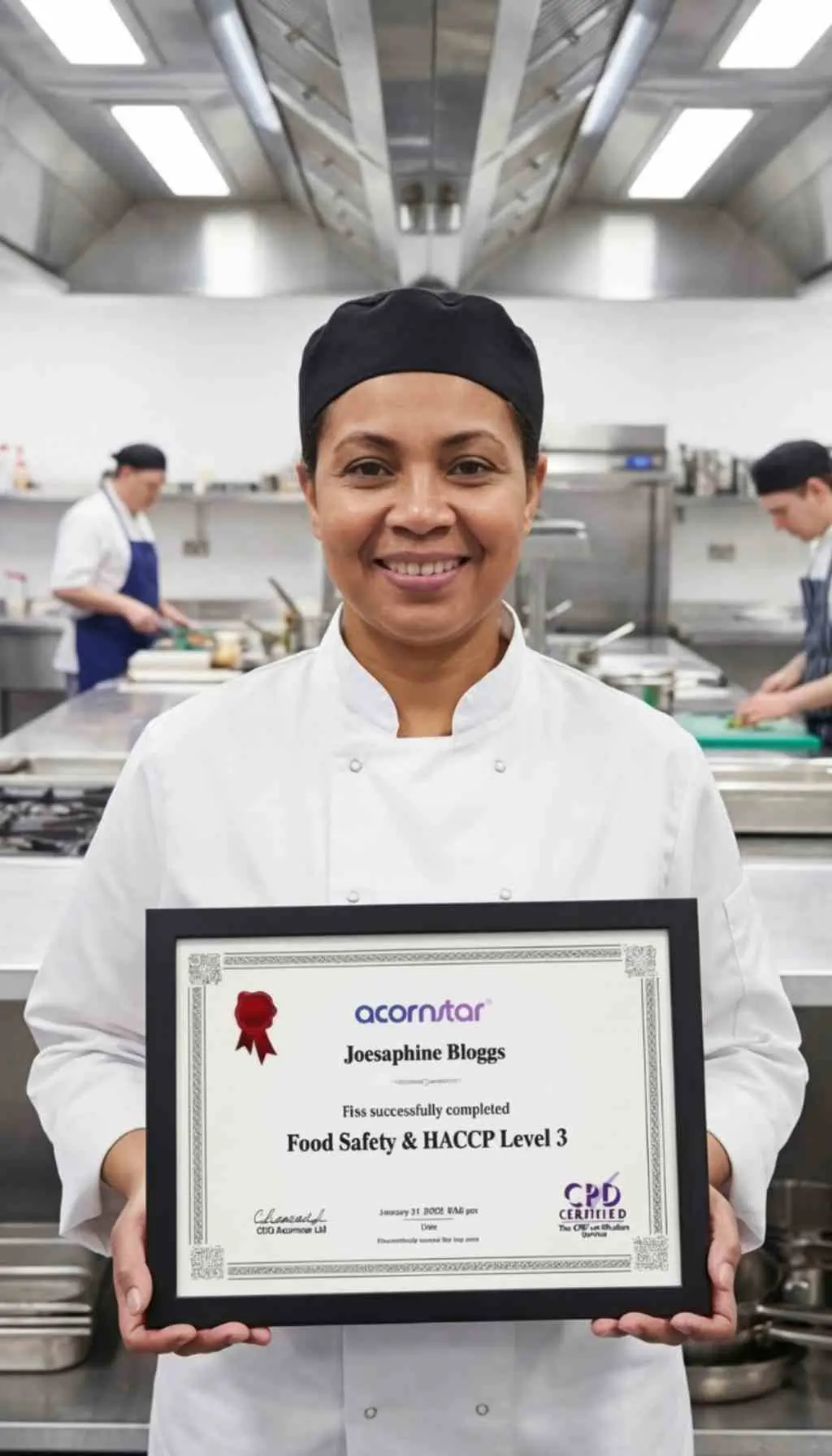
Your Kitchen Layout and Equipment
Two restaurants might serve identical menus. But if one has a tight galley kitchen with limited fridge space, and the other has a wide prep area with walk-in chillers, their food safety controls will look completely different.
Your HACCP plan needs to reflect what you actually have. Your equipment. Where it sits. How food flows through your space.
Cross-contamination risk is heavily shaped by kitchen design. A well-laid-out kitchen naturally separates raw and ready-to-eat prep. A smaller space needs stricter procedures and extra training to reach the same safety standard. A consultant has to see the room to spot these risks properly.
Your Menu and Ingredients
A coffee dock selling pre-packaged sandwiches faces very different hazards from a restaurant cooking complex dishes from raw ingredients.
If your menu includes high-risk foods shellfish, rare-cooked meats, raw eggs, unpasteurised dairy, or dishes prepped well ahead of service your number of critical control points goes up.
Allergens are another area where your menu drives your HACCP plan. Ireland’s allergen rules come from EU Regulation 1169/2011, and you must give consumers clear information on the 14 regulated allergens. Your plan has to spell out how you stop cross-contact with each one and that depends entirely on what you cook and how. Staff allergen training is non-negotiable, and your bespoke plan should match the allergens you actually handle.
Your Service Style and Customer Base
How you serve food shapes your HACCP requirements as much as what you serve.
A fast-food outlet with quick turnover faces different challenges from a hotel buffet holding food hot for hours. A nursing home serving vulnerable residents needs tighter controls than a city pub serving general adult customers.
Schools and childcare settings have their own considerations around allergens, choking hazards and nutrition. If you’re cooking for vulnerable groups older people, young children, or anyone immunocompromised your HACCP plan has to recognise their higher susceptibility to foodborne illness.

Why a Trained Certificate Isn’t the Same as a Trained Manager
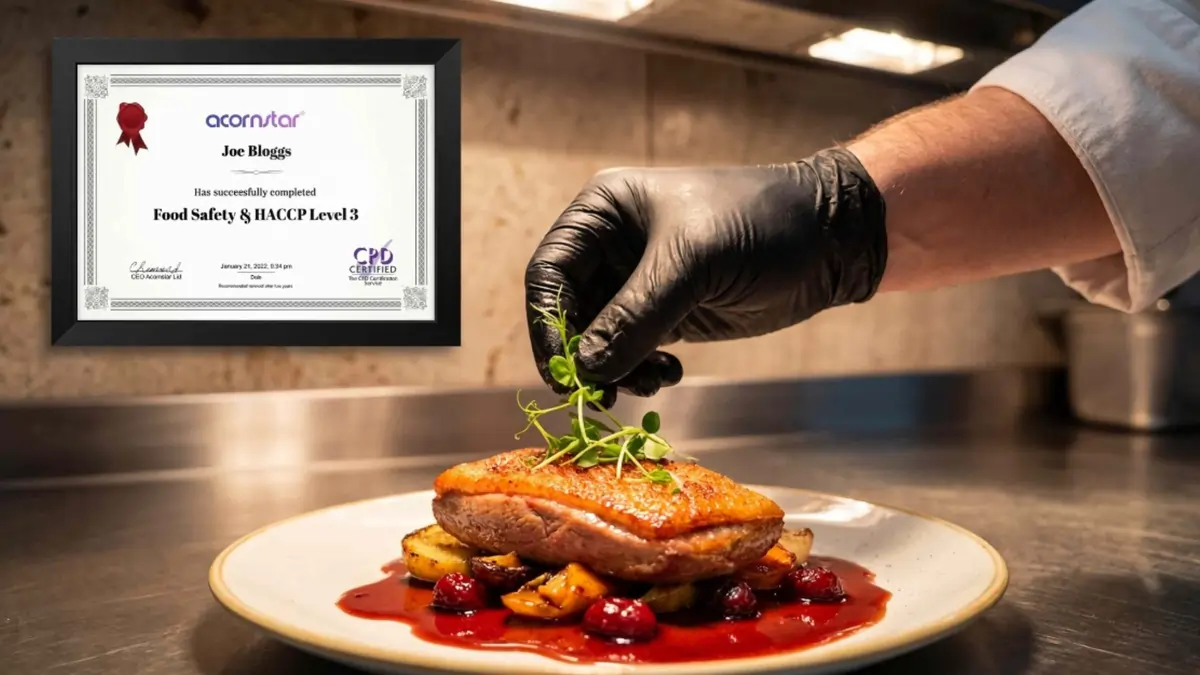
“But my head chef already has a food safety certificate why does he need more training?” This question comes up a lot when food business owners look at their training obligations. The certificate on the staff room wall says HACCP Level 1 or Level 2. The legal box looks ticked. Surely that’s enough?
Not really.
Here’s where a lot of Irish food businesses get caught out. The legal duty isn’t just to have trained staff. It’s to make sure staff are “supervised and instructed and/or trained in food hygiene matters commensurate with their work activity.” That last part is the catch.
Your head chef, sous chef or kitchen supervisor isn’t doing the same job as a line cook. They’re not just cleaning down, checking temperatures and following someone else’s procedures. They’re writing those procedures, troubleshooting when things go sideways, training others, making real-time food safety calls, and carrying responsibility when an inspector walks in.
Their training has to match that level of responsibility. Most managers should be working at HACCP Level 3 (Management HACCP), not Level 1.
Food Business Registration and FSAI Compliance: Getting It Right from Day One
Before you serve your first customer, you must register your food business with your local Environmental Health Service. This is required under the Food Safety Authority of Ireland Act 1998 and follow-on regulations. Registration is free and is normally completed at least 28 days before opening.
A lot of new food entrepreneurs underestimate how much food safety paperwork needs to be in place before opening. You can technically register your business before your HACCP plan is fully written. But you should have a complete food safety management system up and running before you trade. The FSAI and local Environmental Health Officers (EHOs) can inspect at any time, and a weak system can mean enforcement action that delays or stops your opening.
Working with a HACCP consultant Ireland businesses trust takes a lot of the stress out of this stage. An experienced consultant knows what the FSAI expects and gets your documentation to the right standard from the start. That’s much cheaper and easier than fixing it after you’ve opened.
Preparing for EHO Inspections, Why Bespoke Documentation Matters
EHO inspections are a normal part of running a food business in Ireland. EHOs are employed by the Health Service Executive (HSE) and enforce food safety law on the FSAI’s behalf. Their job is to check that businesses are meeting legal requirements and protecting public health.
During an inspection, the EHO will look at your premises, watch how you work, talk to staff, and review your food safety paperwork especially your HACCP plan. They want to see that you understand the hazards specific to your business and have real controls in place.
A bespoke HACCP plan signals professionalism. It shows the inspector you’ve taken time to assess your own risks rather than printing off a generic template and hoping for the best. That sets a positive tone for the whole inspection.
The opposite is also true. A generic template with obvious gaps or sections that don’t match your operation raises immediate red flags. EHOs see a lot of paperwork. They quickly spot documents that don’t match reality. That can trigger closer scrutiny and, in some cases, formal enforcement action under the FSAI’s enforcement framework.
HACCP Training, Building a Food Safety Culture from Day One
A HACCP plan only works when the people on the floor understand it. That’s why training matters as much as paperwork. Every member of your team from kitchen porters to head chefs has a role in food safety.
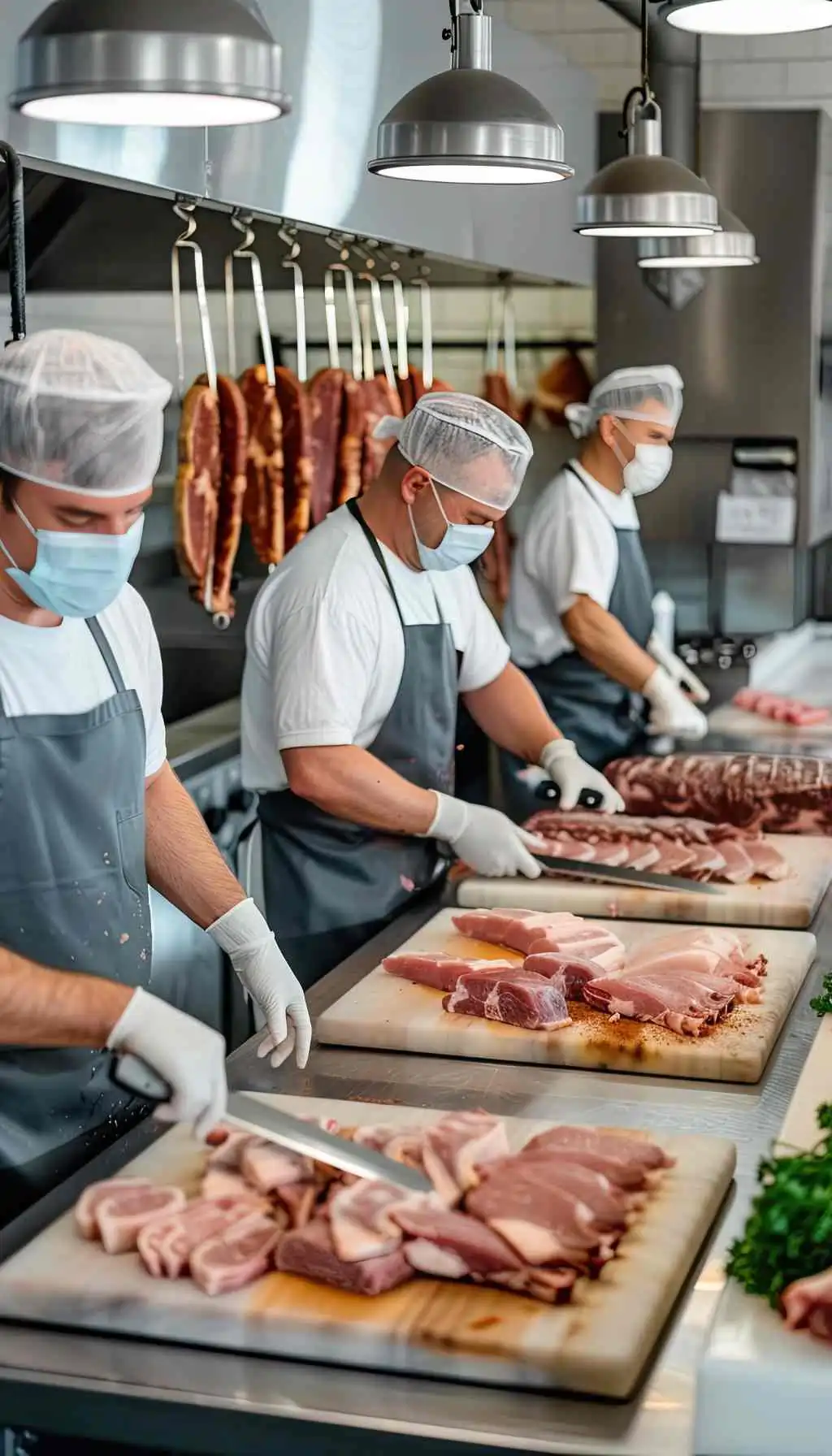
HACCP Level 1 training gives food handlers the basics: hygiene, personal cleanliness, cleaning and sanitation, and temperature control. Every person handling food in your business should hold at least this level of certified training.
HACCP Level 2 training goes further into food safety management. It suits supervisors and anyone with food safety responsibility beyond basic handling. It covers hazard analysis, critical control points, and how a HACCP system actually runs.
For owners, managers and anyone designing or auditing the system, HACCP Level 3 (Management HACCP) is the right level. It gives you the depth needed to lead the programme rather than just follow it.
A lot of food safety providers now deliver these courses through a Learning Management System (LMS). That makes food safety training in Ireland easier to roll out. You can train staff before opening day, and refresh the team without closing service. For startup operations juggling fit-out, hiring and marketing, that flexibility is a real win.

Allergen Awareness, A Non-Negotiable for Modern Food Businesses
Allergens deserve their own moment. The number of customers asking about allergens has grown sharply in the last decade. So has the legal and reputational fallout when something goes wrong.
If your staff treat allergen questions casually, get visibly annoyed by them, or skip the documented procedure for checking ingredients, you have a problem. Urgent allergen awareness training is the answer. The consequences of getting allergens wrong can be fatal for the customer and catastrophic for the business.
When to Bring in a HACCP Consultant
If you’re still on the fence about getting professional help, here’s the practical answer. Building a food safety management system needs real expertise in food law, hazard analysis, microbiology and the day-to-day reality of how kitchens work.
Working with HACCP consultants who know Irish food safety regulations brings several clear benefits. They know what the FSAI expects and what EHOs look for during an inspection. They spot hazards you may have walked past for months. They turn legal duties into procedures your team will actually follow. And they save you time during the busiest period of your business pre-opening.
A good food safety consultant will visit your premises, look over your menu and recipes, check your equipment and layout, review your suppliers, and build a HACCP plan that fits your specific operation. That isn’t a generic template with your business name dropped in. It’s a real, site-specific system.
Your content goes here. Edit or remove this text inline or in the module Content settings. You can also style every aspect of this content in the module Design settings and even apply custom CSS to this text in the module Advanced settings.
Your Journey Starts with the Right Foundation
Starting a food business in Ireland is hard, rewarding, and full of opportunity. The Irish food sector keeps growing. Customers care more than ever about quality, provenance and the experience of eating out.
Whatever you’re opening a small artisan bakery, a coffee dock, a hotel kitchen or a contemporary restaurant you’re entering a busy and competitive market.
Your success will turn on a lot of things. The food. The service. The concept. The numbers. But under all of that has to be an unshakeable commitment to food safety. Your customers trust you every time they sit down to eat. That trust is sacred.
A bespoke HACCP plan isn’t bureaucratic box-ticking. It’s the foundation that makes everything else stand up. It protects your customers, your business and your reputation. It tells the FSAI, EHOs, your insurer and your customers that you take food safety seriously.
Don’t gamble with a generic template you found online. Don’t tell yourself you’ll “sort the paperwork after we open.” Don’t underestimate either the detail of Irish food safety law or the cost of getting it wrong.
Get it right on day one instead. Focus on perfecting the menu and the fit-out. Let an experienced consultant build a bespoke HACCP plan that does the job for the FSAI, your team and your customers.
Elevate Your Business Standards
Strong food businesses run on two things: a well-trained team and robust safety systems. AcornStar gives you the tools for both.
Training Your Team
Our accredited online food safety courses let your staff train at their own pace. Right now, selected food safety modules include free Allergen Awareness training as a limited-time offer.
Our most popular options for new and growing food businesses include the kitchen essentials pathway from Level 1 Induction through Level 2 Food Handling to Level 3 Management, comprehensive bundles like the Level 1 & 2 + Allergen package, and site safety courses such as Fire Warden and Slips, Trips & Falls to protect your premises.
Need Deeper Expertise?
For bespoke advice, our HSEQ Consultancy Services can help with risk assessments, safety statements, and full compliance auditing so your food business is properly covered from day one.
Smarter Management for Free
Business customers get exclusive access to our free Learning Management System. Manage all your compliance training in one place with a single smart login. Track enrolments, download certificates, and save your team real time compared with other platforms.
Get in touch today for corporate rates, or browse our full course list to start training your team.