
Manual Handling in Catering, The Food Safety Risk Most Kitchens Overlook
Manual handling in catering Ireland is a common workplace safety issue, particularly in busy kitchens where staff lift, carry, push and move stock throughout the day.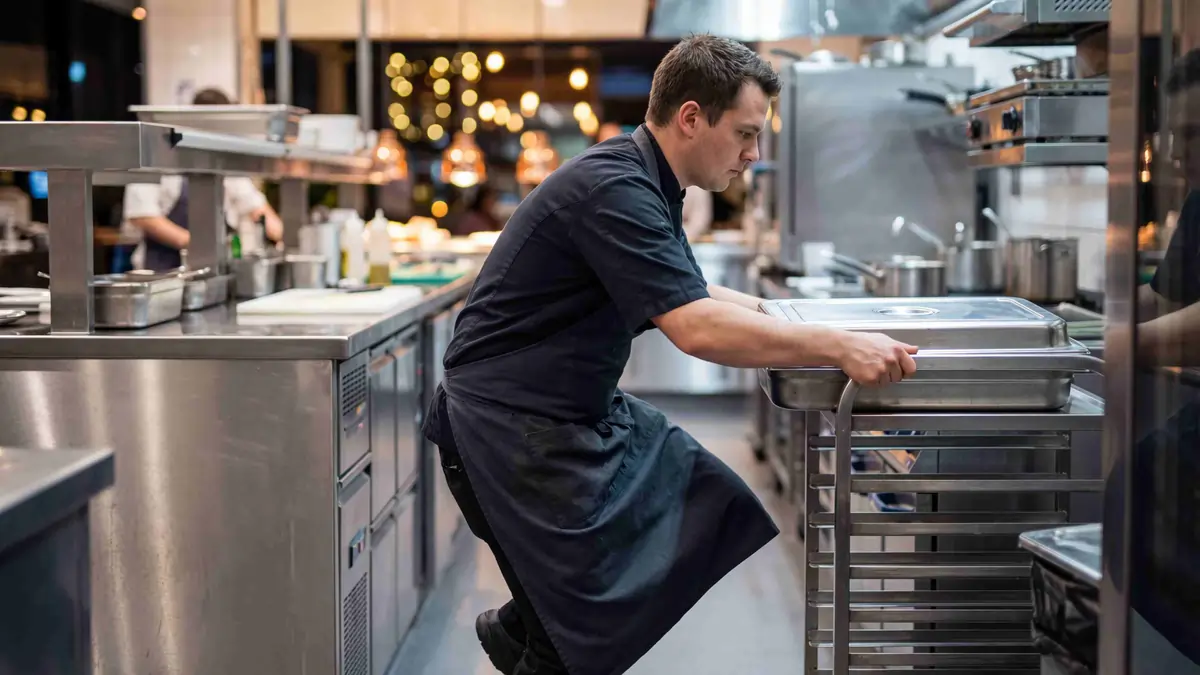
When a Lifting Injury Becomes a Food Safety Problem
Ask most catering business owners to list their food safety risks and you’ll hear the usual answers. Cross-contamination. Temperature control. Poor personal hygiene. Pest control.
Manual handling rarely makes the list.
That’s a significant blind spot. In a busy commercial kitchen, a staff member nursing a back injury from lifting flour sacks, or a chef favouring a strained shoulder mid-service, doesn’t just represent a personal health problem. It creates a chain of food safety risks that can run straight through your HACCP controls.
This article explores that connection why manual handling in catering is a food safety issue as much as a staff safety one, what the specific risks look like in Irish kitchens, and what catering businesses are legally required to do about it.
The Scale of Manual Handling Injury in Irish Hospitality
Manual handling is the single largest cause of workplace injury in the Irish hospitality sector. According to HSA guidance on the sector, it accounts for around 34% of all reported incidents in hotels, restaurants, cafés, and catering operations, according to HSA’s Safe Hospitality guidance
Combined with slips, trips, and falls (around 23%), physical handling tasks and movement through kitchens and service areas account for more than half of all hospitality injuries.
That’s one in three workplace injuries in your industry coming directly from lifting, carrying, pushing, and pulling. It’s a serious operational risk and, as we’ll explore, its consequences extend well beyond individual injury.
Why Manual Handling Is a Food Safety Issue in Catering
The connection between lifting injuries and food safety isn’t theoretical. It’s a practical, predictable chain of cause and effect that plays out in kitchens across Ireland every week.
Pain affects hand hygiene
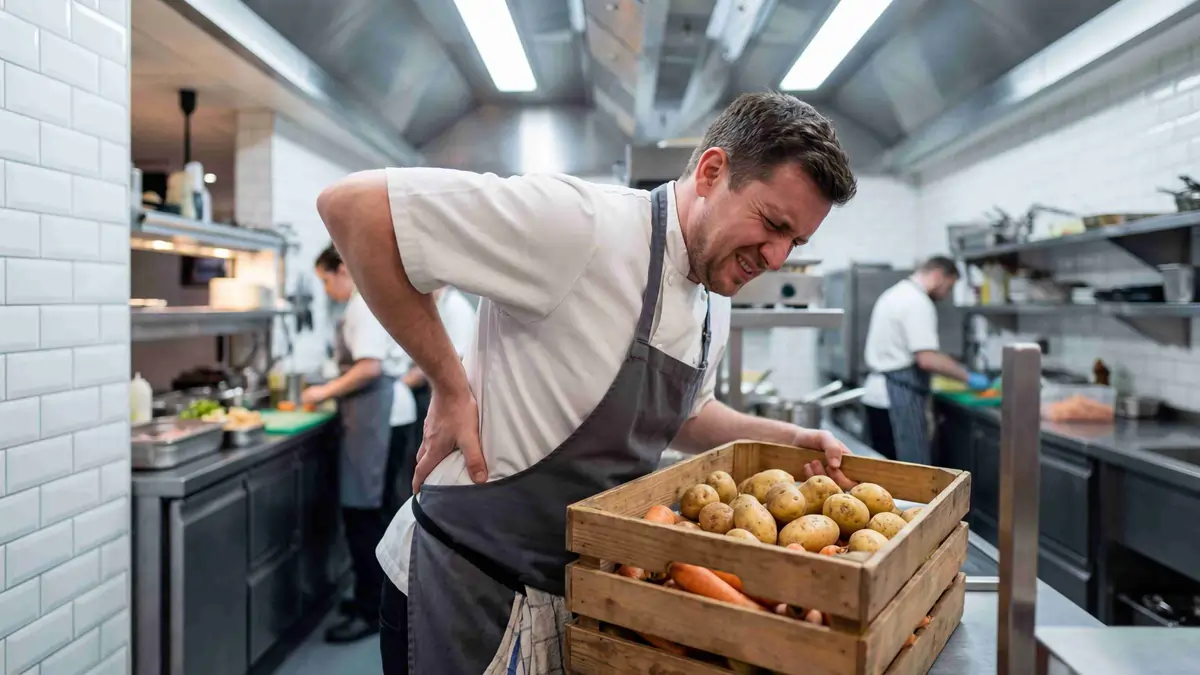
Staff with shoulder, back, or arm injuries may avoid frequent handwashing because bending to the sink or scrubbing vigorously causes pain. Hand hygiene drops. Pathogen transfer risk rises.
Understaffing from injuries puts pressure on HACCP controls
When two or three team members are off work recovering from manual handling injuries, the remaining staff carry multiple roles under time pressure.Temperature monitoring gets delayed, date labelling gets rushed, and cross-contamination protocols get deprioritised. On paper, the HACCP system still exists but in practice, it has stopped functioning. See our guide to HACCP Levels Ireland to understand what a functioning system requires at each level.
Injured staff handle food differently
A chef favouring an injured wrist may lose proper knife control. A worker in pain may not rotate stock because reaching upper shelves hurts. Small compromises accumulate across a shift into meaningful food safety risk.
Emergency responses breach protocols
In the immediate aftermath of an acute injury, the normal response colleagues rushing to help, routines disrupted, food left unattended can create temporary but real HACCP breaches. Hot food may sit outside safe temperature ranges, and contaminated gloves may come into contact with food surfaces. However brief, these lapses are genuine HACCP breaches.
The short version: injured staff create food safety risk. That’s why manual handling in catering deserves the same serious attention as HACCP compliance itself.
What Manual Handling Actually Looks Like in a Catering Environment
Manual handling isn’t just about heavy lifting. In a catering context, it covers a wide range of daily tasks across every area of the operation.
Common Manual Handling Tasks by Area
In the kitchen:
- Lifting 25kg flour sacks from floor-level storage to work surfaces
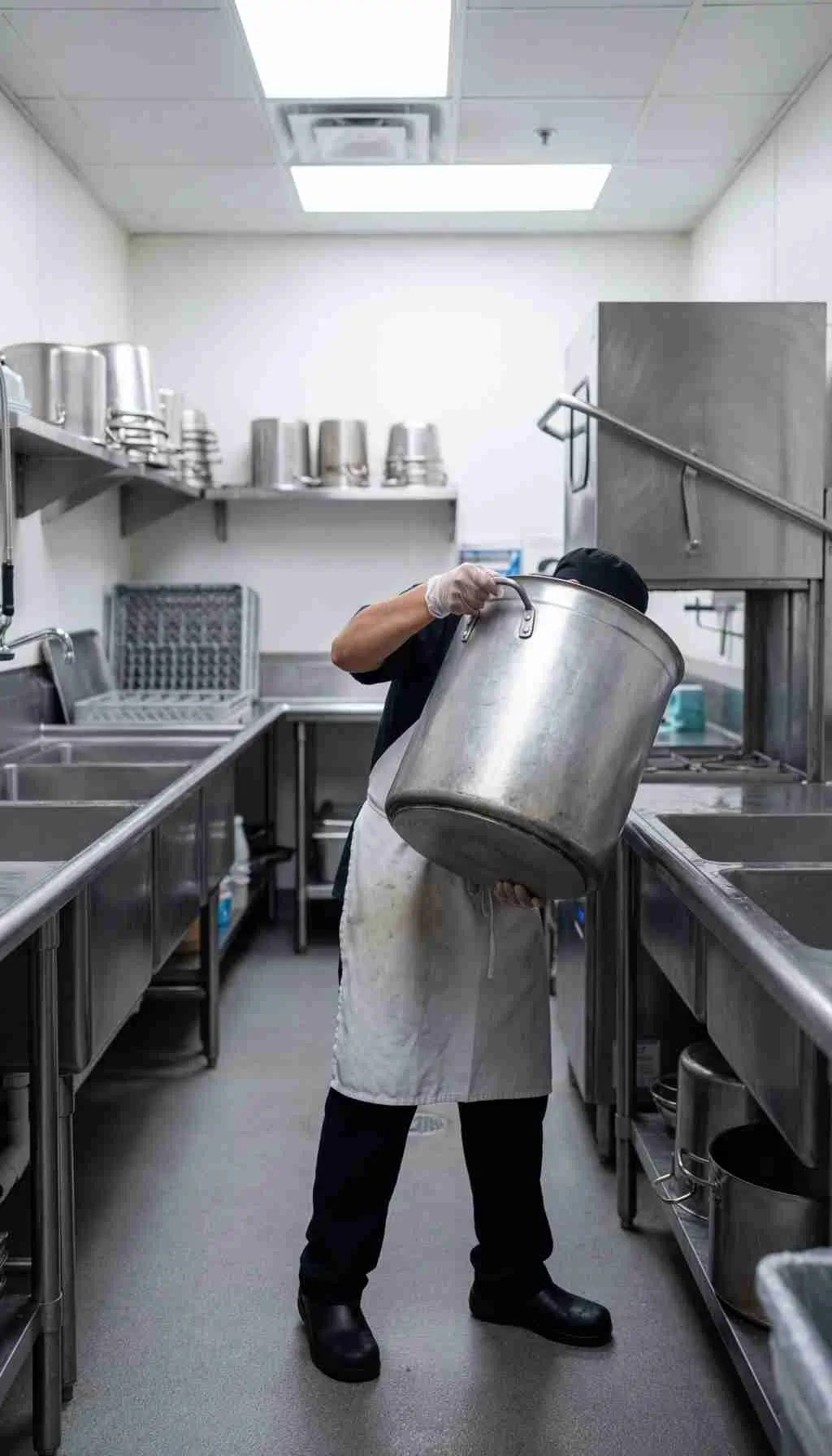
- Moving heavy stockpots filled with liquid across busy layouts
- Transferring 20-litre oil drums to refill fryers
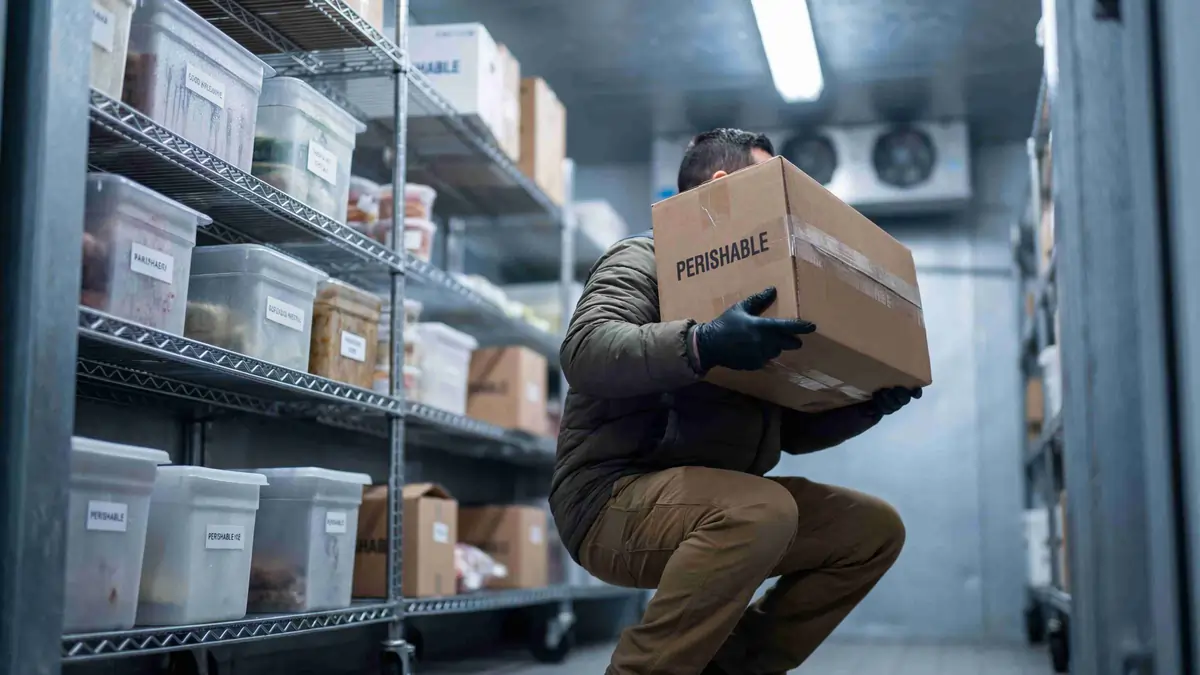
- Loading and unloading walk-in refrigerators and freezers
- Repeatedly lifting mixing bowls filled with dough
In front-of-house:
- Carrying multiple stacked plates, often with awkward reach
- Bar staff handling beer kegs, wine cases, and glass crates
- Catering teams setting up events with heavy equipment and furniture
In storage and delivery:
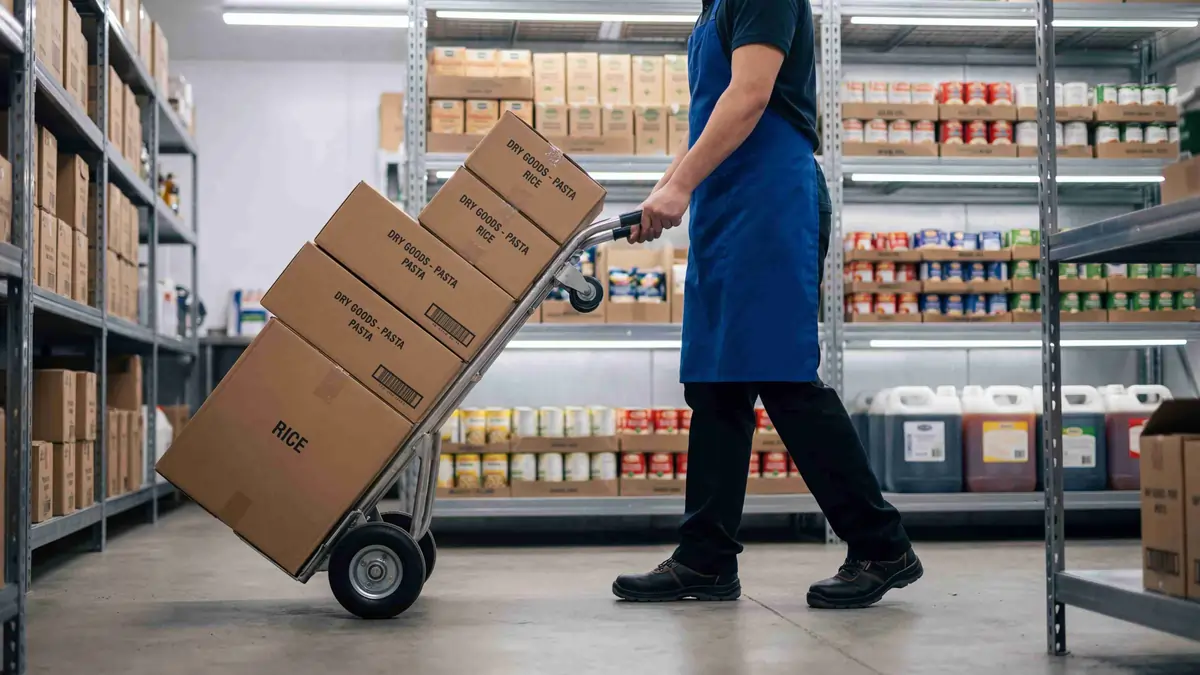
- Accepting deliveries of beverages, dry goods, and fresh produce
- Moving stock from delivery areas to storage, often involving stairs or level changes
- Reorganising storage areas with heavy or awkwardly shaped items
- Moving bins and recycling to external collection points
Every one of these tasks creates manual handling risk. Most happen dozens of times per shift, in cramped spaces, under time pressure, in environments that are hot, wet, or both.
A Typical Scenario, The Flour Sack Problem
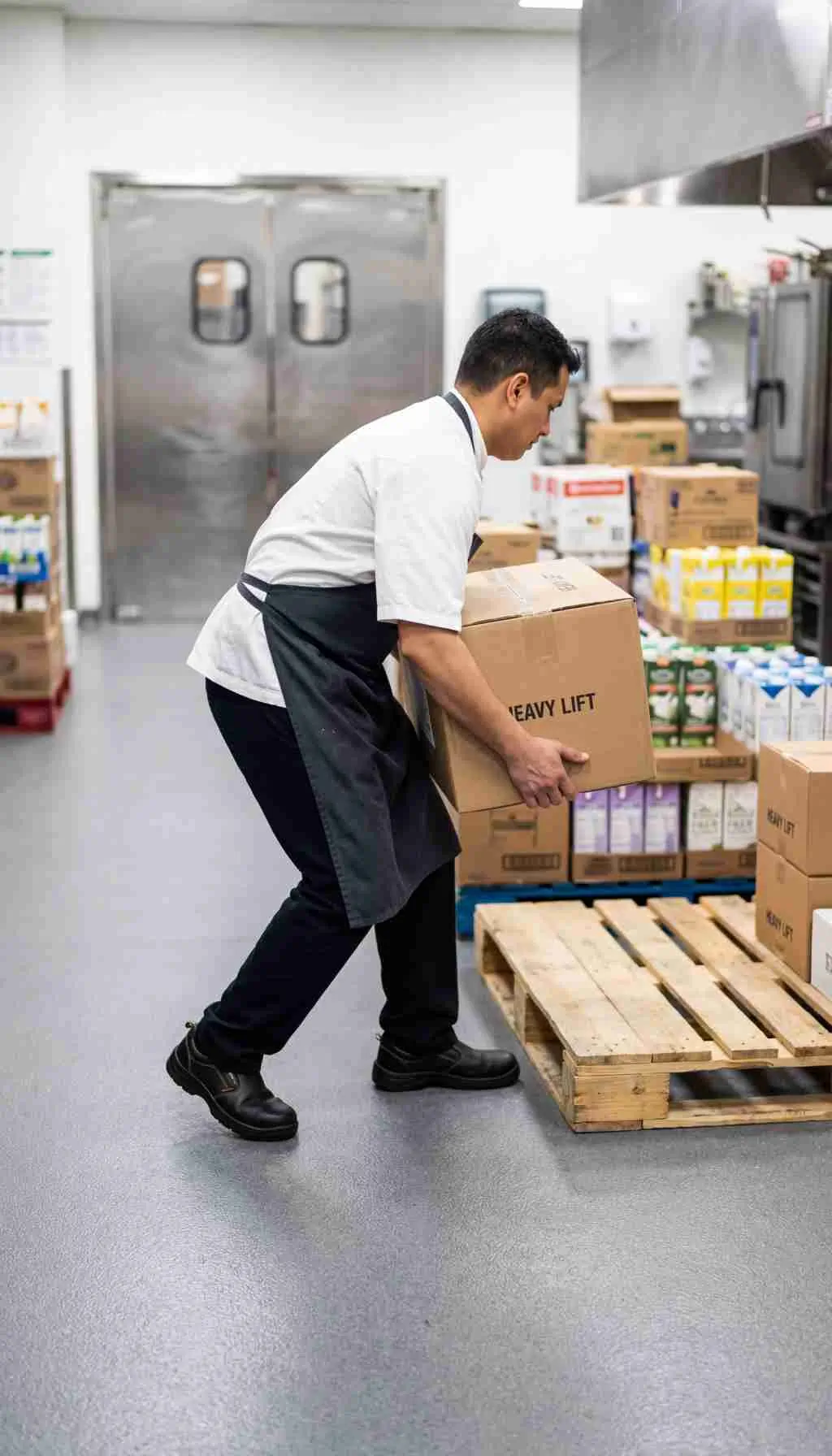
Consider a task that happens daily in bakeries, restaurants, and hotel kitchens across Ireland: moving 25kg flour sacks from ground-level storage to the prep station.
The manual handling risks:
- 25kg can exceed safe lifting capacity for many workers, depending on posture, frequency, and individual capability
- Awkward, unstable sack shape is difficult to grip
- Repetitive lifts across a single task
- Often performed in cramped conditions with limited space for proper technique
What happens to food safety when things go wrong:
- A dropped sack may burst and contaminate nearby food or surfaces
- An injured worker may skip handwashing between handling packaging and food
- Fatigue from pain may mean flour storage isn’t properly sealed, creating pest risk
- A colleague covering for an injured worker may be unfamiliar with allergen protocols
- Pressure to keep working despite injury means unwell staff handling food
None of this requires a dramatic incident. It’s the routine, accumulated effect of inadequate manual handling practice and it’s entirely preventable.
Reducing the Risk: Practical Solutions
Practical solutions for this specific task:
- Order flour in 12.5kg sacks rather than 25kg
- Provide a wheeled trolley for transporting multiple bags
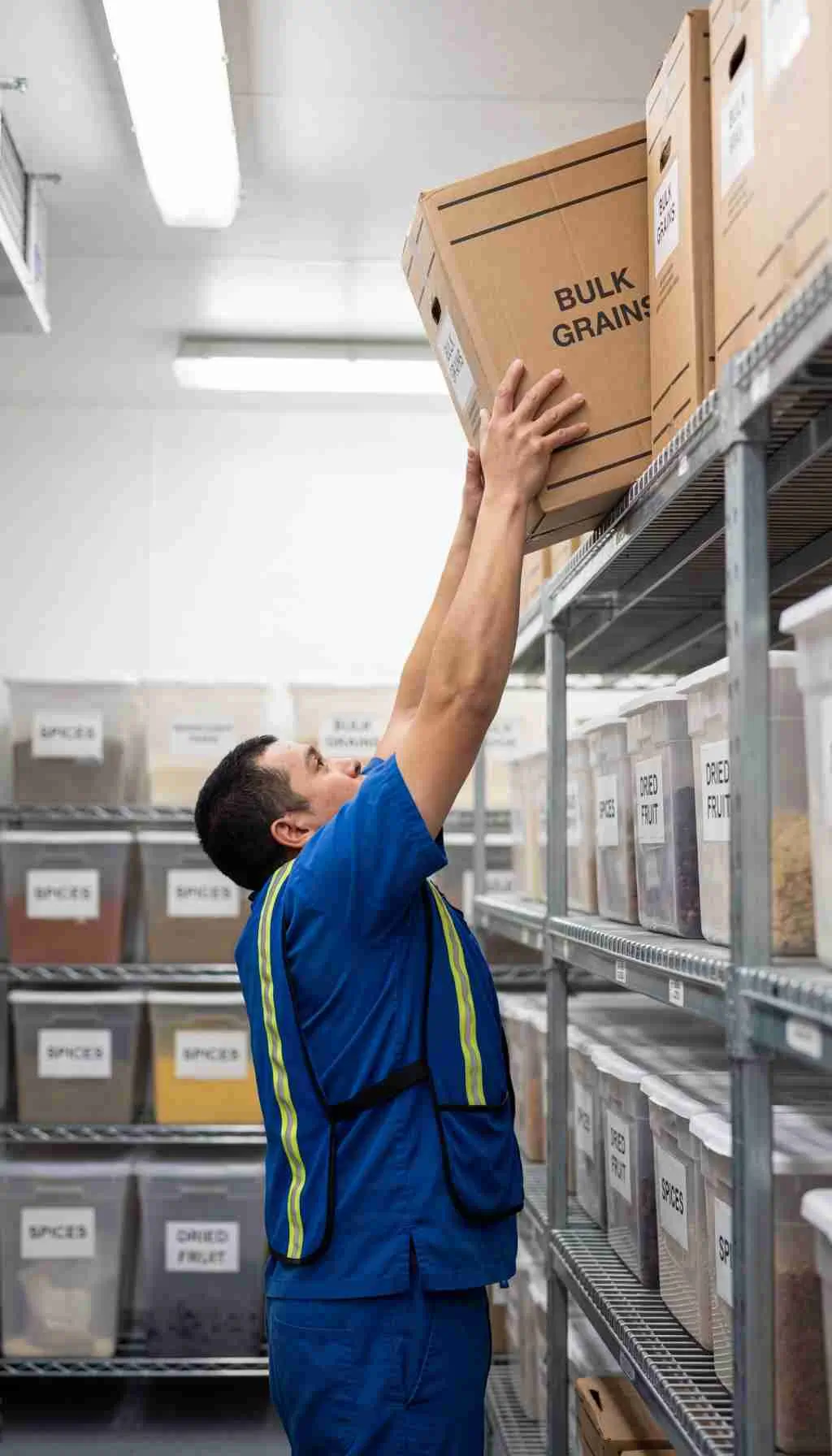
- Redesign storage layout to reduce the vertical range of lifting
- Install adjustable-height shelving
- Train all staff on flour sack handling specifically not just generic lifting technique
The Urban Catering Challenge, Dublin and City-Centre Operations
For catering businesses operating in Dublin and Ireland’s other urban centres, manual handling risks are compounded by the built environment.
Many city-centre restaurants, cafés, and catering operations work in older buildings with narrow staircases, basement kitchens, limited storage requiring vertical stacking, and no goods lift. Although these constraints can’t be wished away, they make careful risk assessment and creative solutions more important, not less.
High staff turnover adds another layer of difficulty. Dublin’s competitive hospitality labour market means a constant flow of new starters unfamiliar with safe lifting techniques, less experienced staff performing hazardous tasks, and part-time workers who may miss safety briefings or refresher sessions. Language barriers can complicate training for some teams.
For these operations, consistent and well-delivered manual handling training isn’t just about compliance. It’s operationally critical for food safety, for staff retention, and for the ability to stay open and functional when injuries would otherwise take people off the floor.
Applying the TILE Framework in a Catering Context
The TILE framework provides a structured approach to manual handling risk assessment. In a catering setting, each element needs to be considered with food service specifics in mind.
Task — What does the job involve? How many times per shift does this happen? How far does the load need to travel? Is it during service rush or prep time? What are the floor conditions along the route?
Individual — Who is performing the task? Physical capability for this specific load. Training and experience level. Where are they in the shift fresh at the start or fatigued at the end of a double? Are they wearing appropriate PPE (oven gloves, non-slip footwear)?
Load — What is being handled? Weight and shape. Temperature is this a hot pan, frozen goods, or a sloshing liquid? Grip availability smooth-sided oil drums and wet produce crates both present grip challenges. Is the packaging intact?
Environment — Where is this happening? Floor surface is it wet, greasy, or uneven? How much space is available? What are the lighting conditions? Is there a temperature extreme (moving from hot kitchen to cold storage)? Are there level changes such as steps or thresholds along the route?
Working through TILE for each significant task and documenting it forms the core of a compliant manual handling risk assessment for catering operations.
Safe Lifting Technique: The Essentials for Kitchen Environments
Engineering controls mechanical aids, layout improvements, ordering smaller packaging should always be the first line of defence. But safe lifting technique remains essential for the manual handling that cannot be eliminated.
Before you lift:
- Plan the route — is the path clear?
- Check the load — weight, stability, temperature, grip
- Decide if you need help
The lift:
- Stand close to the load, feet shoulder-width apart with one foot slightly forward
- Bend at the knees and hips — keep the back straight
- Get a firm, whole-hand grip — check your hands are dry first
- Lift smoothly using leg muscles, keeping the load close to your body
- Move without twisting — turn your feet, not your back
Putting it down:
- Reverse the same technique
- Bend the knees to lower the load
- Never drop loads or let them fall
Team lifts:
- Agree the method before starting
- One person calls the timing
- Lift and lower together both using proper technique
In a kitchen environment, “dry hands” and “clear path” are particularly worth emphasising. Wet hands on a smooth-sided container and a greasy floor mid-route are where things go wrong.
Practical Solutions for Common Catering Manual Handling Risks
Heavy flour sacks
- Order in smaller weights (12.5kg rather than 25kg)
- Provide a wheeled trolley for transport
- Adjust shelf heights to reduce the lift range
- Schedule flour handling away from peak service times
Oil drums
- Use pump systems to transfer oil where possible
- Specify drum-handling trolleys with proper wheels
- Make it a two-person task as a minimum
- Ensure the route is clear and dry before moving drums
Stockpots
- Install pot fillers at cooking stations to eliminate carrying water
- Provide wheeled pot carriers
- Never carry stockpots at maximum capacity — transfer contents to smaller containers first
- Designate clear routes during stockpot movement
Beverage deliveries
- Negotiate smaller delivery units with suppliers
- Provide appropriate trolleys for different load types
- Schedule deliveries when adequate staff are available
- Establish a designated delivery-handling procedure rather than using whoever is closest
Event setup
- Invest in wheeled equipment wherever possible
- Use collapsible or modular equipment to reduce individual unit weight
- Brief staff before each event on the manual handling approach
- Review events afterwards what created unexpected handling challenges?
Legal Obligations for Irish Catering Businesses
The Safety, Health and Welfare at Work Act 2005 places duties on employers to manage workplace risks systematically duties that sit naturally alongside ISO 9001 and ISO 14001 obligations rather than apart from them. Guidance and oversight on these obligations in Ireland is provided by the Health and Safety Authority (HSA).
Avoid hazardous manual handling where reasonably practicable. For catering, this means genuinely asking: could you order smaller packaging? Could you redesign the kitchen layout? Or could you provide a mechanical aid that removes the need for a manual lift altogether? In many cases, the answer is yes and as a result, the law expects you to act on it.
Conduct and document risk assessments for any manual handling that cannot be avoided. These must be specific to the actual tasks, regularly reviewed, and communicated to the staff involved.
Update your safety statement under the Safety, Health and Welfare at Work Act 2005 to specifically address manual handling hazards, risk assessments conducted, control measures in place, and training provided.
The consequences of non-compliance can be severe.Under the 2005 Act, serious breaches can lead to enforcement action, prosecution, and significant penalties, with personal liability for directors and managers possible under Section 80. For more on what inspectors look for, see our guide to HSA Inspections. Beyond enforcement, inadequate manual handling provisions that lead to injuries create significant exposure to compensation claims, staff absence, reputational damage in a competitive labour market, and as discussed throughout this article food safety failures during understaffing periods.
Why Joining the Two in Training Makes the Difference
Integrating Manual Handling Into Your Food Safety Culture
The most effective catering operations don’t treat manual handling and food safety as separate compliance obligations. They understand that the culture supporting one reinforces the other.
That means management visibly modelling safe behaviours not just signing off on the training records. It means daily briefings that treat physical safety and food safety with equal seriousness. It means staffing levels that allow people to work safely rather than rushing and taking shortcuts. It means near-miss reporting that covers both domains.
It also means training that connects the two explicitly. When kitchen staff understand that a manual handling injury doesn’t just affect them personally it creates real risk for the customers they’re serving the motivation to work safely shifts. It’s not just about avoiding a sore back. It’s about doing the job properly.
Your Manual Handling Implementation Roadmap
Weeks 1–2: Assessment Walk through every area where staff lift, carry, push, or pull loads. List every manual handling task. Review injury records. Talk to the staff doing the work they’ll know where the real challenges are.
Weeks 2–4: Risk Assessment Apply TILE to each task identified. Document your findings. Identify where engineering controls could reduce or eliminate risk. Prioritise by risk level.
Months 2–3: Controls Procure mechanical aids. Redesign layouts where feasible. Negotiate with suppliers on packaging. Update your safety statement with manual handling provisions.
Months 3–4: Training Book accredited manual handling training with a provider who understands catering operations. Ensure training covers practical, task-specific scenarios from your actual workplace not generic warehouse examples. Document everything.
Ongoing: Monitor and Review Track both manual handling injuries and food safety incidents. Look for the connections. Review your controls when processes change. Ask staff what’s working and what isn’t.
How AcornStar Supports Irish Catering Businesses
AcornStar works at the intersection of food safety training and health and safety expertise which means we understand catering operations from the inside out.
When we deliver manual handling training to catering clients, the scenarios come from your kitchen: handling flour sacks in a bakery, moving oil drums in a restaurant, accepting deliveries in a hotel kitchen, setting up a catering event. Not a generic training room with a standardised cardboard box.
Our training is designed to meet the requirements of the Safety, Health and Welfare at Work (General Application) Regulations 2007 and, as a result, supports seamless integration with your existing HACCP and food safety framework.
We also provide free access to our Learning Management System for business customers, so training records, certificates, and renewal reminders are managed in one place no paper chasing, no missed renewals, no scrambling when an inspector arrives.
View our manual handling training courses or contact our team
Additional Resources
- HSA: Safe Hospitality — Safety, Health and Welfare in Hotels, Restaurants, Catering and Bars
- HSA: Manual Handling Risk Assessment in the Hospitality Sector
- Safety, Health and Welfare at Work (General Application) Regulations 2007
- Safety, Health and Welfare at Work Act 2005
- Food Safety Authority of Ireland — HACCP Guidance