
How to Conduct a Risk Assessment: A Step-by-Step Guide for Irish Employers
Workplace Risk Assessment Requirements in Ireland
Workplace Risk Assessment Requirements in Ireland
Every Irish employer has a legal duty to protect the people who work for them and a proper risk assessment is how you do it. Under the Safety, Health and Welfare at Work Act 2005, identifying hazards and assessing risks isn’t optional. It’s the foundation your entire safety system rests on. Get it right and you’ll meet your obligations to the Health and Safety Authority (HSA), reduce workplace incidents, and build a culture where safety is part of how people work every day. Get it wrong and you’re exposed to prosecution, serious fines, and far worse preventable harm to your team. This step-by-step guide walks you through the HSA’s five-step risk assessment process in plain English, so you know exactly what’s required and how to make it work in your business.
A workplace risk assessment is a legal requirement for every Irish employer and it’s the foundation of decent health and safety management. Get it right and you protect your people, your business, and your bottom line. Get it wrong and you leave staff exposed, risk HSA enforcement action, and rack up costs you could have avoided.
The good news: the process isn’t as complicated as it sometimes sounds. The Health and Safety Authority (HSA) sets out a clear five-step approach that works for any Irish workplace, from a small café in Galway to a large construction site in Dublin. This step-by-step guide walks you through each stage in plain English, so you can carry out a risk assessment that actually makes your workplace safer not just one that ticks a compliance box.
Good risk assessment training helps employers and supervisors spot hazards accurately and put sensible controls in place, in line with HSA guidance.
What a Risk Assessment Really Is
A risk assessment is a careful look at what in your workplace could cause harm, who it could harm, and whether you’ve done enough to prevent it. Two terms worth pinning down:
- A hazard is anything with the potential to cause harm a chemical, a machine, a slippery floor, a stressful workload.
- A risk is the chance that someone will actually be harmed by that hazard, combined with how serious the harm could be.
Done well, risk assessment turns safety from reactive fire-fighting into proactive prevention. It becomes part of how you run the business, not a document you dust off for inspections.
Why Risk Assessment Matters Under Irish Safety Law
The Safety, Health and Welfare at Work Act 2005 is the cornerstone of workplace safety in Ireland. Two sections matter most here:
- Section 19 requires every employer to identify hazards, assess the risks associated with those hazards, and prepare a written assessment.
- Section 20 requires you to set out your safety arrangements in a Safety Statement, which draws on your risk assessment and covers psychosocial risks such as workplace stress, bullying, and harassment alongside physical ones.
Legal requirement: Under the 2005 Act, Irish employers must assess and document risks for all workplace hazards physical, chemical, biological, ergonomic, and psychosocial. Failing to comply can bring significant penalties and, far worse, exposes workers to preventable harm.
The consequences of a poor risk assessment go well beyond regulatory fines. Inadequate assessments lead to accidents, sick days, business disruption, higher insurance premiums, and reputational damage. HSA inspectors don’t just check that an assessment exists they look at whether it reflects real workplace conditions and whether the controls listed on paper are actually in place on the ground.
The HSA’s Five-Step Risk Assessment Process
The HSA recommends a straightforward five-step approach. It works for any sector, and it keeps risk assessment practical rather than bureaucratic.
Step 1: Identify the Hazards
Start by taking a proper walk around your workplace with fresh eyes. Look for anything that could reasonably cause harm. Don’t rely on memory — things change, and small hazards are easy to miss when you see them every day.
Workplace hazards generally fall into five categories:
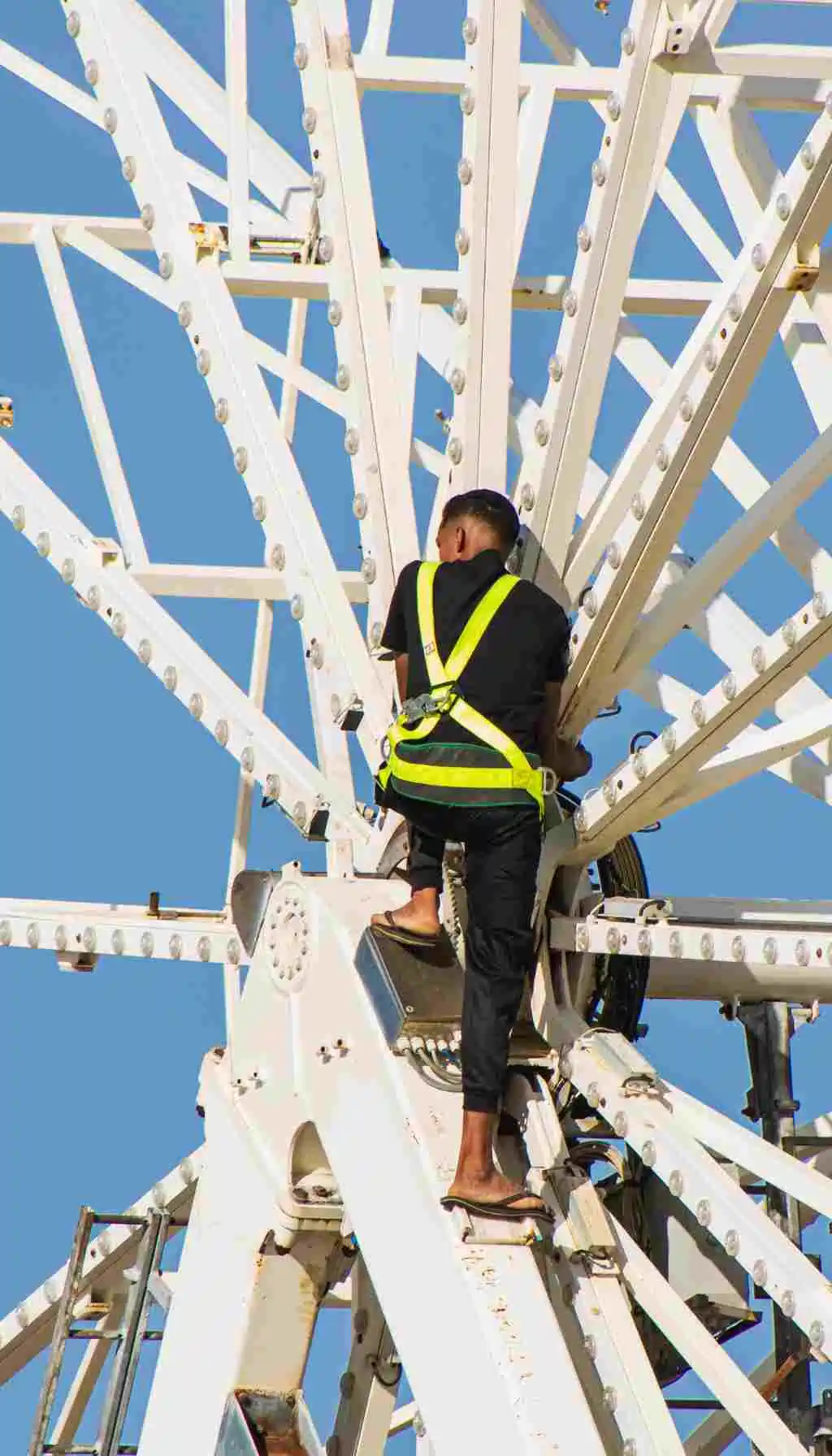
- Physical — machinery, vehicles, working at height, noise, vibration, manual handling, slips, trips, and falls.
- Chemical — cleaning products, solvents, fuels, dust, fumes, and any substances that are toxic, corrosive, or flammable.
- Biological — bacteria, viruses, fungi, and other microorganisms that can cause infection.
- Ergonomic — poor posture, repetitive motions, badly designed workstations, and display screen equipment issues.
- Psychosocial — workplace stress, bullying, harassment, excessive workloads, and work organisation factors that affect mental health.
Use a mix of methods to spot hazards. Walk-around inspections help. So do accident and near-miss records, manufacturers’ instructions, safety data sheets, and HSA sector guidance.
Worker input is critical: The people doing the job every day usually know where the real risks are. Involving staff through safety chats, toolbox talks, or quick surveys improves the quality of your assessment and it’s also a legal requirement under the 2005 Act.


Step 2: Decide Who Might Be Harmed and How
For every hazard, think about who could be affected. That includes your employees, but also contractors, agency staff, visitors, delivery drivers, cleaners, and members of the public.
Pay particular attention to groups who may face higher risks:
- Young workers under 18, who may lack experience recognising hazards.
- Pregnant employees and new mothers, who face specific risks from certain chemicals, biological agents, and physical work.
- Lone workers, who don’t have help nearby if something goes wrong.
- Workers with disabilities, where controls may need adjusting to keep them safe and accessible.
- New starters, contractors, and migrant workers, who may be unfamiliar with your site or face language barriers.
Be specific about how someone could be harmed. “Back injury from lifting heavy stock without training” tells you far more than “manual handling risk” — and it points you directly towards the right control.
Also think about work patterns. Shift workers, part-timers, and maintenance staff often face different risks than daytime production teams, so your assessment needs to cover all of them.
Step 3: Evaluate the Risks and Choose Control Measures
Once you’ve listed your hazards and who they affect, weigh up how likely harm is and how serious it would be. Most organisations use a simple risk matrix that combines likelihood (very unlikely through to almost certain) with severity (minor injury through to fatal) to give each risk a rating.
The law requires you to reduce risks so far as is reasonably practicable which means balancing the level of risk against the time, cost, and effort needed to control it, and taking sensible action.
When you’re choosing controls, always work through the Hierarchy of Controls from the top down. The higher up the list, the more reliable the control:
- Elimination — remove the hazard altogether. Scrap the faulty machine, redesign the task so lifting isn’t needed, stop using the dangerous substance.
- Substitution — replace the hazard with something safer. Swap a toxic cleaner for a non-hazardous one, or a noisy machine for a quieter model.
- Engineering controls — physical measures that separate people from the hazard, like machine guards, local exhaust ventilation, guardrails, or noise enclosures.
- Administrative controls — safe systems of work, training, signage, permits to work, job rotation, and procedures.
- Personal Protective Equipment (PPE) — the last line of defence for risks that can’t be controlled any other way.
A common mistake is jumping straight to PPE because it’s cheap and quick. PPE should back up more effective controls not replace them.
Step 4: Record Your Findings and Put Controls in Place
Irish employers with three or more employees must prepare a written risk assessment and include it in their Safety Statement. Even if you’re smaller, putting it in writing is good practice and gives you something to point to if questions ever arise.
A good record should clearly show:
- The work activities and areas covered
- The hazards identified and where they come from
- Who might be harmed
- The controls already in place
- Any further controls needed, who’s responsible, and by when
- The date of the assessment and when it will be reviewed
Keep it specific. The HSA expects risk assessments to reflect your actual workplace not a generic template copied off the internet. A bakery and a warehouse face very different risks, and your paperwork should show that.
Implementation is where most risk assessments succeed or fail. Assign clear responsibilities, set realistic timelines, and make sure the people doing the work know what the controls are, why they matter, and what to do if something goes wrong. Training flows directly from your risk assessment, so it should be specific to the hazards and controls in your workplace not generic safety awareness.
Step 5: Review and Update the Assessment
A risk assessment isn’t a one-off exercise. Workplaces change, and your paperwork has to keep up.
Review your risk assessment whenever there’s a significant change, including:
- A workplace accident, near-miss, or dangerous occurrence
- New equipment, substances, or processes
- Changes to the layout of the workplace
- Changes in the workforce (new starters, different shift patterns, young or pregnant workers)
- Updates to legislation or HSA guidance
As a minimum, most Irish employers review their risk assessments at least once a year to make sure they’re still accurate and the controls are still working.

Risk Assessment Examples by Sector
The five-step process stays the same across every sector, but the hazards change. A few practical examples:
- Construction — working at height, manual handling, mobile plant, excavations, noise, dust, and coordinating multiple contractors on site. Site conditions change daily, so assessments need to be dynamic.
- Manufacturing — machine guarding, lockout/tagout, noise, chemical handling, manual handling in warehousing, and fire and explosion risks.
- Healthcare — infection control, manual handling of patients, sharps injuries, aggression from patients or visitors, and chemical exposure from cleaning products and medical gases.
- Offices — display screen equipment, ergonomics, slips and trips, fire safety, manual handling of supplies, and psychosocial risks like workload pressure and poor working relationships.
Common Risk Assessment Mistakes to Avoid
Even well-meaning employers slip up. Watch out for these:
- Generic tick-box assessments copied from templates that don’t match your workplace.
- Leaving workers out of the process the people doing the job know where the shortcuts and pinch points are.
- Skipping psychosocial risks like stress, bullying, and excessive workloads, which are just as much a legal duty as physical hazards.
- Jumping straight to PPE instead of working through the hierarchy of controls.
- Forgetting to follow up identifying a hazard and then doing nothing about it is worse than not assessing it at all.
- Never reviewing the assessment after changes to equipment, processes, or the team.
5-step risk assessment checklist
- Identify all hazards through inspection, records, and worker consultation.
- Decide who might be harmed and how, including higher-risk groups.
- Evaluate the risks and choose controls using the Hierarchy of Controls.
- Record your findings and put controls in place, with clear responsibilities and deadlines.
- Review and update the assessment regularly and after any significant change.
How AcornStar Can Support Your Risk Assessment Programme
Running effective risk assessments takes time, expertise, and ongoing attention and many Irish organisations don’t have all of that in-house. At AcornStar, we help businesses across Ireland meet their legal duties and build genuinely safer workplaces, with practical support tailored to Irish regulations and your sector.
Consultancy and On-Site Support
Our HSEQ consultancy services give you complete support for developing or strengthening your risk assessment programme. We carry out thorough workplace assessments, help you evaluate risks and choose the right controls, produce documentation that meets HSA expectations, and guide you through implementation and review. The goal is always the same risk assessments that reflect what’s really happening on the ground and stand up to scrutiny.
Training for Your Team
Building internal capability is often the most cost-effective long-term approach. Our Risk Assessment online course covers the five-step process, legal duties under the Safety, Health and Welfare at Work Act 2005, and practical skills for identifying hazards and choosing controls. We can also develop customised templates, checklists, and training materials for your sector.
For a wider view of the training we offer, browse our full catalogue of accredited safety courses.
Related Resources
Risk assessment sits alongside several other areas of workplace safety. You may also find useful:
- Our Safety Culture Development guidance, which shows how risk assessment contributes to a stronger safety culture.
- Our Manual Handling Training, covering one of the most common hazards identified in Irish risk assessments.
- Our Wellbeing at Work programme, which covers psychosocial risk assessment under Section 20 of the 2005 Act.
Useful External References
- Health and Safety Authority (HSA) — Risk Assessment Guidance
- Safety, Health and Welfare at Work Act 2005 (Irish Statute Book)
- ie — Free HSA risk assessment tool for small businesses
Done well, risk assessment shifts safety from paperwork into something practical that protects both your people and your business. If you’d like help getting the process right, the AcornStar team is here to support you every step of the way.